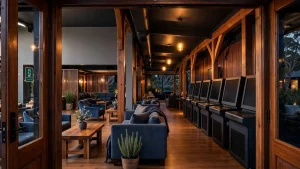
Location labels can indicate a broad Sydney match, but they do not establish proximity or confirm that a venue offers pokies.
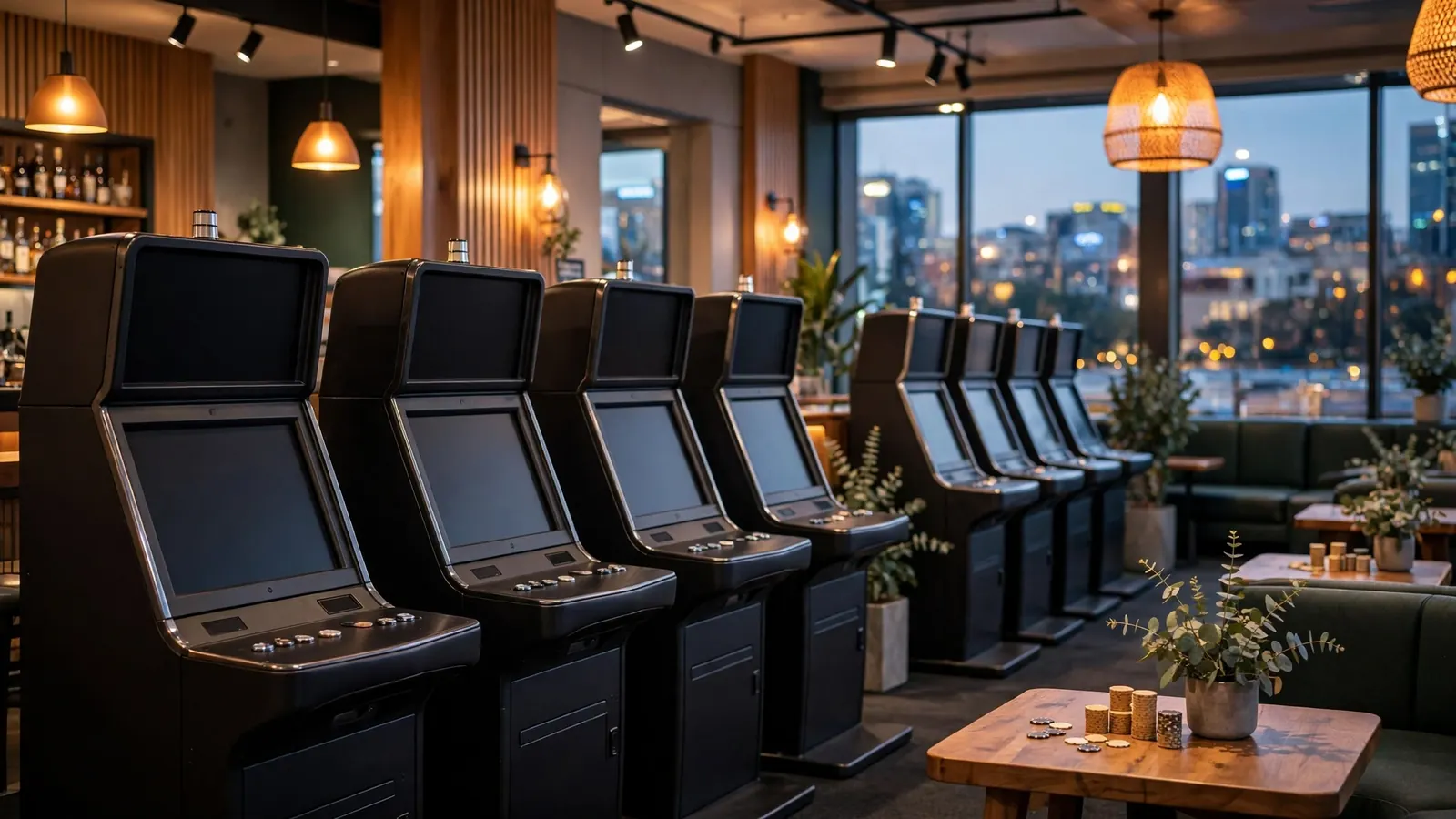
A nearby result can look more definite than it is. A map pin, a venue name and a short distance label make a neat answer to a simple question: where can someone find pokies around Sydney? But those details only help if they refer to a real venue, the right part of the city and a place that actually has the machines being sought. A location match is not proof of any of those things.
I separate three ideas that search results often compress into one: a place is in the wider Sydney area, it is close to a particular starting point, and it offers pokies. Each needs its own confirmation. A result matching “Sydney” may be useful for broad orientation without being close to a person’s suburb. And a venue listing does not, by itself, establish that pokies are available there. The wording is not the evidence.
“Near me” is especially dependent on context. It can mean near a current map location, near an entered address or simply somewhere in the city named in the search. Those are not interchangeable. A result may appear relevant to Sydney while being inconvenient from the actual starting point. Without a reliable origin and a clearly identified venue, a proximity claim is little more than a label.
The same caution applies to searches that combine a district with Sydney. The phrase may express a specific destination, a rough area or uncertainty about how a place relates to the city. A central address and an address elsewhere in the metropolitan area answer different practical questions, even if both are presented under a broad Sydney heading. “Nearby” is relative; the map cannot decide what distance is useful for someone else.
I learned to distrust tidy category labels. In venue information, a listing can make a business easy to locate while leaving the crucial detail—whether the desired activity is actually available—unsettled. The distinction matters more than the order in which results appear. A prominent result is not necessarily the closest match, and a short description is not a substitute for checking the venue’s own current information.
For that reason, a sensible location check begins with the exact place, not a general claim that it is “near Sydney.” The venue name and street address should agree across the information being used. The location should make sense against the intended starting point, and the venue itself should confirm the relevant offering. If one of those pieces is unclear, the responsible answer is to leave it unresolved rather than turn a broad match into a recommendation.
This is not a ranking of Sydney venues. A list presented as the best or nearest would imply that each entry had been checked against the same criteria: actual location, distance from a defined point and confirmed pokie availability. Without that consistent basis, the list would look precise while comparing unlike things. That is how a map result becomes an overconfident claim.
The word “near” also hides a choice about travel. Some people mean a short walk; others mean a straightforward trip across the city. A search result usually cannot infer that preference. Nor should a city-wide label be read as a promise that a suitable venue is just around the corner. The useful question is not merely whether a result falls under Sydney, but whether its confirmed address and offering fit the journey being considered.
There is one threshold that applies regardless of the suburb or venue: gambling in Australia is restricted to people aged 18 and over. That does not make a location listing more reliable, but it is part of the basic boundary around access.
I would treat a location result as a lead, not a finding. Confirm the place and the offering independently; if those details cannot be established, there is no sound basis for calling it nearby or suitable. Map first. Claims second.
A Sydney venue and an online page offering pokies for real money may look like two ways to reach the same game. Legally, they are not the same arrangement. The Interactive Gambling Act 2001 prohibits companies from providing real-money online casino games, including pokies, to people in Australia unless the operator holds a domestic licence. No Australian online casino licences have been issued.
Legal Status
No Australian online casino licences have been issued, and the Interactive Gambling Act 2001 prohibits companies from providing real-money online casino games to people in Australia without such a licence.
That distinction matters more than the wording on a website. A page may use Sydney in its name, mention local players or display familiar payment options. None of that gives the operator an Australian licence. There is no Australian-licensed online casino, so claims that an online casino is locally licensed should not be taken at face value.
The law is directed at the companies providing the prohibited service, not at individual players. Australians are not criminally liable simply for playing on an offshore site that accepts them. That is not the same as saying an offshore service is authorised to operate here, or that using it carries no practical risk. The operator’s position and the player’s exposure are separate questions.
In a physical setting, the interaction takes place at a venue. Online, the service is supplied by a company that may be based outside Australia, under rules that do not give an Australian player the same local protections. If a dispute arises over a balance or a withdrawal, an Australian player has no legal recourse in Australia against an offshore casino that refuses to pay winnings.
That is the part promotions tend to leave in the background. A welcome offer, a cashless payment option or a claim about paying pokies can make an online service feel close at hand. But those claims do not settle who operates the site, which law governs the account, or what can be done if the operator withholds funds. Familiar language is not local oversight.
I have seen how the word “Sydney” can do quiet work in a headline: it makes a distant service sound as if it belongs to the city. It does not establish a local venue or a locally authorised online operator. Likewise, “no deposit” is an offer label, not evidence of legal status or a promise that winnings can be withdrawn. The practical terms remain with the operator.
Searches for online pokies, cashless play or high-limit games can blur the boundary between a local venue and an offshore website. The boundary remains. A website accepting Australian customers is not thereby approved to provide real-money pokies here, and a payment method does not prove that a service is lawful or that its terms are fair.
The main practical difference is recourse. With an offshore operator, the player may face foreign terms and a company outside the reach of Australian remedies. If a payout is refused, the absence of Australian legal recourse is not a technical footnote. It changes the value of any advertised win.
This also puts bonus language in perspective. An offer can look generous while its conditions determine whether any balance is withdrawable. The legal distinction does not verify those conditions, and it does not turn an offshore promotion into a Sydney service. Read the claim as marketing, not as evidence.
The sensible dividing line is simple: online real-money pokies offered to Australians are not supplied under an Australian casino licence, because none exists. The law targets operators, while players are not the target of that prohibition. Yet when an offshore site fails to pay, Australian legal recourse is unavailable. Different sides of the same transaction.
No Recourse
When using an offshore operator, an Australian player has no legal recourse in Australia if a payout is refused or a dispute arises over a balance.
A venue’s opening time and the hours when its pokies are operating are not necessarily the same thing. A hotel or club may have its own schedule, while access to a machine area can be subject to separate conditions. That distinction matters when an early start or a late finish is the deciding factor: a broad statement about Sydney does not establish that a particular venue, or its machines, will be available at a particular hour.
I would treat phrases such as “open early” as descriptions, not as a usable timetable. They do not say which venue is meant, whether the machine area is operating, or whether the information is current. The same problem applies to claims about play continuing late. Without venue-specific confirmation, a citywide opening-time claim is too blunt to support a practical plan.
There is a more concrete point about operating conditions. A report published by regionriverina.com.au described a requirement taking effect from 1 July: venues operating more than 20 gaming machines are to have a dedicated responsible gambling officer (RGO) on duty for the period those machines are running. The condition is tied to machine operation, not simply to the building being open. It therefore says something about how a qualifying venue must be staffed while gaming is available, rather than establishing any opening hour for Sydney venues.
That difference is easy to miss. An opening time tells when a venue admits patrons; an operating condition tells what must be in place during a defined activity. The RGO requirement does not, by itself, confirm that a venue opens at dawn, stays open overnight, or runs machines throughout its full trading hours. It is a safeguard associated with operation, not a promise of access.
The same report noted a one-month grace period for venues to remove specified signage and put the responsible gambling officer arrangements in place. It also described a requirement for venues to maintain a gambling incident register. That register is intended to capture incidents, including situations in which a patron’s behaviour indicates possible gambling harm. These are operational responsibilities, not clues from which to infer a venue’s schedule.
Responsible Gambling
Venues operating more than 20 gaming machines must have a dedicated responsible gambling officer (RGO) on duty and maintain a gambling incident register.
In my experience, the wording around a venue’s hours can sound more definite than the underlying detail. “Open” may refer to the bar, hotel, or club, while a customer is actually trying to establish whether pokies are available. Those are different questions. A precise answer needs to identify the venue and the relevant machine operating times; a general label cannot do that work.
Nor does a statement about a responsible gambling officer supply the missing timetable. It establishes a staffing condition for qualifying venues while machines are operating. It does not identify which Sydney venues meet the threshold, or say when their machines start or stop. The distinction is practical, not technical: a building’s trading hours alone may not settle the matter.
For anyone comparing early-opening or late-running options, the useful standard is a current, venue-specific schedule that explicitly covers machine availability, rather than a general claim about Sydney. Treat the two clocks separately: the venue’s hours, and the hours when pokies are actually in operation. That keeps a staffing rule in its proper place and avoids mistaking a regulatory condition for an opening-time guarantee.
Conditions, not a timetable.
Choosing pokies to play in Sydney means weighing what matters to you, such as available payment details and licensing information. This guide offers a concise starting point for checking the listed options.
Neospin
Neospin is listed with a Curacao Gaming Control Board licence, OGL/2023/176/0095, held by Hollycorn N.V.
Ricky Casino
Ricky Casino lists crypto payouts in under an hour and PayID payouts in 1–3 business days. Its minimum deposit is A$20, or A$30 to qualify for the bonus.
7Bit Casino
7Bit Casino is operated by Dama N.V. and is listed as licensed in Curacao.
Rollero Casino
Rollero Casino is listed with Curacao Gaming Control Board licence OGL/2023/176/0095, held by Hollycorn N.V.
Lucky Dreams
Lucky Dreams lists a A$20 minimum deposit via POLi and a Curacao licence.
LevelUp Casino
LevelUp Casino is listed with Curacao eGaming licence OGL/2023/174/0082, held by Dama N.V. Its minimum deposit is A$15.
DragonSlots Casino
DragonSlots Casino is listed as licensed by the Curacao Gaming Authority, with Jumpman Gaming Ltd named as the operator.
House of Pokies
House of Pokies lists an international iGaming licence, though the jurisdiction is not named in the source. PayID payouts are listed as taking 1–24 hours; the minimum deposit is A$30, or A$10 when using PayID.
Roby Casino
Roby Casino is listed as licensed by Curacao eGaming, with Roby Games Ltd named as the operator.
JustCasino
JustCasino is listed with a Curacao Gaming Control Board licence.
“Best” can mean different things when pokie settings are compared. A player might mean a game that feels entertaining, one with a particular style of play, or one with a higher published return percentage. Those are not interchangeable measures. A return setting describes a game’s designed payout behaviour over extensive play; it does not predict what a particular session will produce.
A specialist review reports that some game providers allow casinos to choose between more than one return-to-player setting for the same pokie. In that case, the title alone does not establish its return percentage. The setting selected for the game matters, and the same pokie could therefore have different stated returns at different casinos. A familiar name is not a complete comparison.
That distinction can get lost in language such as “best paying”. It sounds like a promise about what will happen at the machine, but a return percentage is not a forecast for an individual player. It is a setting associated with the game, not a schedule of wins. A higher stated return, where properly disclosed, does not mean a win is due, or that a short session will come close to the stated figure.
I have seen how easily a technical setting becomes a sales phrase. “High return” sounds immediate; the underlying measure is not. The wording can describe a configured rate while leaving the player with no certainty about the next result. That gap matters.
Each spin is produced by a Random Number Generator, with the result of one spin independent of the result before it. A run of losses does not make a win more likely on the next spin, and a recent win does not make another one less likely. Patterns that seem meaningful in a short session are not a reliable way to identify what the machine will do next.
This is why comparing pokies in Sydney venues, or considering a game described as one of the best in Sydney, calls for care about what is actually being compared. A title may be the same while its selected return setting differs. And even where the setting is known, it cannot turn a random individual outcome into a dependable result. A comparison based only on game names or promotional labels leaves out the detail that gives the claim meaning.
There is no single definition of “best” that settles every preference. Return setting is one technical point; enjoyment and the experience of play are different considerations. Neither changes the independence of each spin. The practical distinction is simple: a setting can describe the game’s return design, but it cannot tell anyone how a session will end.
A request about pokies at Sydney Airport sounds precise, but the place name alone does not establish that gaming machines are available there. The same applies to North Sydney. I learned to separate a location label from a venue-level claim: one tells us what someone has in mind; it does not confirm a particular property, machine room or service.
That distinction matters because nearby-sounding descriptions can be read as confirmation. Saying that a venue is “at the airport” or “in North Sydney” may suggest a specific location even when no property has been identified. Without a confirmed venue, there is no sound basis for describing its facilities or presenting it as a destination for pokies. A confident-sounding list would make the gap look smaller than it is.
The airport wording can also blur different ideas: a terminal, the wider airport precinct, or somewhere described as being near the airport. Those are not interchangeable. A location claim needs to say which place it means and support the connection. Otherwise, “pokies at Sydney Airport” is only a broad label, not useful evidence of machine availability.
North Sydney has the same problem in a different form. A suburb or district name is not a venue name. It cannot establish whether a particular club or other premises has pokies, let alone what conditions apply there. In my experience, this is where a general location description gets repeated as though it had already been checked. It has not.
The distinction from a city-wide search is important. A request about pokies somewhere in Sydney leaves the location open; an airport or North Sydney request narrows the intended area. But narrowing the wording does not supply missing venue details. Neither a general city label nor a more exact place name should be turned into a claim that a particular venue exists there.
The wording about a maximum cash payout has a similar limit. A figure would need to be tied to an identified game and the terms that govern it. Without that, there is no responsible way to give a single maximum or imply that one amount applies across Sydney. The phrase alone does not identify a machine or establish its payout conditions. A number without that context would sound useful while answering a question that has not actually been pinned down.
I would treat any listing that combines a place label with a payout figure as making two separate claims: that pokies are available at the stated location, and that a particular cash-out limit applies. Each needs its own basis. One cannot be inferred from the other.
So airport and North Sydney descriptions should remain carefully bounded. A location name can express an intention, but it is not proof of a venue or its machines. And a payout figure without a clearly identified game and applicable terms is not a reliable answer. No shortcut.
A Crown-branded search can make several different things sound like one claim: that a named property exists, that it offers casino facilities, and that pokies are available in a particular room. Those are separate points. The wording of a search does not establish any of them.
I have seen how a familiar brand can do too much work in a sentence. A name creates an impression of certainty; a result or description can then be read as confirmation of facilities it never actually specifies. That is not enough to support a claim that pokies are available at Crown Sydney, or that there is a dedicated pokies room there.
The same caution applies to the phrase “best pokies room”. “Best” needs a defined basis for comparison, and a room needs to be confirmed before it can be compared with anything. Without dependable details about availability and the conditions on site, a ranking would be decoration, not reporting. No list of games or room features can responsibly fill that gap.
The practical distinction is between a property’s branding and a verified description of what it offers. A Crown name, a map result, or a third-party listing may help identify what someone has in mind; none, by itself, proves machine availability. Listings can also be out of date or use broad labels that do not answer the specific question. A confident tone is not evidence.
For a current answer, the useful check is a direct, up-to-date statement from the property about its facilities and access. If that statement does not explicitly confirm pokies, the gap remains. A general description of entertainment or casino facilities should not be stretched into confirmation of a particular machine area. Nor should an old photograph or an unreferenced comment be treated as current operating information.
This is a narrow point, but it matters. A venue can be discussed under a well-known brand while the detail that matters to a visitor—whether the requested machines are available—remains unconfirmed. I would keep those claims separate rather than turning a brand association into a recommendation.
The name alone settles nothing.
A venue’s machine area is not just a room with pokies. It is also a place where staff responsibilities and signage rules matter. When I assess a venue, I separate what can be established about those operating safeguards from claims about which venue is “best”. A polished room or a large machine floor does not, by itself, tell anyone how well the venue handles gambling harm.
A report by regionriverina.com.au describes a requirement taking effect from 1 July: venues operating more than 20 gaming machines are to have a dedicated responsible gambling officer (RGO) present while those machines are in use. The role is tied to operating hours for the machines, not simply to whether the venue building is open. That distinction matters. A venue may have other services running while its gaming area is closed; the reported requirement concerns the period when machines are operating.
The same report says venues are allowed a one-month transition period to take down signage and put the RGO arrangements in place. It also describes a requirement for venues to maintain a gambling incident register. The register is intended to capture events such as a patron showing behaviour that suggests gambling harm or risk. That makes the safeguard more than a sign on a wall: it involves recording incidents as well as having a designated staff role.
Machine-area signage has its own practical limits. Signs directing patrons towards gaming lounges must be removed if they are within sight of ATMs or EFTPOS terminals. Signs pointing patrons towards ATMs must also be removed when they are visible from gaming machines. The point is to avoid using one facility’s signage to lead people between cash access and gambling. In a venue, the positioning matters as much as the wording.
These requirements give a more useful basis for considering Sydney pokies venues than promotional labels such as “premium” or “best”. Those words describe presentation, not the safeguards in operation. I have seen how a small detail—whether a staff responsibility is clear, or whether signs direct people through a cash-access route—can reveal more about the setup than a broad claim about atmosphere.
None of this identifies a particular Sydney venue or confirms the number of machines at any named property. Venue-level information has to be specific before it can support a comparison. The responsible question is whether the operating arrangements and machine-area practices can be established, not whether a venue’s advertising sounds reassuring.
Safeguards are operational details. Not decoration.
“Open all night” sounds like a simple description. In practice, it is a precise claim about a venue’s operating schedule, and it should not be inferred from a general listing, an old mention or the fact that a venue has pokies. I would treat a Sydney venue as operating around the clock only when its current, venue-specific hours clearly support that reading.
There is also a distinction between a venue being open and its pokie area being available. A broad opening-hours statement may describe the premises, not every facility inside. The wording matters: a listing that gives no detail about machine access cannot settle that question. A confident label is not the same as a confirmed schedule.
Hours can also be presented without enough context to make them useful. A venue name and an “open now” status may not show when the information was checked or whether it covers the relevant area. That does not prove the listing is wrong. It means the label alone is a weak basis for treating a venue as a confirmed 24-hour option.
The same caution applies to broad claims about Sydney pokies opening hours. One venue’s schedule cannot establish a city-wide pattern, and a general description should not be turned into a promise about a particular night. I have seen how short labels can flatten operational detail: the qualifier disappears, while the headline remains. Small wording, large difference.
For a reliable answer, the useful detail is a current schedule tied to the specific venue, with clear wording about whether it applies to the pokie area. If that detail is not stated, the responsible conclusion is not that the venue must be closed, or that it must be open all night. It is simply that the hours have not been established by the claim being read.
A round-the-clock label should therefore be treated as a claim to verify, not a dependable feature of Sydney venues. Without a clear schedule for the individual venue and the relevant area, calling it a 24-hour pokies venue goes further than the information supports. No assumption.
A club name, a city-centre address and a claim about pokies are three separate things. In central Sydney, promotional wording can make them look like one confirmed package. I have learned to separate the parts: a venue may be described as a club, but that alone says nothing about whether it has pokies, what its machine area is like, or whether the description is current.
That distinction matters when a list calls particular venues the “best”. Best can mean a convenient location, a busy room or a personal preference; it does not establish anything about the machines or the experience. Without reliable venue-level details, a ranking would turn an assumption into a recommendation. No ranking. No shortcut.
Club-related searches can also blur different kinds of places. A social club, a licensed venue and a venue with gaming machines are not interchangeable descriptions. A name that sounds familiar is not proof of current machine availability, and a map pin cannot settle that question. The practical standard is direct confirmation from the venue, with its own current information taking priority over an old listing or copied description.
The CBD label needs the same care. It describes a broad central-city area, not a single venue or a guarantee that pokies are available nearby. A comparison built from unconfirmed names can look useful while concealing the key point: the details that matter belong to each individual venue. Location alone does not answer them.
Self-exclusion is a different matter from choosing a club. In Australia, BetStop applies only to Australian-licensed operators; it does not bind offshore sites. That limit should be understood plainly. For physical venues, the relevant arrangements are venue-specific, so a general CBD label cannot establish what is in place at a particular club.
I would treat a polished “best” label as a claim to check, not a finding. For a central Sydney venue, confirmation should come from the venue itself and should distinguish its current pokies offering from general club facilities. Until those details are clear, a list or comparison says more about its compiler than about the venue.
A mention of Parkes alongside Sydney does not, by itself, identify a single destination. It may be unclear whether Parkes is intended as a place in its own right, part of an address, or a reference connected with a wider Sydney search. Those possibilities are not interchangeable. Treating the wording as proof of a local connection can turn a loose phrase into a venue claim.
I have seen how this happens in commercial listings: a location label can travel farther than the detail behind it. A page may repeat a place name near a city name, and the two start to look like one confirmed area. That impression is not the same as an address, a venue listing or confirmation that pokies are available at a particular property. Adjectives such as “best” add no location evidence either. They express a judgement, not a map.
For a useful comparison, the place needs to be clear first. A venue name and its full address establish what location is being discussed; separate confirmation from the venue establishes whether pokies are available there. Without those distinctions, a list can appear precise while leaving the central question unanswered. Neat formatting. Unsettled geography.
The same caution applies when a broad Sydney reference is placed beside a specific place name. It does not establish that the named place sits within Sydney, that a venue serves both areas, or that a Sydney-wide description applies to it. Those are separate claims, each needing its own basis. Combining them in one phrase does not supply that basis.
For anyone comparing venues, the sensible standard is plain: identify the intended location, then check the venue’s own current details before relying on a listing. If the location cannot be pinned down, the claim should remain narrow rather than being stretched into a destination recommendation. That is less dramatic than a “top pick”. It is also more useful.
In practical terms, Parkes should not be treated as a confirmed Sydney pokies destination merely because the names appear together. The distinction is small on a page and significant on the ground. A location label is a starting point, not confirmation.
You must be 18 or older to gamble in Australia, including online.
Australian companies cannot legally offer real-money online pokies without a domestic licence, and none have been issued. Players are not criminally liable simply for playing on an offshore site that accepts them, but they have no legal recourse in Australia if it refuses to pay winnings.
It is the amount you must bet before bonus-related winnings can be withdrawn, usually calculated as a multiplier. For example, a $500 bonus with a 40x requirement means $20,000 in bets; if the requirement applies to a $500 deposit plus a $500 bonus at 35x, it means $35,000.
Compare the required turnover with the bonus and check any withdrawal cap on free-spin winnings. For example, a $500 bonus at 40x requires $20,000 in bets, while a 35x requirement on a $500 deposit plus a $500 bonus requires $35,000.