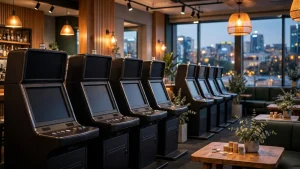
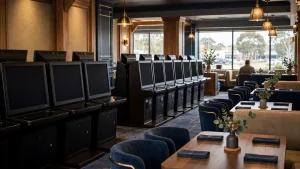
Pokies access depends on individual venue schedules, and broad listings do not confirm when a gaming area is available.
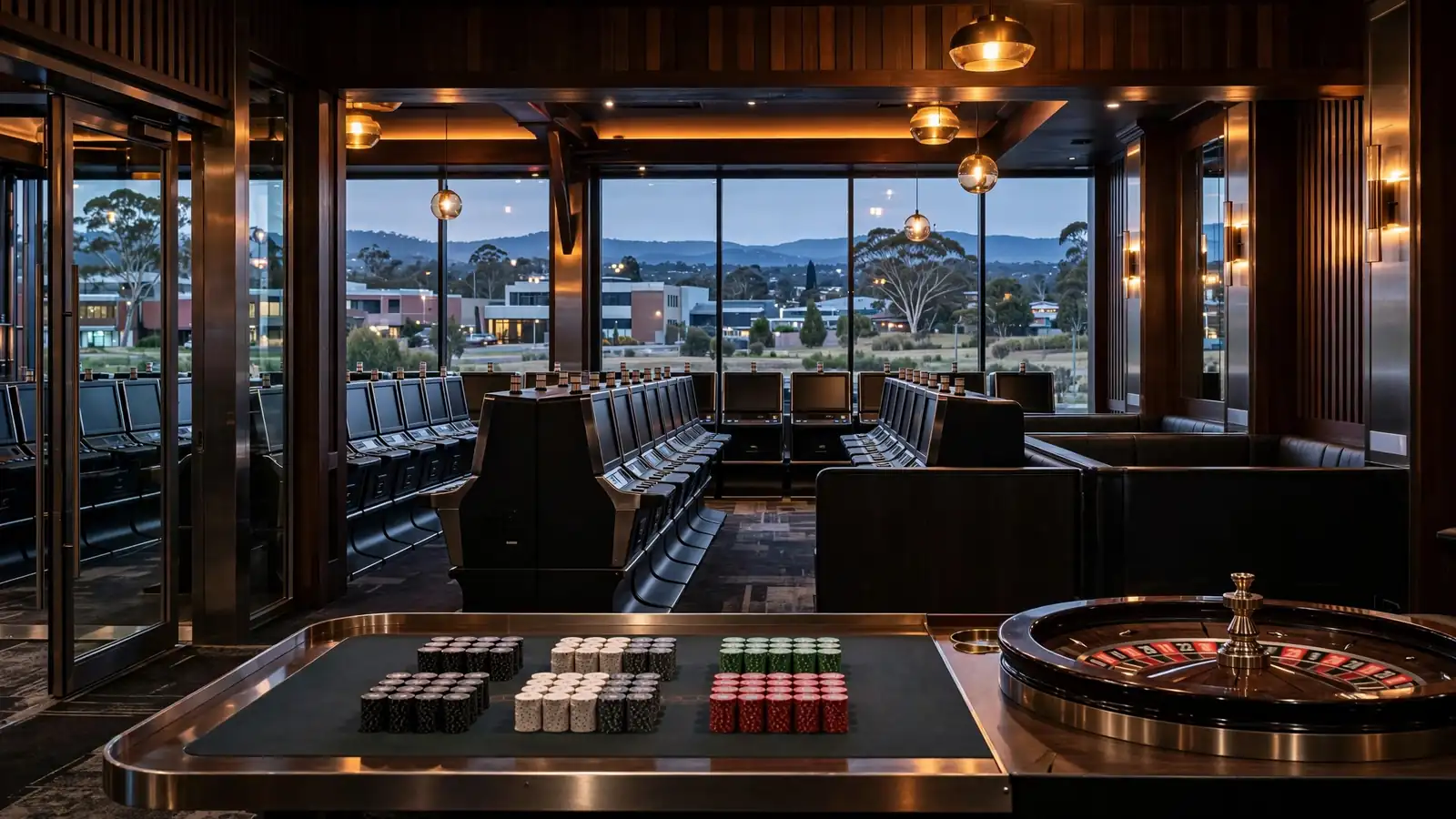
There is no single opening time for pokies across Canberra. Access depends on the individual venue and its operating schedule, so a city-wide answer cannot establish whether a particular room is open at a particular moment. “Open now” is useful only when it refers to the venue being considered and reflects its current hours.
I separate two questions that are often collapsed into one: whether a venue is open, and whether its gaming area is available. A business may have general opening hours, but those hours do not, by themselves, establish when pokies can be used. The relevant detail is the venue’s own information about access to its gaming area. A broad listing or a general description of Canberra nightlife cannot settle that point.
That distinction matters most when timing is the reason for the search. Someone looking for an early start or a late finish needs a specific operating detail, not a general claim that a venue stays open late or opens early. Without a current, venue-specific schedule, assigning an opening time to Canberra pokies would be guesswork. I would not treat an assumed pattern as confirmation.
The phrase “open now” also has a short shelf life. It describes a point in time, not a permanent feature of a venue. Hours can be presented differently across business listings, venue pages and other notices, and a page that appears current may not answer whether gaming access matches the broader venue schedule. The practical check is to look for information published by the venue itself and make sure it addresses the relevant area, rather than relying on a city-wide summary.
Even a clear schedule has limits. It describes expected access; it is not a guarantee that every part of a venue is available at every moment. The useful question is therefore narrow: does the venue state that its gaming area is operating at the time in question? If the information gives only general business hours, the distinction remains unresolved. That is a small wording difference with a real effect on the answer.
 Pokies in Geelong: venue hours and what’s confirmedLearn why a venue’s listed opening hours do not confirm that its gaming room is operating, and how to check venue information…
 Big Red Pokies Online in Australia: Free Play ExplainedLearn what “free” Big Red play does—and does not—tell you about cash stakes, game settings and offer conditions; the label alone settles…
I have seen how “open” can do too much work in promotional language. It may mean the doors are open, the bar is serving, or the venue is operating in some capacity. It does not automatically mean that pokies are available. A clean hours check keeps those meanings separate and does not turn a general opening claim into a promise of gaming access.
The same care applies to early and late searches. A request for pokies before the usual daytime routine, or after an evening out, cannot be answered responsibly with a guessed timetable. The opening time has to belong to a named venue and to the relevant service within it. Without that connection, a precise answer would sound more useful than it is.
This is a practical limitation, not a ranking of venues. A list of places described as open would still need a time-specific basis and a clear explanation of what “open” covers. Otherwise, it can send people toward a door that is open while the gaming area is not, or imply access that the venue has not stated. The wording should not outrun the evidence.
Opening hours also say nothing about how a pokie behaves or what it may return. Those are separate questions from whether a venue is operating, and combining them can make a simple hours check misleading. A schedule cannot establish a payout percentage, and a payout claim cannot establish that a gaming area is accessible at a given time.
For a straightforward check, the order is simple: identify the venue, find its own current hours, and confirm that the information specifically covers gaming access. If those details do not line up, the honest answer is that the time remains uncertain—not that Canberra has a general opening time. No shortcut.
Choosing pokies for Canberra means looking beyond game titles to the details available about each operator. This list offers a concise starting point for checking licensing and practical payment information.
Neospin
Neospin is listed with a Curacao Gaming Control Board licence, OGL/2023/176/0095, held by Hollycorn N.V.
Ricky Casino
Ricky Casino lists crypto payouts as taking under an hour and PayID payouts as taking 1–3 business days. Its minimum deposit is A$20, or A$30 to qualify for the bonus.
7Bit Casino
7Bit Casino is operated by Dama N.V. and is listed as licensed in Curacao.
Rollero Casino
Rollero Casino is listed with a Curacao Gaming Control Board licence, OGL/2023/176/0095, held by Hollycorn N.V.
Lucky Dreams
Lucky Dreams is listed as licensed in Curacao. Its minimum deposit via POLi is A$20.
LevelUp Casino
LevelUp Casino is operated by Dama N.V. and lists a Curacao eGaming licence, OGL/2023/174/0082. Its minimum deposit is A$15.
DragonSlots Casino
DragonSlots Casino is listed as licensed by the Curacao Gaming Authority, with Jumpman Gaming Ltd as operator.
House of Pokies
House of Pokies lists an international iGaming licence, though the jurisdiction is not named in the source. PayID payouts are listed at 1–24 hours; the minimum deposit is A$30, or A$10 when using PayID.
Roby Casino
Roby Casino is operated by Roby Games Ltd and is listed as licensed by Curacao eGaming.
JustCasino
JustCasino is listed as licensed by the Curacao Gaming Control Board.
“Best paying” sounds like a property a pokie carries with it, like its name or theme. It is not. A return setting describes a game configuration, and it does not establish what a particular machine in Canberra is set to, how it will perform over a short session, or what any individual will get back.
A specialist review reports that some game providers let casinos choose between multiple return-to-player (RTP) settings for the same pokie. In practice, that means a game with the same title may be configured differently at different casinos. The title alone therefore cannot confirm the setting in use. Nor does a general description of a game prove that a Canberra venue has it, or that it is available at a particular setting.
That distinction is easy to lose in promotional language. “High return” may sound like a promise about the next session. It is not. RTP is a statistical measure associated with a configured game, not a forecast for a particular player or a guarantee that a chosen machine will return a stated amount. Without reliable information about the actual setting, attaching a precise return to a local machine would be guesswork.
Attention: RTP is a statistical measure of a configured game, not a guarantee of a payout for a particular player or session.
The setting is only one part of what a headline claim leaves out. A percentage, when one is published, needs context: which configuration it describes, where that configuration applies, and whether the information is current. A figure attached to a game title may not answer those questions. A list labelled the best-paying pokies in Canberra would imply that machines had been compared on a sound, local basis. That cannot be concluded from a game name or a general RTP description.
The other important mechanic is randomness. Each pokie spin is an independent event determined by a Random Number Generator. A previous result does not make a win due, and a run of losses does not alter the next spin’s odds. The machine does not remember that it has paid recently, nor does a quiet spell mean that a payout is about to arrive.
This is where “best paying” claims can be misunderstood. A return setting concerns outcomes across play at a statistical level; it does not describe the sequence that one person will see. In a short session, results can vary substantially from any long-run measure. A player may receive less than expected, more than expected, or nothing back during that session. None of those outcomes, by itself, proves that the setting is different.
I have seen how quickly a number becomes a sales line once it is detached from its conditions. The number looks precise, so the claim feels settled. But precision in a description does not establish that the setting applies to a specific machine, and it does not remove the uncertainty of each spin. A headline is not a test result. A title is not a setting.
For someone comparing pokies in Canberra, the honest conclusion is narrow: the same game may have different RTP configurations at different casinos, while each spin remains an independent random event. Those points explain why a universal local ranking cannot be inferred from game names or broad claims about returns. They do not identify a best machine, a best venue, or a dependable way to predict a payout.
The same caution applies whether the question concerns the city centre or Canberra more broadly. A search for the best-paying option does not supply evidence about a machine’s configuration. Even if a return figure is available for a particular game somewhere, it should not be carried across to another casino without confirmation that the same setting is in use. Without that link, the comparison is incomplete.
That is the practical limit of the phrase. It can point toward a published game setting, provided the setting and its context are clear. It cannot promise what happens in an individual session, prove what is configured on a local machine, or turn a random result into a predictable one.
No ranking follows.
The legal distinction is between the company providing an online pokie service and the person who might use it. Under the Interactive Gambling Act 2001, an operator cannot lawfully offer real-money online casino games to people in Australia without a domestic licence. No Australian online-casino licences have been issued. In practical terms, there is no locally licensed online casino for Canberra residents.
That rule is directed at operators, not individual players. The Act does not make a player criminally liable simply for accessing an offshore site that accepts Australian customers. That distinction matters, but it is not a sign that an offshore service is approved, locally supervised or safe to rely on. The legal restriction on providing the service remains, while Australian authorities can block access to illegal offshore gambling sites.
 Pokies in Perth: hours, payouts and venue claimsLearn why venue schedules do not confirm live gaming access, and why Perth-wide payout, airport and CBD claims require careful checking.
 Adelaide Casino: Accommodation, Dining and MoreExplore hotel offers, room locations and booking terms, alongside poker, dining and events. Casino branding alone does not confirm who operates the…
I have seen the wording of a promotion do a lot of work. “Available to Australians” describes what an operator claims it will accept; it does not establish that the operator has permission to provide the service in Australia. A welcome offer, a no-deposit offer or a large maximum stake does not change that legal position. Nor does the fact that a site loads, takes a registration or processes a payment.
The same distinction applies when a search combines Canberra with online play, real-money stakes or a bonus. A local-sounding label does not make an offshore website a Canberra venue, and a service accessible from a phone is not thereby licensed in Australia. A player may not face a penalty under the operator-focused law, yet the service itself remains outside the domestic licensing system. Those are separate points.
The consequences become concrete if a dispute arises. An Australian player who is refused a withdrawal by an offshore casino has no legal recourse in Australia against that operator for the unpaid winnings. There is no Australian online-casino regulator supervising such a site as a locally licensed casino, and no domestic licence that can be used as the basis for local consumer protection in that dispute. The absence of player liability should not be confused with a practical way to recover money.
This is why phrases such as “Australian players welcome” or “trusted casino” need to be read as marketing claims, not regulatory findings. A site might state that it holds a foreign licence, but that does not create an Australian licence or change the rules applying to services offered here. Likewise, an operator’s willingness to accept an account or deposit does not guarantee that a withdrawal will be honoured.
No Legal Recourse
Australian players who are refused withdrawals by offshore casinos have no local legal recourse to compel payment from the operator.
Access itself is not proof of legality. The Australian Communications and Media Authority enforces the Interactive Gambling Act and blocks illegal offshore gambling sites; internet service providers must comply with its blocklist. A site may be inaccessible, or access may change, without changing the legal status of the service. A temporary technical route around a block would not turn an offshore casino into a licensed Australian operator.
The practical reading is plain: the law prohibits the unlicensed supply of real-money online pokies to people in Australia, while it does not impose that same operator rule on individual players. But when an offshore site withholds winnings, Australian players lack local legal recourse to compel payment. That is the risk behind a seemingly simple online offer. No local safety net.
A request for pokies near Canberra Airport is a location question, not evidence that machines are inside the airport or at a particular nearby venue. The same distinction applies to searches centred on the Canberra CBD, North Canberra or “near me”. A map result, a venue name or a broad area label would need to be checked against reliable, current venue information before it could support a claim that pokies are present there.
I have seen how quickly a location description can acquire more certainty than the underlying listing deserves. A result may identify a business without establishing whether it has gaming machines; an old directory entry may remain visible after details change. A pin on a map is not a machine inventory. Nor does proximity in a search result establish a practical journey or confirm that a venue is open. Those are separate checks, and they should not be bundled into one confident-sounding answer.
For the airport, the useful distinction is between a search area and a verified site. The phrase “at Canberra Airport” implies a specific facility; “near the airport” could refer to a wider area. Without a confirmed address and venue-level information, neither wording supports a definite claim about where pokies can be found. The same standard applies to a CBD search: a central location is not itself proof of a club, hotel or other venue with machines.
“Near me” is particularly dependent on the searcher’s location settings. It can return results based on an approximate device location, a chosen map area or a previous search. That ordering may look authoritative while saying little about whether a listed business has pokies. I would treat the distance and category labels as prompts for further checking, not as confirmation. No leap from a nearby marker to a machine floor.
There is also a possible place-name ambiguity in a search that pairs Canberra with Victoria. Search wording alone does not establish which location is intended, or whether a result belongs to the Canberra being asked about. A listing should be tied to an actual address before it is treated as local. A familiar place name can travel farther than the venue details attached to it.
For a useful location check, the core evidence is straightforward: a clearly identified venue, an address that matches the intended area, and current information from the venue or an authoritative listing that specifically confirms gaming machines. If any part is absent, the responsible description is that the location has not been established—not that the machines are there or that they are not. Exact distances, routes and nearby options should likewise be left unstated unless they have been checked.
This geographic question is separate from how venues are required to manage gaming areas. Those obligations do not identify which Canberra locations have machines. A rule applying to a category of venue cannot be used as a substitute for a local listing. Location first; venue conditions separately.
A venue’s machine count can determine whether an additional staffing requirement applies. A report by regionriverina.com.au says that, from 1 July, venues operating more than 20 gaming machines must have a dedicated responsible gambling officer (RGO) on duty for as long as those machines are running. That is a specific operating condition, not a general description of every pokies venue.
The distinction matters when assessing a Canberra venue. A search for the “best” place does not establish how many machines a particular venue has, whether the threshold applies there, or whether an RGO is present during a visit. The rule described in the report should not be turned into a claim about an individual Canberra venue without venue-level information. A headline requirement is not proof of local practice.
The same report describes a one-month grace period for venues to take down signage and put the responsible-gambling officer arrangements in place. A transition period is practical: a venue may need time to change its procedures and remove material that no longer meets the requirements. It is not a permanent exemption, and it does not establish that a particular venue has completed the changes.
Signage has to be considered by where it can be seen, not just by what it says. Directions to gaming lounges should be removed when they are within sight of ATMs or EFTPOS terminals. Directions to ATMs should be removed when they are visible from gaming machines. That makes placement part of the control: a sign can create the wrong prompt even if its wording appears ordinary. The view from the relevant equipment matters.
The report also says venues will have to maintain a gambling incident register. It is intended to record occurrences, including situations in which a patron’s behaviour suggests they may be at risk of gambling harm or already affected by it. The register turns staff observations into a record rather than leaving them as an informal exchange on the floor. It does not, by itself, show how a venue responds to an incident or whether a particular event has been recorded.
From the counter side, a written requirement and its day-to-day execution are different things. Staffing, signage and incident records are separate checks; one cannot stand in for the others. An RGO on duty does not prove that every sign is correctly placed, and a register does not demonstrate that a concern was handled well. Compliance is operational. The detail is in the shift.
“Open all night” sounds like a simple operating detail. In practice, it is a claim about a particular venue, its current hours and whether its pokies are available throughout that period. A general description or a result labelled “open now” does not establish all three. Nor does a search for Canberra venues operating around the clock confirm that any one of them provides uninterrupted access.
I have seen how easily those distinctions disappear in a listing. A venue may have one set of public opening hours and separate conditions for access to particular facilities. A result can also be out of date, or describe a past schedule as though it still applies. The phrase “24-hour pokies” is not a timetable. It is a claim that needs current, venue-specific confirmation.
That matters especially late at night. A person making a trip on the assumption that machines will be available may find the information says less than it appears to. Without confirmed local operating details, it would be misleading to name a Canberra venue as open all night or to suggest that its machines can be used at any hour. No guesswork. No implied guarantee.
There is a separate issue that should not be folded into an hours check. Responsible-gambling tools concern limits and access to play; they do not tell anyone when a venue is open. Deposit limits, loss limits and session time limits can help set boundaries, while self-exclusion is an option to restrict access. Their availability does not prove round-the-clock operation, and a venue’s hours do not show which tools it offers.
The distinction is practical, not technical. Opening times answer when a venue or facility is available. Responsible-gambling measures address how participation can be limited or stopped. Treating one as evidence of the other creates a false sense of certainty: a late-hours listing is not proof of safeguards, and the existence of safeguards is not proof of late access.
For anyone assessing a claim of all-night availability, the useful evidence is a current statement from the venue that expressly covers the relevant facility and hours. A broad directory entry or an unqualified “open now” label is weaker, particularly when the decision depends on access late in the day. Until such a statement is confirmed, the sound conclusion is limited: Canberra round-the-clock access has not been established. A search phrase cannot fill that gap.
A Crown-branded casino should not be treated as a Canberra venue simply because the two names appear together. The wording does not establish a local property, a pokies room, or machines available there. I would not describe Crown pokies as being in Canberra without a confirmed venue to attach them to.
That distinction matters because a familiar brand name can make an unverified local claim sound settled. A venue’s name, location and facilities are separate details; one does not prove the others. So a description of a “Crown room” in Canberra, or of particular pokies there, would go beyond what can responsibly be stated.
The same restraint applies to claims about the “best” pokies room. That label suggests a comparison based on known venues and some stated measure of quality. Without confirmed local rooms and comparable information, it is not a useful verdict. It is an advertising word unless the basis for the comparison is clear.
Maximum cash payouts need similar care. There is no single figure that can be assigned to Canberra pokies as a whole on the basis of a brand association. A payout claim needs to identify what it applies to and the terms governing it. Without those particulars, quoting a ceiling would give a false impression of a confirmed local rule.
There is also a separate meaning of “Crown casino” in online gambling discussions. In Australia, no online casino holds a domestic licence. A brand association does not change that position, and it does not establish that an online service is authorised to offer real-money casino games to people in Australia. The legality of a service and the existence of a physical venue are different questions.
That separation is easy to lose in a short description. A physical venue claim is about a place and its facilities. An online claim is about a service operating under Australian law. Neither can be inferred from a name alone. No shortcut.
A club in central Canberra may sound like a straightforward answer to a search for pokies, but a venue label is not a reliable description of what is available inside. It does not establish that the club has pokies, how many it has, whether they are operating, or what conditions apply on the day. Those are separate, venue-level details.
I learned to treat “best” as an advertising word until the basis for it is clear. In a CBD context, the label could refer to location, atmosphere, food, opening times or machine choice; none of those meanings is interchangeable.
That distinction matters because broad descriptions can travel further than the information behind them. A club may be mentioned in a directory or an old post, but that alone does not settle whether it currently offers pokies or what its arrangements are. A venue’s own current information is a more direct place to establish basic details, though it should not be mistaken for an independent comparison.
Self-exclusion is also a venue-specific question, not something that can be inferred from a club’s CBD location or from the presence of pokies generally. Deposit limits, loss limits, session time limits and self-exclusion are recognised responsible-gambling tools, but the availability and operation of a particular option should not be assumed for an unnamed venue.
BetStop has a narrower scope: it applies to Australian-licensed operators and does not bind offshore sites. It should not be treated as a universal exclusion mechanism for every gambling service. For club-based pokies, the relevant arrangements are those applying at the venue; a general reference to self-exclusion does not establish which process a particular club uses.
I have seen how a neat listing can make an uncertain detail look settled. It is better to keep the categories separate: a CBD address does not prove machine availability, and a machine listing does not establish a club’s self-exclusion arrangements. No ranking follows from a location alone.
A request for pokies in Parkes alongside Canberra does not, by itself, establish that a particular venue or machine is located there. Place names can be used loosely, and a shared search phrase is not a venue record. I would treat the two names as a prompt to confirm the intended area, not as evidence that a local listing exists.
That distinction matters when a page uses terms such as “best pokies”. The phrase can sound like a comparison of identifiable machines or venues, but without location-specific details it cannot support a Parkes shortlist. A general description of pokies says nothing about what is installed at a particular address, whether a venue has machines, or what conditions apply there. Those are separate claims, and each needs evidence tied to the venue.
I have seen broad labels do too much work: a heading suggests a local selection, while the text underneath only describes pokies in general. That gap is easy to miss. A reliable local account would need to connect the place name to a specific venue and substantiate any details attributed to it. Without that connection, naming venues, counting machines or assigning a ranking would turn an assumption into apparent fact.
The same caution applies to claims carried over from other places. A machine’s name or general reputation cannot establish its presence in Parkes, and information about a venue elsewhere cannot stand in for local evidence. Nor does the wording “Canberra pokies” prove that every nearby place mentioned in a search belongs to one confirmed local list.
A careful answer is narrower: Parkes can be discussed as a location someone may have in mind, but no venue-level recommendation follows from the place name alone. The distinction is plain. Location first; claims second.
“Cashless” describes how a payment is made, not what a venue offers. PayID is part of Australia’s New Payments Platform (NPP): it links a payment to an alias such as an email address, mobile number or ABN, rather than requiring the sender to enter bank account details. The NPP is supported by all major banks and uses end-to-end encryption.
That explains the payment rail, not whether a particular Canberra venue accepts PayID or any other cashless method. A payment option has to be confirmed at the venue; the existence of the NPP does not turn it into a venue feature. Nor does PayID support establish that a gambling service is licensed, fair or transparent about game returns. Those are separate questions.
I have seen payment labels do more work in advertising than they can support. “Cashless” can sound like a statement about the whole experience, when it may refer only to the way money moves. The distinction matters. Payment infrastructure is not evidence about the machines, the venue’s rules or the terms attached to a transaction.
Newcastle and Canberra are separate locations. A reference to pokies in Newcastle does not identify a Canberra venue, and a Canberra payment question does not establish anything about Newcastle. Treating the two places as one market would blur a basic distinction: location tells where a service is, while PayID describes one way a transfer can be addressed.
The practical point is narrow. PayID is an alias layer on the NPP, not a directory of cashless venues. Its technical availability says nothing by itself about which local businesses accept it. A payment label is not a venue listing.
Australian companies cannot legally offer real-money online pokies without a domestic licence, and none have been issued. The law targets operators, not players, so Australians can play on offshore sites that accept them, but they have no legal recourse in Australia if a site withholds winnings.
You must be 18 or older to gamble online in Australia.
It is the total amount you must bet before bonus winnings can be withdrawn. For example, a $500 bonus with a 40x requirement means $20,000 in bets.