The Interactive Gambling Act addresses providers, while payment availability, game access and withdrawal methods remain separate questions.
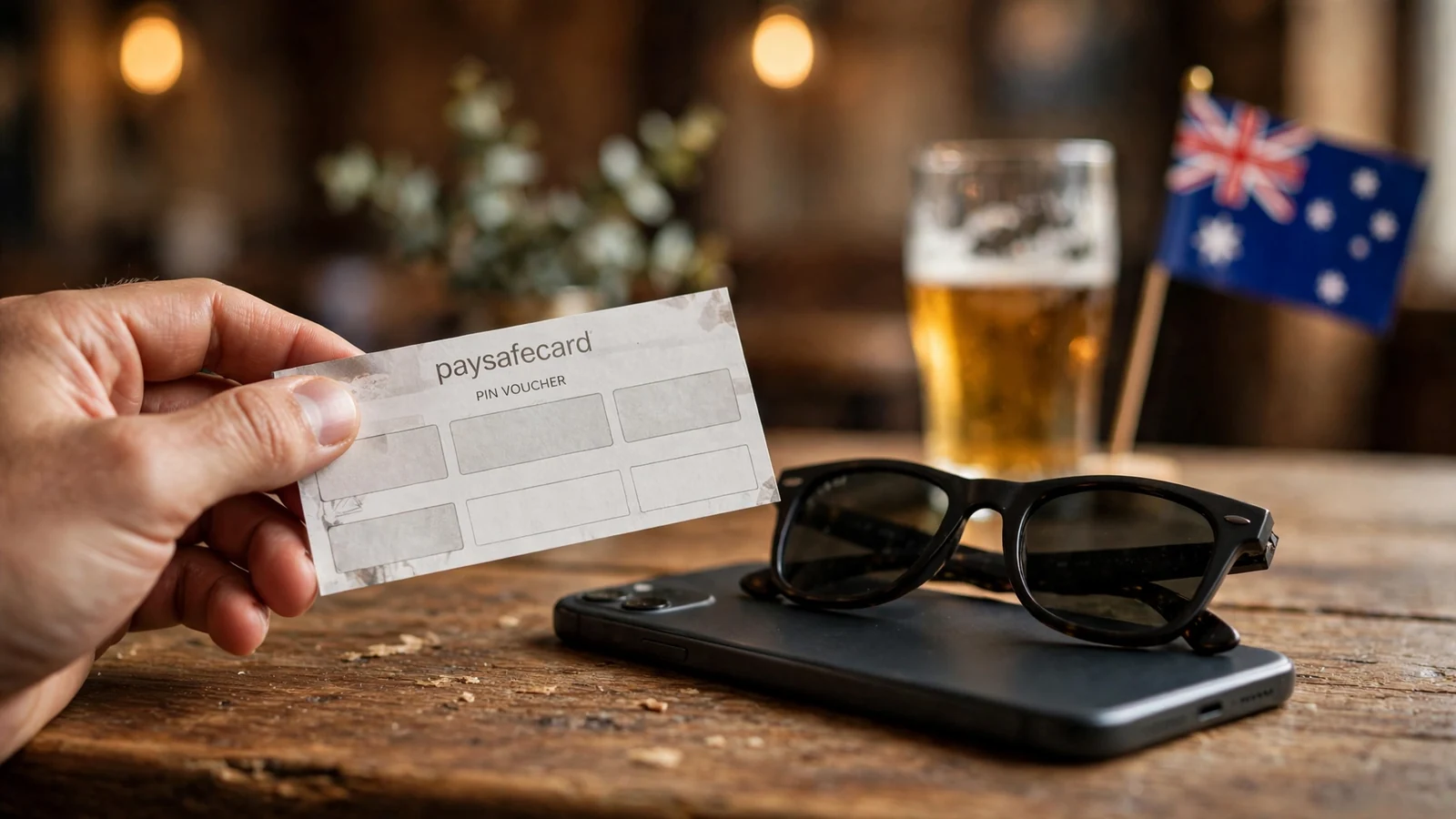
The legal distinction in Australia begins with who provides the service. Under the Interactive Gambling Act 2001, an operator cannot lawfully offer real-money online casino games to people physically located in Australia. That category includes online pokies as well as table games such as blackjack, roulette and poker. A website’s overseas location or payment options do not change the rule applying to the operator’s service to someone in Australia.
The Act is directed at providers, not framed as a general offence for a player who uses an offshore site. It does not explicitly criminalise players for accessing those services. That distinction matters, but it should not be mistaken for approval, local regulation or a guarantee that an offshore operator will be available. The legal position of the provider and the position of the person using the site are different questions.
In practice, access is also shaped by enforcement. The Australian Communications and Media Authority (ACMA) is responsible for enforcing the Act. Its role is not simply to publish the rule: the regulator can act against prohibited services, and offshore casino sites may be blocked for Australian users. A page loading at one point does not establish that the service is lawful to offer in Australia or that access will remain available. Availability and legality are not the same thing.
For Australian players looking for casino sites that accept paysafecard in 2026, this list is a starting point for checking the available options. Confirm paysafecard availability directly with each casino, as the details here do not specify its payment methods.
Neospin
Neospin is listed with a Curacao Gaming Control Board licence, OGL/2023/176/0095, held by Hollycorn N.V.
Ricky Casino
Ricky Casino lists crypto payouts in under an hour and PayID payouts in 1–3 business days. Its minimum deposit is A$20, or A$30 to qualify for the bonus.
7Bit Casino
7Bit Casino is operated by Dama N.V. and is listed as licensed in Curacao.
Rollero Casino
Rollero Casino is listed with a Curacao Gaming Control Board licence, OGL/2023/176/0095, held by Hollycorn N.V.
Lucky Dreams
Lucky Dreams is listed as licensed in Curacao. Its minimum deposit via POLi is A$20.
LevelUp Casino
LevelUp Casino is operated by Dama N.V. and is listed with a Curacao eGaming licence, OGL/2023/174/0082. Its minimum deposit is A$15.
DragonSlots Casino
DragonSlots Casino is listed as licensed by the Curacao Gaming Authority, with Jumpman Gaming Ltd as the operator.
House of Pokies
House of Pokies lists PayID payouts of 1–24 hours and a minimum deposit of A$30, with PayID deposits from A$10. Its source describes the licence as international but does not name the jurisdiction.
Roby Casino
Roby Casino is listed as licensed by Curacao eGaming and operated by Roby Games Ltd.
JustCasino
JustCasino is listed with a Curacao Gaming Control Board licence.
This is where search phrases about Australian online casinos accepting Paysafecard can blur two separate ideas. “Australian” may describe the intended audience or the person searching, rather than an operator licensed and regulated under an Australian online-casino framework. A payment method does not create that framework. Nor does a site become lawful to offer real-money casino games to Australians because it accepts a familiar payment product, uses Australian currency, or presents its services in a way that appears local.
I have seen how checkout language can make a transaction feel ordinary: a cashier presents a method, the user selects it, and the interface treats the payment as one step in a routine account flow. That commercial design does not determine the legal status of the underlying gambling service. The payment layer and the gaming service sit alongside one another, but the former cannot authorise the latter. No shortcut there.
The same separation applies to offshore operators. A business may be established outside Australia and may claim permission from another jurisdiction. That does not displace the Australian prohibition on providing online casino games to people physically in Australia. A foreign authorisation is not an Australian approval, and it does not give an offshore player the protections that apply under Australian consumer law. Australian consumer law does not protect players using offshore casinos.
 Skrill at Australian Casino Sites: What Can Be VerifiedLearn why familiar Australian payment habits do not confirm casino support, and what can—and cannot—be established about Skrill deposits and withdrawals.
 Casinos That Accept PayID in Australia: What Is VerifiedLearn why a PayID logo does not confirm Australian customer access, casino transaction support or availability in the cashier.
That lack of protection has practical weight. If an offshore site disputes an account decision, delays a payment, changes its terms or stops operating, a player cannot assume that Australian consumer-law remedies will apply to the relationship. A dispute may cross borders and involve a business outside the reach of ordinary local processes. The issue is not merely which payment method appears in a cashier; it is which entity is responsible and what remedies are realistically available under the applicable arrangements.
The Act also sets serious consequences for providers that breach it. The maximum daily penalty is $360,000 for an individual and $1.8 million for a body corporate. Those figures concern violations by providers; they should not be read as a penalty imposed on a player simply for using an offshore casino. The distinction is important because legal warnings often compress operator conduct and player conduct into one alarming sentence.
For a paysafecard-related search, then, the central Australian rule is not a ranking of payment options. It is that offering real-money online casino games to people in Australia is prohibited under the Interactive Gambling Act, while the Act does not explicitly criminalise the player for using an offshore site. ACMA is the regulator responsible for enforcement, and blocking measures can affect access. None of those points turns offshore play into a protected local service.
Legal Risk
Under the Interactive Gambling Act 2001, providing real-money online casino games to people in Australia is prohibited. Australian consumer law does not protect players using offshore casinos.
The wording “Australian casino” can sound like a statement about legal status when it may only be a label aimed at Australian customers. I treat those meanings separately. A site’s audience, its payment menu and its legal position are not interchangeable facts. A payment logo cannot settle the question of whether the operator may provide the gambling service in Australia, and it cannot supply the consumer protections that an offshore relationship lacks.
That is the boundary worth keeping clear: the prohibition falls on the operator offering the service, the player position is not the same offence, and access can still be restricted through enforcement. Familiar payment language does not alter that boundary. Just the legal position.
A Paysafecard deposit cannot be described in useful financial terms without a specific operator’s current cashier conditions. The payment label alone does not establish the amount accepted, whether a fee applies, or whether a deposit can be completed. Those details belong to the transaction terms, not to the name of the method.
That distinction matters when a search is framed around a small deposit, such as a $10 Paysafecard payment. The figure in the search phrase is not evidence that a casino permits that amount. A minimum can be set by an operator, vary by payment route, or be affected by account conditions. Without a current, operator-specific term, stating a minimum would turn a search target into an unsupported promise.
The same applies to fees. A deposit may involve conditions set by more than one party, and a cashier display may not tell the whole story if separate terms apply. A claim that a Paysafecard deposit is free therefore needs a clear basis: the relevant operator, the applicable transaction, and the terms in force when the payment is made. No general statement about the method can settle those details for every site.
There is a practical difference between a payment method being familiar and a particular transaction being available. Even where a cashier displays a method, the displayed option does not by itself explain the permitted amount or any restrictions attached to the account. A deposit process can also depend on the operator’s conditions. The payment name is only one part of the transaction.
I have seen payment copy compress all of this into a neat label: “instant” or “easy.” What it leaves out is the part that determines whether a deposit can proceed on the stated terms. The label is not the condition.
For Australian readers, claims about the best casino sites that accept Paysafecard deposits need especially careful handling. A ranking implies that the listed operators have been checked against a consistent set of current criteria.
A useful deposit comparison would need to identify what is being compared: the operator’s stated minimum, any fee, the currency and account conditions, and whether the terms refer specifically to Paysafecard. If those elements are not tied to a current operator statement, a figure copied into a review can quickly become detached from the transaction it was supposed to describe. That is how an apparently precise deposit guide can mislead without containing an obviously dramatic claim.
The wording around “casino deposit via Paysafecard” can also blur two different questions: whether a payment option is mentioned in general, and whether an identified operator presently permits that method for a particular account. The former is a broad statement; the latter is a transaction condition. Neither an old description nor a generic payment logo establishes the details of a current deposit.
A careful account of Paysafecard deposit terms therefore avoids filling in blanks with familiar industry patterns. It does not infer a minimum from the amount a user intends to deposit, assume fees are absent because none are highlighted, or treat a general reference to the method as proof of a live option. Each of those shortcuts produces a tidy answer by adding information that the claim itself does not establish.
This is not a technicality. Deposit conditions determine the amount that may be accepted and the cost attached to the transaction. When those conditions cannot be connected to an identified operator and a current statement, a specific figure or fee would create false certainty.
The sound distinction is narrow but important: a search for a Paysafecard casino deposit describes what someone hopes to find; it does not confirm a site, a minimum, or a fee. Deposit claims should stand on the operator’s stated terms, not on the confidence of a headline. No guesswork.
“Instant” is a narrow description, not a promise about the whole payment cycle. In a cashier, it may refer to how quickly a deposit is submitted or credited. A withdrawal is a separate transaction, with its own checks, approval steps and payment route. Treating the two as interchangeable is one of the easiest ways to misread a payment claim.
 Casino Sites That Accept BPAY in AustraliaSee why familiar bank-linked payments do not confirm BPAY availability, and how documented card details differ from a casino cashier's actual options.
 Casinos That Accept Visa in Australia: What to KnowLearn what Visa acceptance can and cannot show: the Interactive Gambling Act 2001 prohibits operators from providing real-money online casino games in…
I have seen payment wording do a lot of work with very little detail. “Instant deposits” sounds like a statement about the account as a whole, but it says nothing by itself about when a withdrawal is approved or reaches its destination. The stages are different. The funds entering an account do not establish the speed of funds leaving it.
That distinction matters when Paysafecard is named. No dependable processing time can be assigned to a Paysafecard withdrawal on the basis of a general claim about instant payments. Nor does a description of a rapid deposit supply a withdrawal estimate. “Instant” without a clearly stated transaction stage is incomplete.
A withdrawal can depend on the operator’s review of the request and completion of customer checks. Online casinos may require identity and other customer information to be assessed before financial transactions. That check is not the same thing as moving money through a payment method, and the fact that a deposit was accepted does not show that every later review has been completed.
The stages can therefore be understood separately: a customer requests a payout; the operator reviews it; the payment is then sent through an available route. A delay at one stage does not reveal how long another stage will take. Without operator-specific terms that distinguish approval from transfer, a single speed label cannot describe the full process.
This is where “fast withdrawals” can become slippery wording. It may refer to internal approval, the time after approval, or an overall period. Those are not equivalent measures. If the wording does not specify what is being timed, it is not a usable payout estimate. A tidy label. No clock attached.
A payout involves separate stages: the customer request, the operator's review and customer checks, and the final transfer through a payment route.
A deposit and a withdrawal move in opposite directions, but that does not make them mirror transactions. A payment method may be available for funding an account without being available for receiving money back. Even where the same method is mentioned for both, the deposit description does not establish withdrawal eligibility or timing.
For Paysafecard, claims about an instant deposit cannot be carried across to a casino withdrawal. The method’s name does not settle how an operator handles a payout, whether the route is available, or how long the complete process takes. Those details require terms that address withdrawals specifically. A general speed claim leaves them open.
The same caution applies to search phrases that combine “instant” with Paysafecard and a casino payout. The wording joins several ideas, but each one needs separate support: the operator’s acceptance of the method, whether it can be used for withdrawals, and the time involved. One part cannot prove the others.
A meaningful payout estimate should identify the stage it covers and the conditions attached to it. It should distinguish an operator’s review from the transfer itself, and it should make clear whether the stated period begins when a request is submitted or after approval. Without those distinctions, “instant” is a slogan, not a complete description.
I would not treat an instant-payment label as evidence of instant Paysafecard withdrawals in Australia. It establishes no payout time on its own. The practical point is simple: deposit speed and withdrawal speed are separate questions, and a claim about one cannot answer the other.
 Casino sites that accept Amex in Australia: how it worksLearn why Amex availability varies by casino, what to check in the cashier, and why deposits and withdrawals may follow different routes.
 CashToCode Casinos in Australia: What’s VerifiedLearn what the available evidence says about CashToCode deposits, casino acceptance and payouts, and why ACMA enforcement matters in Australia.
A Paysafecard logo beside a payment heading is a claim about branding, not proof that a particular transaction is available to people in Australia. The distinction matters. A logo can appear in a general list of payment brands even when the operator’s cashier does not offer that method for a particular country, account, or transaction. The visual is easy to publish; the operational condition is what needs substantiation.
In payment operations, I learned to separate three things that marketing often compresses into one phrase: a method being mentioned, being enabled in a cashier, and being available to a particular customer. Those are not interchangeable. “We accept Paysafecard” may describe an overall product catalogue or a market in which the operator operates. It does not, by itself, establish local availability.
A stronger claim would be tied to a named operator and a current, accessible payment page that clearly states the method applies to Australian accounts. Even then, the wording needs to be read closely. A payment provider may be listed among supported methods without being available for every account, or a cashier may display options that depend on account details and location. A general logo cannot answer those questions.
The same applies to labels such as “best” or “top.” They can sound like an assessment of payment access, but they do not show how the comparison was made or whether the payment method was checked for the Australian market. A ranking is not a transaction record. Nor does a list of casino names establish that Paysafecard is available at each one.
Attention: A payment logo is a branding claim and does not guarantee that a method is enabled for a particular country, account, or transaction.
There is a further distinction between a commercial claim and the legal position. Under the Interactive Gambling Act 2001, operators cannot provide real-money online casino games to people physically located in Australia. A payment mark does not change that rule or make an offshore service locally authorised. The Australian Communications and Media Authority is responsible for enforcing the Act, and Australian consumer law does not protect players using offshore casinos. A payment logo cannot supply protections that are absent.
That is why a broad claim should be treated as limited in scope. It may indicate that Paysafecard is part of an operator’s wider payment vocabulary; it does not establish who can use it, where it is enabled, or whether the service can lawfully be offered to Australian residents. The gap between a logo and a working, permitted transaction is substantial.
I would not treat “casino sites that accept Paysafecard in Australia” as a verified category merely because the phrase appears in a banner, comparison table, or payment-method panel. To support that description, the evidence would need to be specific to the operator and the relevant Australian context, rather than borrowed from a generic page or an undated brand list. Without that connection, the claim remains broad.
The wording does less work than it appears to. “Accepts Paysafecard” may describe a brand relationship, a cashier option in another market, or an unqualified promotional statement. It should not be read as proof of Australian availability or lawful access. A logo is not a licence.
 EcoPayz for Australian Casino Sites: What to CheckLearn why an Australian-facing label or cashier logo does not confirm EcoPayz availability, transaction terms, or authorisation for online casino games.
 Casinos That Accept Neosurf in Australia: What to CheckLearn why a Neosurf mention does not verify an Australian casino payment option, and why a deposit claim cannot confirm a withdrawal…
A ranked list of Paysafecard casino options for Australia would imply that the named operators had been checked against the same standard.
That distinction matters. A ranking is not simply a collection of names. It suggests that each entry has been assessed on comparable evidence and that the order reflects meaningful differences. The label does not establish that an operator serves Australian residents, accepts the payment method, or offers terms that can be compared.
The same limit applies to lists of casino websites. Repeating names from an old review, a payment-method directory or a promotional page would not turn them into confirmed options. Those materials can describe a claim; they cannot, by themselves, establish that it remains accurate for a particular operator. Payment arrangements may change, and a list with no dated, operator-specific basis can become misleading while still looking current.
I have learned to treat a ranking as a conclusion, not a starting point. It needs a consistent yardstick, such as confirmed method availability and comparable published conditions. A polished table does not fix that. Nor does adding labels such as “top”, “recommended” or “trusted”. Those words carry weight only when the underlying comparison can be explained and checked.
It would also blur an important boundary between discussing a payment claim and directing people towards real-money casino services. In Australia, the legal position concerns operators providing online casino games to people in the country; offshore access does not remove the consumer risk. Australian consumer law does not protect players using offshore casinos.
“Best” is particularly slippery. It can mean broad payment access, clear terms, reliable service or some other measure, but a ranking has to say which one and show how each option was assessed. Without that, the word is an advertising shortcut. It tells little about the operator and even less about whether a payment claim applies to Australian customers.
The same caution applies to descriptions of a Paysafecard casino website. A page that mentions the method is not proof of current availability, and a general list does not establish a specific operator’s position.
No shortlist. No ranking.
A payment method and a game catalogue answer different questions. A cashier describes how an account might be funded; it does not establish which games an operator makes available, or whether any particular game can be played using a particular payment method. Treating those details as interchangeable turns a payment label into a claim it cannot support.
I have seen the distinction blurred in promotional wording. “Paysafecard games” can sound as though a game has a special connection to the payment service. In practice, the phrase may simply combine two separate parts of a casino’s presentation: its payment options and its game listings. Neither part proves anything about the other.
The same applies to searches for casino games with Paysafecard or a Paysafecard casino payment option. A payment logo does not show that the method applies to every account, every transaction or any specific game. Nor does a game appearing in a catalogue establish that Paysafecard can be used to fund play connected with it. Those are separate operational details, and broad labels do not settle them.
 Casino sites claiming to accept Osko in AustraliaLearn why search labels do not prove Osko acceptance, and what remains unverified about deposits, withdrawals and Australian availability.
 Casinos That Accept POLi in Australia: What to VerifyLearn why POLi’s association with bank-linked payments does not confirm casino acceptance, and how to distinguish general payment habits from cashier evidence.
That distinction matters particularly with claims about individual games. A page may group games by provider, category or format, while a cashier lists payment methods independently. Without a clear, current statement tying the two together, describing a title as a game “using Paysafecard” goes beyond what the payment information demonstrates.
There is also a separate Australian context. The Interactive Gambling Act 2001 prohibits operators from providing real-money online casino games to people in Australia. A payment method does not change that position or make a game lawful to offer. Australian consumer law also does not protect people who use offshore casinos.
The practical reading is narrow: payment information concerns payment access; game information concerns the games an operator presents. One is not evidence for the other. Keep the claims separate.
A deposit route and a withdrawal route are separate parts of a casino’s payment setup. A payment option appearing at the cashier for adding funds does not, by itself, mean it can also receive a payout. That distinction matters when considering Paysafecard: a claim about deposits cannot establish that a casino withdrawal to Paysafecard is available.
From the other side of the counter, this is where broad payment language often leaves an important condition unstated. The operator may accept a method for incoming transactions while directing withdrawals through a different route, or not offer that method for payouts at all. The cashier’s deposit options are not a reliable description of the withdrawal process.
Deposit routes and withdrawal routes are separate. An operator may accept a method for funding an account while directing payouts through a different route or not offering that method for withdrawals at all.
A withdrawal also involves checks that are separate from the payment choice. Online casinos commonly require identity and customer checks before handling financial transactions. Completing those checks does not, on its own, determine which method can receive a payout; that depends on the operator’s payment rules.
The wording “Paysafecard withdrawals” can therefore imply more than it proves. It may refer to a deposit method, a general payment claim, or a payout route. Those are not interchangeable. The practical point is simple: deposits and withdrawals need separate confirmation.
A casino with Paysafecard withdrawal support would need to state that the method is available for payouts, not merely display Paysafecard among deposit options. Any terms attached to that route would also need to be clear, including whether the same payment instrument must be used for deposits and withdrawals. Without operator-specific terms, a general claim cannot settle either point.
This distinction applies to searches for Paysafecard withdrawals at pokies sites in Australia as much as to any other online casino payment claim. The phrase alone does not establish that an operator offers the route, or that a payout can be sent through it. Payment labels are not payout rules.
There is also a broader Australian context: the Interactive Gambling Act 2001 prohibits operators from providing real-money online casino games to people in Australia, and ACMA enforces the Act. Australian consumer law does not protect people using offshore casinos. Payment-route claims do not change that position. No shortcut.
A statement that a casino accepts Paysafecard sounds definite, but it leaves the important part unresolved: which operator, for which customers, and under what conditions. In payment operations, a method name on a page is not the same thing as a confirmed route through the cashier. The wording may describe a general capability, an option available only in some regions, or a payment brand that is not currently enabled for a particular account.
That distinction matters in Australia. Naming a Paysafecard casino without operator-specific confirmation would turn a possibility into an apparent fact. That is how a tidy label becomes misleading.
The claim also leaves transaction terms open. It does not establish whether Paysafecard appears in the cashier for Australian customers, whether account or regional conditions apply, or what restrictions govern a payment. Those details belong to the operator’s own current terms and cashier, not to the payment logo or a general description. No assumption should be made from the method’s name alone.
I have seen the gap between a payment brand being mentioned and a usable option being available. The commercial copy tends to compress several separate checks into one word: “accepted.” In practice, the word says little until it is tied to a named operator and its specific conditions. A broad Paysafecard claim is therefore not evidence that a particular casino accepts Paysafecard in Australia.
This is narrower than a question about whether a payment method exists in general. It is about whether an actual operator makes it available, and what that operator permits. Without that link, claims about Paysafecard casino sites remain unsubstantiated, rather than a basis for naming or endorsing one.
The same caution applies to phrases suggesting that Paysafecard is accepted at a casino. They may sound like a practical answer, but do not establish availability for a particular Australian customer or disclose the terms attached to the option. The claim needs an operator and current, specific conditions behind it. Otherwise, it is only a broad label.
In Australia, payment habits are shaped by how many everyday transactions can be completed without inserting a card or handling cash. Contactless credit and debit cards are accepted almost everywhere, and mobile wallets such as Google Pay and Apple Pay have similarly broad acceptance. That familiarity affects expectations: a payment method can feel ordinary because it works across shops and services, even when a particular online business does not support it.
I have seen the distinction matter at the cashier. People move between cards, phone wallets and services connected to bank accounts, including PayPal, without treating those as interchangeable systems. Each has its own acceptance rules. A wallet may rely on an underlying card; a bank-linked service has a separate account relationship; a prepaid product follows its own terms. Familiarity with one route does not establish that another is available.
That is the useful context for a question about a Paysafecard option at an Australian-facing casino. Australia’s broad contactless acceptance says something about local retail habits, not about the payment settings of an individual online operator. Nor does widespread use of mobile wallets show that a prepaid voucher is accepted by the same businesses. Those are separate decisions, made at the level of the service and its payment arrangements.
The word “convenient” often blurs that distinction. In practice, convenience depends on whether the payment method is accepted in that setting and whether its conditions suit the transaction. The general Australian pattern is flexible: consumers are comfortable changing between cards, wallets and bank-linked services. It does not follow that every payment brand is available everywhere, or that an offline payment habit carries over to an online gambling service.
So the wider payment picture helps explain why Australians may expect several familiar options to coexist. It cannot establish that a particular casino accepts Paysafecard. Local habits are context, not confirmation.
The phrase “pay with Paysafecard” can sound like a complete description of a transaction. It is not. It names a payment method, but does not establish whether a particular operator makes that method available to Australian customers, or whether a payment would be accepted in a particular account.
From the other side of the counter, I learned to separate a payment label from the transaction itself. A method can be named in general terms without defining the conditions under which it can be used. The relevant details belong to the operator’s cashier and its current terms; they cannot safely be inferred from the name of a payment method alone.
That distinction matters because “available” is not the same as “usable in every circumstance”. An operator may set account and verification requirements before financial transactions. Those requirements are separate from the payment method, and the method’s name does not explain them. Small wording differences matter. A page describing a payment option is not necessarily a statement that every account can use it.
I would not treat a general reference to Paysafecard as a confirmed route for a casino payment in Australia. Nor would I assume a particular sequence of steps, a supported voucher type, or a successful transaction. Those are operational details, not consequences of the payment method’s name.
The practical point is narrow: the wording alone cannot establish that a Paysafecard payment can be made at a specific operator. It also cannot establish transaction conditions. A cashier display, if present, would still need to be read alongside the operator’s terms and account requirements; it would not make broader claims about availability true.
That is the difference between describing a payment method and confirming a working payment route. Clean distinction. No shortcut.
Limits are set by each casino and can vary. Check the casino’s cashier for its current Amex deposit and withdrawal limits.
Check the payment methods shown in the casino’s cashier. Jackpot City Casino, Spin Palace, Ruby Fortune, Ignition Casino, Joe Fortune and PlayAmo are listed as supporting Amex deposits for Australian players.
Some casinos allow Amex withdrawals, but not all do, and you generally need to have made a previous deposit with Amex. Withdrawals can take up to five days to clear, and a fee may apply.
Check whether your card issuer or bank is blocking gambling transactions, as Australian banks may block them and Amex can restrict payments to particular websites.
Yes, some online casinos accept Amex deposits, and those deposits are typically processed instantly. Acceptance is not universal, and Australian banks may block gambling-related transactions.
Amex deposits are typically fee-free, but a casino may add a 1.5% surcharge to transfers, and currency conversion can incur a 3% fee. Withdrawal fees may also apply.