The guide distinguishes streamed dealing from software-generated outcomes and outlines how common card, roulette and poker formats work.
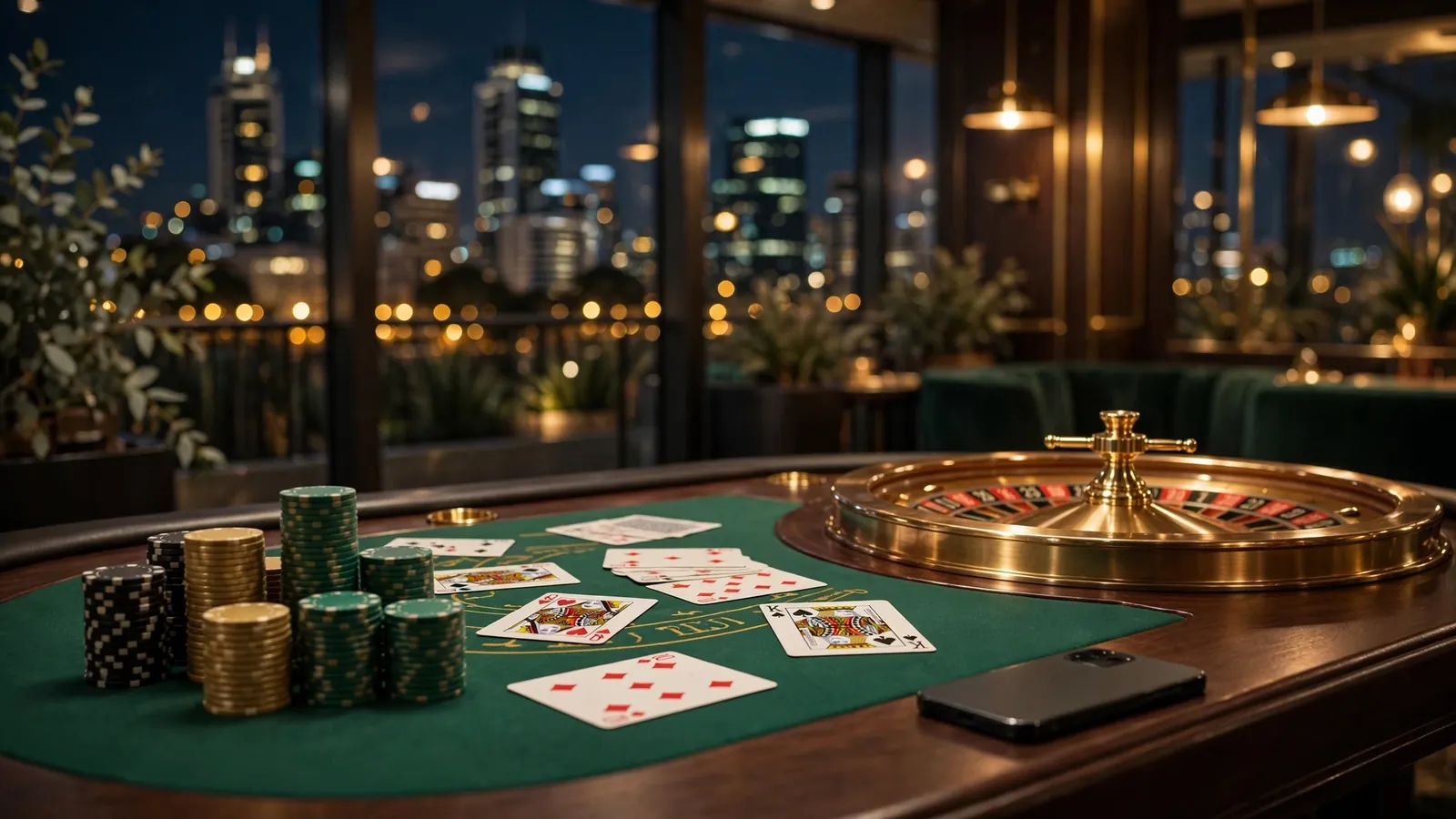
An online table game can be delivered in two fundamentally different ways. One presents a real dealer and casino equipment through a live video stream. The other uses software to determine the game’s events, such as the cards dealt or the point at which a roulette ball would land. Both may look like a table-game screen, but the process behind that screen is not the same.
That difference matters more than the visual design. A polished interface can make a software game resemble a physical table, while a live stream can place a dealer and real equipment inside a digital layout. The screen alone does not tell the whole story. The key distinction is whether the game is showing a real dealing process or displaying an outcome generated by software.
In a live dealer game, a real dealer operates real casino equipment, and video of the action is streamed to players. The digital screen acts as the viewing and interaction layer; the dealing itself takes place at the physical table shown in the stream.
Choosing a real-money table-games site in Australia calls for checking what is disclosed about its licensing and payment terms. These brief verdicts highlight the available details for each operator.
Neospin
Neospin is listed with a Curaçao Gaming Control Board licence, OGL/2023/176/0095, held by Hollycorn N.V.
Ricky Casino
Ricky Casino lists crypto payouts in under an hour and PayID payouts in 1–3 business days. Its minimum deposit is A$20, or A$30 to qualify for the bonus.
7Bit Casino
7Bit Casino is operated by Dama N.V. and is listed as licensed in Curaçao.
Rollero Casino
Rollero Casino is listed with a Curaçao Gaming Control Board licence, OGL/2023/176/0095, held by Hollycorn N.V.
Lucky Dreams
Lucky Dreams is listed as licensed in Curaçao. Its minimum deposit via POLi is A$20.
LevelUp Casino
LevelUp Casino is listed with a Curaçao eGaming licence, OGL/2023/174/0082, held by Dama N.V. Its minimum deposit is A$15.
DragonSlots Casino
DragonSlots Casino is listed as licensed by the Curaçao Gaming Authority, with Jumpman Gaming Ltd named as the operator.
House of Pokies
House of Pokies lists an international iGaming licence, though the source does not name the jurisdiction. PayID payouts are listed at 1–24 hours; the minimum deposit is A$30, or A$10 when using PayID.
Roby Casino
Roby Casino is listed as licensed by Curaçao eGaming, with Roby Games Ltd named as the operator.
JustCasino
JustCasino is listed as licensed by the Curaçao Gaming Control Board.
That arrangement makes the source of the action visible. Cards are handled by a dealer, or a roulette wheel is present in the streamed setting. The game feed shows that physical activity as it happens, rather than presenting a sequence created entirely by software. The interface may frame the image with a virtual table, but the defining feature is the live dealer and real equipment behind the broadcast.
“Live” describes the dealing and stream, not every part of the experience. The online display still has to represent the table and its activity on screen. The stream is the connection between the physical game and the remote viewer; the surrounding interface is how that game is presented digitally. Those are related layers, but they are not interchangeable.
I find that distinction useful because “live” can sound like a broad quality claim. Here it has a specific meaning: the dealer and equipment are real, and video is streamed to the player. It does not, by itself, tell anyone whether a particular service is lawful in Australia or whether it is appropriate to use. Format is not permission.
In a software-run version, there is no streamed dealer whose physical actions determine the result. A Random Number Generator, or RNG, is used to decide game events. For example, it can determine which cards are dealt or where the roulette ball lands in the software representation of the wheel.
The screen may still show cards, chips, a table layout or a roulette wheel. Those images help make the rules legible, but they do not mean that physical cards have been dealt or that a physical ball has been spun. The displayed action represents an outcome determined by the game software.
This is where visual similarity can mislead. A software table can be designed to resemble a conventional casino table, and a live table can also use digital graphics around its video. Appearance is not the reliable test. The question is what determines the event: a real dealer and casino equipment shown in a live stream, or software using an RNG.
An RNG is not a dealer hidden behind a graphic. It is the mechanism the software uses to determine the relevant outcome. In a card game, that means the software determines the cards dealt; in online roulette, it determines where the ball lands. The interface then presents that result in a form suited to the game.
The phrase “online casino table games” can cover both delivery formats, but it should not be read as a single technical model. One format transmits a physical game. The other creates the outcome through software. A table-shaped screen does not settle which format is in use.
Nor does the word “live” make the software layer disappear. The live stream shows a dealer and real equipment, while the online service still presents that feed through a digital interface. Conversely, realistic graphics do not turn a software outcome into a physical one. The distinction rests on how the game event is produced, not how convincingly it is drawn.
From an industry perspective, that separation is basic but easy to blur in promotional language. “Authentic” may describe the look or atmosphere; “live dealer” identifies a more concrete arrangement. I would treat the latter as a format label, not as a verdict on quality or trustworthiness. Different machinery. Different meaning.
Attention: Describing the technical format of a game does not mean that a real-money online casino service may lawfully offer it to people in Australia.
These descriptions explain delivery, not availability. In Australia, describing a format does not mean that a real-money online casino service may lawfully offer it to people in the country. The technical distinction remains clear: live dealer games show a real dealer using real casino equipment through a video stream, while software versions use an RNG to determine events such as dealt cards or a roulette landing point.
Bitcoin and a table game belong to different parts of a casino transaction. The game sets the rules for a hand or round; the payment method concerns how funds move. Putting the two together in a phrase such as “Bitcoin table games” can make the payment sound like a feature of the game. It is not. A table game does not become a different game because an account uses Bitcoin.
That distinction matters when comparing Bitcoin table games with conventional casino table games. The comparison only makes sense if it separates the table’s rules and format from the way an account is funded. One describes play; the other describes payment. The words may appear side by side on a site, but they answer separate questions.
I have seen payment language carry more weight in casino advertising than it deserves. “Bitcoin-friendly” can sound like a meaningful description of the gaming experience, when it tells little about the game itself. It does not identify how cards are dealt, how a roulette result is produced, or what rules apply at a table. Nor does the label, by itself, establish how a payment is handled. A payment method is not a quality mark for the game.
The same separation applies to requests for the best Bitcoin table games or the best games at a casino. “Best” needs a criterion. It could refer to rules, the style of play, or another feature, but the payment method cannot settle that question. Bitcoin does not rank games, and a table title cannot show whether Bitcoin is accepted or how a transaction would work. Treating those as one decision risks comparing unlike things.
In practical terms, the game and payment need separate descriptions. A game description concerns the rules and how a round unfolds. A payment description concerns the route used to transfer funds. Combining them into a single label obscures which part is being described. This is especially easy to miss when a page groups games and payment options under one promotional heading. The heading is not evidence that the payment changes the game.
There is also a legal boundary that a payment label cannot remove. Under Australia’s Interactive Gambling Act 2001, operators are prohibited from providing real-money online casino games, including table games, to people located in Australia. The Australian Communications and Media Authority enforces compliance and blocks unlicensed domestic platforms. Whether a site mentions Bitcoin, another payment method, or none at all does not alter that restriction. Payment terminology does not create an exception to the law.
That is why “Bitcoin casino” should not be read as a statement about legality, availability, or the nature of a table game. It is a payment-related label, not a licence and not a description of the game’s mechanics. The legal position concerns the provision of real-money online casino services to people in Australia, not the vocabulary used to market them.
Legal Restriction
Under Australia’s Interactive Gambling Act 2001, operators are prohibited from providing real-money online casino games, including table games, to people located in Australia.
The comparison can therefore tell very little about the table itself. A Bitcoin label does not show whether a game is blackjack, poker, roulette, or another format; nor does it establish the rules or the way outcomes are determined. Those details have to be understood as game features, independently of any payment language. Likewise, a game’s name cannot establish what payment methods a site supports.
I keep the categories apart: game rules on one side, payment terminology on the other, and the Australian legal restriction as a separate question. That avoids turning a currency label into a claim about game quality or legal status. Different questions. Different answers.
“Best odds” sounds like a single ranking, but it can refer to different things: the chance of a particular result, the amount paid when it happens, or the expected balance across repeated play. Those measures are related, but they are not interchangeable. A game can offer a frequent small payout and still have a different long-run expectation from one with less frequent, larger payouts.
That distinction matters when reading claims about casino table games with the best odds. A house-edge chart can compare games only when its figures use a clear, consistent basis. The game rules and bet being measured must be identified, and the comparison must make clear what the percentage represents. Without those details, a ranked list can look precise while leaving its central comparison unclear.
I learned to distrust neat rankings when the label did more work than the explanation. “Best” is often a conclusion, not a measurement. A percentage beside a game name does not tell its full story unless the underlying calculation and conditions are also clear.
Pokies use a separate measure called RTP, or return to player. It describes a theoretical return calculated over millions of spins, not a promise about any individual session. That definition belongs to pokies. It cannot be transferred to blackjack, roulette, baccarat or poker as though the same figure had been established for those table games. Their rules and outcomes are not interchangeable with a pokie’s spins.
The same caution applies to claims about the worst odds in casino table games. A low ranking may refer to one particular bet or calculation rather than every way of playing that game. A game name alone is not enough to establish a universal result. Nor does knowing that a game uses random outcomes, by itself, reveal the probability of each outcome or the expected return from a particular wager.
So what can a reader take from a house-edge chart? First, check what is being compared: an individual bet, a game under specified rules, or a broad category. Next, check whether the chart explains its method and whether the figures refer to the same kind of measure. If those points are absent, treating the order as a dependable ranking is a mistake.
This is not a claim that all table games have identical odds. It is a limit on what can responsibly be said without comparable calculations. A list of “best casino odds” can be useful only when its numbers are tied to the exact conditions they describe. A confident headline cannot fill in those conditions.
There is also a difference between odds and outcome. Even a sound long-run calculation does not tell what will happen in a short run. Random results can vary; a recent streak does not turn into a reliable forecast. I have seen that distinction disappear in promotional wording, where a theoretical measure is made to sound like a personal advantage. It is not.
In Australia, the legal frame matters as well: real-money online casino-style games, including table games, are prohibited interactive gambling services when offered to people in the country. An odds comparison should not be read as an invitation or recommendation to play. The careful conclusion is narrower: table-game rankings require comparable, clearly defined calculations, and a pokie RTP figure is not a substitute for them.
Precision first. Claims second.
A table game is easier to understand when the basic contest is separated from its presentation. In blackjack, the player’s hand is compared with the dealer’s: the aim is to finish with a value closer to 21. In a dice game, players roll a pair of dice and bet on the outcome. Those are different forms of participation—one centres on comparing hand values, the other on the result of a roll.
That distinction matters more than a game’s “popular” label. The label says little about what a round asks someone to follow. I have seen game descriptions make a table sound familiar while leaving its central action vague. For blackjack, the central comparison is player against dealer. For dice, it is the roll and the bet placed on its outcome. Plain mechanics are more useful than promotional shorthand.
Blackjack is not described as a contest to assemble the highest possible hand without limit. Its defining measure is proximity to 21, with the player’s hand judged against the dealer’s. The objective is comparative: a hand’s value matters in relation to the target and to the dealer’s hand.
That gives the round a clear reference point. Instead of assessing a hand in isolation, the player is involved in a contest with the dealer. The number 21 anchors the comparison, but the basic description does not require a catalogue of actions or side rules to explain the game’s premise. At its simplest, the question is whether the player’s hand is closer to 21 than the dealer’s.
I find that useful when distinguishing a game’s core from the many details that can surround it. A table may have additional conditions, but those should not obscure the central mechanic. Blackjack is about the relative value of two hands, not simply about receiving cards. A short explanation that leaves that relationship out has missed the point.
A dice round has a different centre of attention. Players roll a pair of dice and bet on the outcome. The roll supplies the event; the bet expresses which result is being backed. Unlike blackjack’s comparison between a player’s hand and the dealer’s, the basic description here turns on what the pair of dice produces.
That makes the word “round” useful: it points to a bounded event, the roll, around which the betting is organised. It does not by itself explain every possible wager or table rule, and it should not be mistaken for a full rulebook. The essential shape is still straightforward: a pair of dice is rolled, and players have bets on the result.
A contest where the player's hand is compared with the dealer's, with the aim of finishing closer to 21.
A game where players roll a pair of dice and place bets on the resulting outcome.
The difference between these examples is a practical way to learn how table games are structured. One asks the player to compare a hand with the dealer’s against a target value. The other links a wager to a dice outcome. Neither description establishes which game is preferable; they explain what the contest is about. Mechanics first. Marketing second.
A request for a casino near home can mean two different things: a physical venue within travelling distance, or an online service that can be reached from a particular location. They are not interchangeable. The first is a location question; the second concerns whether real-money online casino games may lawfully be offered to people in Australia.
That distinction matters because “near me” is not a description of a game. It points to geography, and a search for the nearest physical casino would need to be answered with reliable local venue information. Terms such as “new casino table games” point elsewhere: they may refer to newly introduced games, not a nearby venue. Combining these intentions can make an online result look like a local directory when it is not.
The Australian legal position also sets a firm boundary. Section 5 of the Interactive Gambling Act prohibits operators based in Australia from offering residents real-money interactive casino games. The wider Act prohibits the provision of online casino-style gambling services to people physically in Australia, including table games. A web page describing an online casino does not turn it into a local venue, and proximity language does not change the legal status of the service.
I have seen the wording around location used as a kind of reassurance: “nearby” sounds concrete, while “available online” can sound as though the service is simply part of the local market. Those are different claims. A physical address and an online gambling service should not be treated as equivalent just because both appear in results for a location-based phrase.
Searches mentioning Miami or Ohio also belong to a different geographic context from an Australian search. The place name changes what the phrase is asking about; it does not establish anything about venues in Australia. Likewise, a result that uses Australian wording is not, by itself, evidence that an operator is based here or can lawfully provide real-money casino games to residents.
For a location-focused search, the useful question is whether the result identifies an actual physical venue in the relevant area. For an online-focused search, the relevant issue is the legal status of offering the service in Australia. Treating those as separate checks avoids mistaking an online page for a nearby casino or reading local-sounding language as permission to provide online table games.
That is the practical limit of the phrase “casino near me with table games” in Australia: it can describe a request for a physical place, but it cannot make online casino services locally lawful. The wording is not the boundary. The law is.
An online casino table game is a digital version of a game associated with a casino table. The phrase describes the kind of game, not necessarily how it is delivered. A screen may show a real dealer handling casino equipment, or software may generate the outcome. That distinction matters: the same broad label can describe two different setups.
In a live-dealer game, a real dealer operates real casino equipment, and a live video stream carries the action to players. The screen is therefore showing a physical dealing process, rather than a computer animation standing in for one. “Live” refers to the streamed dealer and equipment; it does not, by itself, describe the rules or say anything about a game’s outcome.
In a software-run version, a Random Number Generator determines the result. It can select which cards are dealt or determine where a roulette ball lands. The player sees the result through the online interface, but the deciding mechanism is software rather than a dealer physically producing that outcome. The visual presentation may resemble a table; the underlying process is different.
That gives a practical working definition: online table games are casino-style games presented digitally, with outcomes either produced through live dealing or determined by software. It is a definition by format, not a catalogue of titles. The word “table” signals the kind of casino game being represented; it does not guarantee that a physical table is involved.
I have found it useful to keep the game itself separate from the system around it. A table-game screen and casino table-games management software are not automatically the same thing. The first is the player-facing game; the second phrase may refer to software associated with managing table games, but the label alone does not establish what a particular product does. It should not be treated as proof that software determines game outcomes: that role belongs to the Random Number Generator in software-run versions.
The same caution applies to broad descriptions such as “digital table.” They can conceal a meaningful difference in how a round is produced. With live dealing, the stream shows a dealer and real equipment. With a software-run game, the computer-generated random process determines the cards or roulette result. The interface is only the visible layer.
So when a casino table game is described as online, the useful question is not whether its screen looks like a table. It is whether a live dealer and equipment produce the visible action, or software determines the outcome. That distinction defines the basic formats without confusing game presentation with the mechanism behind it. The label alone tells less.
A table-game catalogue can appear to offer a single kind of experience, but the label often covers two different ways of producing a round. The distinction is about what generates the action: a dealer and physical equipment captured on video, or software that determines the result. I learned to look past the presentation. The screen can make both formats feel similar; the underlying process is not.
In a live dealer format, a real dealer works with real casino equipment while a video feed is streamed to players. The action shown is therefore a live dealing process, rather than an animation standing in for one. “Live” describes the source of the video and the dealer’s role. It does not, by itself, tell anything about the conditions of play or whether a service is lawful in a particular market.
Software-run table games work differently. A random number generator determines the dealt cards or, in roulette, where the ball lands. The interface may depict a table, cards or a wheel, but those images do not mean that physical equipment is producing the outcome. The decisive event is generated by software.
That difference matters when comparing descriptions of live casino tables with software versions. A camera view and dealer are signs of the first format; a digitally presented round whose cards or roulette result are determined by a random number generator belongs to the second. The visual design can be polished in either case. It is not reliable evidence of how the result is produced.
A catalogue can therefore be understood by format without treating it as a definitive list of game titles. “Live table games” refers to games presented through a streamed dealer and equipment. Software-run table games refer to online versions in which the generator determines relevant outcomes. Those descriptions identify delivery and outcome mechanisms; they do not establish quality, odds, rules, or suitability.
There is also a legal distinction that presentation cannot erase. Under Australia’s Interactive Gambling Act 2001, operators are prohibited from providing real-money online casino games to people located in Australia. A live stream does not change that status, and using software rather than a dealer does not change it either. The format explains how a game is presented, not whether a real-money service may lawfully be offered here.
In practical terms, the key question behind any description is whether a real dealer and equipment are being streamed, or software is determining the outcome. That is a useful classification, not a recommendation or a promise of access. Different machinery. Same legal boundary.
Card games at a casino table can look similar from across the room: cards are dealt, players make decisions, and the table settles a result. The important difference is what the hand is being measured against. In blackjack, the player’s hand is compared with the dealer’s. In baccarat, the bet selects which outcome to back. In poker, players compete to assemble the strongest hand. Three distinct contests.
In blackjack, the aim is to finish with a hand value closer to 21 than the dealer’s hand. That comparison defines the game: the player is not trying to beat the other people at the table. From behind the counter, I found that distinction mattered more than the familiar cards or the pace of dealing. The dealer is the opposing hand; other players are not the target.
Baccarat frames the decision differently. A bet can support the hand assigned to the player, the one assigned to the banker, or a tie between them. The choice is about which result the wager backs, rather than building a hand against the dealer in the blackjack sense. The labels can sound like they describe personal roles, but the practical point is simpler: they identify the possible outcomes being selected.
Poker turns attention back to the hand itself, but changes the contest again. Players try to build the best possible poker hand, competing against one another rather than against a dealer’s hand or a chosen baccarat outcome. That gives poker its own table logic: the value of a hand matters in relation to the hands being contested.
A useful way to distinguish these casino card tables is to ask what the player’s hand is measured against. Blackjack compares it with the dealer’s; baccarat offers a choice among named outcomes; poker centres on competing hands. The cards alone do not explain the game. The comparison does.
Promotional descriptions often call a table “simple” or “easy to follow.” Those words flatten the differences. The mechanics are not interchangeable, even when all three games use cards. Blackjack is a dealer-versus-player comparison, baccarat is an outcome wager, and poker is a contest to make the strongest hand. That is the working distinction.
Roulette appears in several online versions, with European, French and American wheels among the main formats. The useful first distinction is the number layout: European and French wheels have 36 numbered pockets and a green zero; the American wheel has a green zero and a green double zero. That extra pocket is the visible difference between the American layout and the other two.
In the European and French versions, the numbered pockets run from 1 to 36, alongside the green 0. The American layout includes those numbered pockets as well as 0 and 00. The labels matter: a single zero and a double zero are separate pockets, not two ways of writing the same result.
At the counter, I learned not to treat a familiar-looking roulette layout as proof that every version is identical. The number field can look much the same from one table to another, while the wheel itself tells a different story. Checking whether it has one green zero or both a zero and double zero is a straightforward way to identify the format.
That distinction also makes it easier to interpret a table description. “European” and “French” identify versions with 36 numbers and a green 0; “American” identifies the version with a green 0 and 00. The names are not decoration. They refer to different wheel layouts.
The rules of roulette are often discussed as though there were one standard table, but the version is part of the game’s basic setup. A description that names the wheel type gives more useful information than a generic roulette label alone. Small detail. Material difference.
For online roulette, the same version names apply. The digital presentation may look different from one table to another, but the defining distinction remains the pockets shown for that wheel: European and French layouts have 36 numbers and a green zero, while the American layout also has a double zero. Reading those markings keeps the comparison precise without confusing the three versions or assuming that all roulette tables use the same arrangement.
Poker is built around a contest to make the strongest possible hand. That is the central idea behind casino poker tables, regardless of how the game is presented: players’ hands are judged against one another, and the aim is to finish with a hand that beats the competing hands.
That sounds simple, but it changes how a table works. The focus is not merely on holding cards with high individual values. A hand is assessed as a combination, so the relationship between its cards matters. Players are trying to form the best available combination from the cards dealt, while the other hands remain the comparison point.
In my experience, this is where the word “strategy” can be made to carry too much weight. The basic contest is clear; the details depend on the specific poker game and its rules. A label such as “casino poker” does not, by itself, tell anyone which cards are used, how many are dealt, or exactly how hands are compared. Those particulars should not be assumed from the name alone.
This is also why a list of poker table games would need more than a shared label to be useful. Different formats can retain the same core objective while setting out distinct rules for reaching it. Pai gow poker, for instance, appears in searches for casino poker, but the basic description of poker does not establish its specific dealing or hand-arrangement rules. The name alone is not a rulebook.
The reliable starting point is therefore modest: poker is a hand-building contest, with players seeking the best possible hand against the others at the table. Specific rules matter. Without them, the general principle is all that can be stated confidently.