A practical look at what can—and cannot—be established about Canberra casino hotels, gaming, dining, amenities and related searches.
A hotel stay and a casino visit are separate things, even when a booking page puts them together under one headline. That distinction matters: a phrase such as “casino hotel” can describe a property, a package, or simply the combination of two travel interests. The wording alone does not establish which one is meant.
I have learned to treat “deal” as a sales label, not a description of what is included. A genuine hotel offer should identify the property, the room category, the dates it covers and the conditions attached to the price. If casino entry, credit or another benefit is advertised, the terms should say exactly what that benefit is and whether it is included in the booking price. Without those particulars, there is no sound basis for comparing a Canberra casino hotel deal with an ordinary room rate.
The same caution applies to claims about rooms. A listing may use “casino hotel” to attract people planning a night out, but that does not prove the hotel is operated by, inside or formally connected with a casino. Those are different arrangements. A property’s own name and booking terms are more useful than a headline that compresses them into a convenient phrase.
Choosing an online casino while based in Canberra calls for checking practical details as well as licensing information. This list offers a concise reference to the details available for each operator.
Neospin
Neospin is listed with a Curacao Gaming Control Board licence, OGL/2023/176/0095, held by Hollycorn N.V.
Ricky Casino
Ricky Casino lists crypto payouts in under an hour and PayID payouts in 1–3 business days. Its minimum deposit is A$20, or A$30 to qualify for the bonus.
7Bit Casino
7Bit Casino is operated by Dama N.V. and is listed as licensed in Curacao.
Rollero Casino
Rollero Casino is listed with Curacao Gaming Control Board licence OGL/2023/176/0095, held by Hollycorn N.V.
Lucky Dreams
Lucky Dreams lists Curacao licensing and a minimum deposit of A$20 when using POLi.
LevelUp Casino
LevelUp Casino is listed with Curacao eGaming licence OGL/2023/174/0082, held by Dama N.V. Its minimum deposit is A$15.
DragonSlots Casino
DragonSlots Casino is listed as licensed by the Curacao Gaming Authority, with Jumpman Gaming Ltd named as the operator.
House of Pokies
House of Pokies lists an international iGaming licence, though the jurisdiction is not named in the source. PayID payouts are listed at 1–24 hours, and the minimum deposit is A$30, or A$10 when depositing via PayID.
Roby Casino
Roby Casino is listed as licensed by Curacao eGaming, with Roby Games Ltd named as the operator.
JustCasino
JustCasino is listed with a Curacao Gaming Control Board licence.
I would also separate a casino’s operating information from a hotel’s booking information. A room reservation does not establish that a casino is open, and a venue’s hours cannot be inferred from a hotel’s check-in details. These are separate operational questions. Blurring them can make a package appear more definite than it is.
There is another distinction worth keeping clear: a physical hotel-and-casino claim is not the same question as online gambling. Australian rules for online casino services concern operators providing those services to people in Australia. They do not, by themselves, establish that a land-based casino hotel exists in Canberra, nor do they verify a hotel room or travel package. A web page using casino language is not proof of a local property.
When checking a proposed booking, the useful documents are the property’s own room description, the cancellation and payment terms, and any separate conditions for advertised extras. The booking should make clear who supplies each part of the offer. If the room is sold by one business and a casino benefit by another, that division affects who is responsible when a promised element is unavailable. “Exclusive” can sound substantial; in practice, the term has value only when the inclusions and conditions are written down.
I would not treat a low headline price as evidence of a special casino arrangement. It may refer to a particular date, room type or booking condition, or it may simply be promotional wording. A comparison is meaningful only when the same room details and conditions are being compared. Otherwise, a neat package label can conceal a mismatch rather than deliver a saving.
 Darwin Casino: Development, Stay and Visitor DetailsLearn how to distinguish a Darwin casino proposal from approved or active construction, and assess employment and event claims without treating them…
 Best Casino in Melbourne: Hotel Stays and Search TermsUnderstand what Melbourne casino hotel searches, room deals and “rooms” can mean, and why listings alone do not confirm availability or inclusions.
Room first. Terms second.
Poker tables, poker tournaments and poker machines are different things, even when venue descriptions place them close together. A poker room suggests organised table play; a tournament implies a scheduled competition with its own entry conditions and structure. Pokies, or Electronic Gaming Machines (EGMs), are a separate form of gambling. One does not establish the presence of the others.
That distinction matters when assessing claims about a Canberra casino poker room. A venue name or a general casino label is not enough to establish that table poker is offered, that tournaments are scheduled, or that either is currently operating. Those details depend on the venue and the event. A tournament listing, for instance, needs to identify its organiser and date; a room description should make clear whether it refers to poker tables or simply to a private or gaming area. Marketing language can blur those categories. The useful detail is the actual offering.
The same care applies to claims about poker in Canberra. A poker event elsewhere in Australia does not establish a local schedule, and a past event would not, by itself, show that a room is operating now. The practical distinction is between a permanent facility and a one-off event. They require different evidence: a facility description for the former, and dated event information for the latter. Without that distinction, an old tournament notice can look like proof of a current poker programme.
State rules should not be carried across borders by assumption. NSW has a legal age of 18 for gambling on poker machines and mandatory pre-commitment systems in which players set a loss limit before play. Those are NSW provisions, not evidence of Canberra poker-room arrangements. Nor do rules for poker machines establish whether table poker is available. The words sound related; the products and the regulatory questions are not interchangeable.
I have seen this confusion arise when a venue’s general gaming language is treated as a complete description. It is not. “Poker” may mean a table game, a tournament, or poker machines in casual conversation, while the operating conditions differ sharply. A precise description should state which activity is meant and, for an event, whether it is a current listing rather than an old announcement. No shorthand can do that work.
The gym question sits beside the poker searches, but it asks about a different kind of facility. A gym would need to be identified as an actual venue amenity, with its access and operating arrangements stated by the operator. It cannot be inferred from the words “casino,” “hotel,” or “resort,” and it has no necessary connection to poker tables or tournaments. Treating those labels as proof is how an assumed facility becomes repeated as if it were confirmed.
The same standard applies to any claimed combination of a poker room, tournament schedule and fitness facility. Each is a separate operational detail. A broad venue description may establish none of them. Specifics matter. Short version: labels are not facilities.
A search for baccarat or craps in Canberra can sound like a request for a particular table, but the wording alone does not establish that a local casino offers either game. I would not turn a game name into a venue recommendation without a confirmed operating location and current, venue-issued details. The same distinction applies to a casino bar, a car park or a concert: a familiar search term is not evidence of a facility or event.
 Perth Casino Guide: Hotels, Dining and Visit DetailsExplore Perth casino hotel bookings, nearby accommodation, dining and practical venue searches; room rates may differ by refund and stay conditions.
 Queensland Casino Hotels: Rooms and Stay DetailsCompare room layouts, bed arrangements, views and bathroom details, and see why the final booking total matters more than a headline rate.
That matters because venue information is practical, not decorative. A map pin, parking entrance or event listing can send someone across town. A confident-sounding description built from assumptions is worse than no description at all. I have seen how easily promotional language makes a feature feel settled before the underlying arrangements are. A name is not an opening; a listing is not confirmation.
For baccarat and craps, the useful distinction is between a game being known generally and being available at a particular Canberra venue. Nothing about the game’s name confirms a local table, its format or whether it is operating. The same caution holds for entertainment: a concert reference would need to identify an actual event and venue, rather than rely on the broad association between casinos and live shows.
Bars invite a similar leap. The phrase “casino bar” may suggest a place to meet or have a drink, but it does not establish that a Canberra casino has one, where it is, or what it serves. Nor should a bar description be used to imply a wider venue experience. Specific details need to attach to a confirmed place, not to the category of business.
Parking and maps are even less forgiving. A usable map needs a real address; car-park guidance needs a real car park and a clear connection to the venue. Without those anchors, directions and access claims would be guesswork. I would treat any map result or parking reference as a lead to verify, not proof that a casino facility exists at that location.
Contact details carry the same burden. A phone number presented as a casino contact should belong to an identifiable operator or venue. A number associated with a similarly named business, an old listing or an unrelated organisation could waste time or expose personal information. I would not publish a contact number as official without a clear link to the venue.
 Adelaide Casino: Accommodation, Dining and MoreExplore hotel offers, room locations and booking terms, alongside poker, dining and events. Casino branding alone does not confirm who operates the…
 Pokies in Adelaide: Access, Hours and PaymentsLearn how to check whether Adelaide gaming areas are open, what venue oversight covers, and why PayID or venue hours do not…
The practical standard is straightforward: establish the venue first, then confirm each feature with information attributable to its operator. Until that chain is clear, baccarat, craps, a bar, parking, concerts, maps and contact details remain unconfirmed as Canberra casino offerings. No invented itinerary.
A search for an online casino associated with Canberra is a different question from looking for a physical venue. The word “casino” can point to both, but the rules do not carry across. A location in the Australian Capital Territory does not create a local exception for internet gambling.
The Interactive Gambling Act 2001 prohibits operators from providing real-money online casino games to people in Australia. That covers games such as pokies, blackjack and roulette. An Australian-run service cannot lawfully offer those games to customers here. Sports betting is a separate category; its status does not make online casino games lawful.
Offshore platforms sit outside Australian regulation, and access is subject to blocking and enforcement. The legal position should not be reduced to “players can use them” simply because a platform is based overseas. It is not a locally regulated option, and a foreign licence does not amount to approval under Australian law. The Act places substantial daily penalties on operators that breach it: up to $360,000 for an individual and $1.8 million for a body corporate. The prohibition is directed at providers.
One practical complication is that a game’s availability can depend on the player’s apparent location. Casinos and software providers may restrict games or entire providers by country. They can use an IP address to identify geographic location; when a game is blocked for Australian access, it may not appear in the lobby at all. That is a technical restriction, not evidence that the game is available to Australian players or that the service is lawful here.
Legal Warning
The Interactive Gambling Act 2001 prohibits operators from providing real-money online casino games to people in Australia, with substantial daily penalties for breaches.
I have seen promotional copy treat a populated game lobby as proof of a generous offer. It proves less than that. A catalogue can change by region, and a title shown in one country may be absent from another. The distinction matters. A Canberra address does not determine which games an offshore platform displays, and an Australian IP address may trigger a different catalogue.
Some commentary has described offshore play as a grey area for individuals. That should not be mistaken for consumer protection or local oversight. Australian law does not regulate those operators as domestic casino services. If a dispute arises, the safeguards available through Australian regulation are not there simply because the customer is in Australia.
Using a VPN to make an Australian connection appear to come from another country is not a workaround I would recommend. It can breach an operator’s terms and may result in account suspension. It also does not change where the player is physically located or turn a prohibited service into a lawful Australian one. A changed IP address is not a change of legal status.
“Available online” is a sales phrase. The location restriction remains.
Accommodation connected with a casino and accommodation merely described as nearby are different propositions. “Near” is a location claim; it does not establish shared ownership, a booking arrangement or access to casino facilities. That distinction matters in Canberra, where a search for a casino stay can return language that sounds more definite than the underlying relationship.
 Brisbane Casino Guide: Hotels, Dining and Booking ChecksLearn how to check who provides the accommodation, takes payment and handles booking changes, while separating confirmed details from assumptions about casino
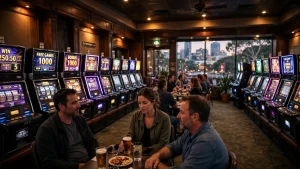 Brisbane pokies: how to check what's openLearn why an “open now” listing may not confirm gaming-area access, and how to assess venue-specific hours, online terms and Brisbane searches.
I have seen how hospitality labels do their work. “Casino accommodation” may read like a package, but the phrase alone does not say who owns the rooms, who takes the booking or whether any venue benefit is included. A property name beside a casino-related term is not proof of affiliation. The useful evidence would be an identified accommodation provider and an explicit statement of the relationship, rather than a suggestive heading.
There is a second issue: location. A nearby property can only be assessed against a specific venue and a stated address. Without those, claims about walking distance, transport time or neighbourhood convenience have no reliable reference point. A map pin, street address and named property would make the comparison concrete; a broad city label would not. Small distinction. Important one.
The same care applies to accommodation promotions. A room offer may be issued by a hotel, a booking platform or another business, and the party responsible for its terms should be clear. The wording should establish what is included and which provider supplies it. A casino-themed label does not, by itself, establish a casino discount or a joint offer. Nor does it show that a booking includes gaming access or any other venue service.
For a stay, the practical details belong to the accommodation provider: room type, cancellation conditions, payment terms and the location shown on the booking. Those details should not be inferred from the word “casino.” In my experience, a headline can compress several separate arrangements into one attractive phrase. The booking conditions tend to reveal whether there is a real package or simply a room listing placed beside a broad destination description.
Attention: A "casino accommodation" label does not prove shared ownership, a booking arrangement, or access to casino facilities without an explicit statement of the relationship.
This is why Canberra casino accommodation should not be treated as a confirmed property category without an identifiable venue and a documented link to a lodging provider. A search phrase can signal what someone hopes to find; it cannot establish that the stay exists, that it is close to a particular casino, or that a casino is involved in the booking. Keep the categories separate.
That is not a comment on the quality of any Canberra hotel or short-stay property. It is a basic distinction between a place to sleep and a casino-branded arrangement. Once a property is named, its own address and terms can be assessed on their own merits. Until then, claims about proximity, affiliation or special accommodation terms remain claims rather than useful booking information.
Breakfast and buffet wording points to a specific kind of visit: a meal tied to a stay, a morning schedule or a larger dining service. It does not establish that a Canberra casino has a breakfast service, buffet, resort or rewards programme. I have learned to treat the difference between a venue name appearing beside a service and evidence that the service is actually available as a practical one. Search wording can make the connection look settled when it is not.
A breakfast listing, if one is presented elsewhere, needs more than a menu image or an old promotional phrase to answer basic questions. The date, venue identity, service times, booking conditions and whether the offer is open to non-guests all matter. Those details are not established for a Canberra casino. Without them, there is no sound basis for describing a buffet breakfast, stating what it includes or suggesting that it can be booked.
The same caution applies to a general buffet. “Buffet” describes a style of service, not a confirmed feature of a particular property. It should not be used to imply a spread, price, schedule or dining room where none has been established. A photograph or a generic venue label can travel further than the conditions attached to it. The wording may remain visible after the offer itself has changed or disappeared. That is not a current menu.
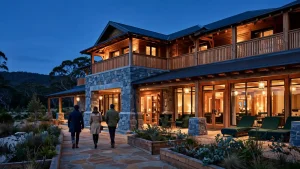 Casino Stays in Tasmania: What to Check FirstLearn how to assess casino-linked accommodation, room-rate terms and nearby facilities, while separating confirmed details from assumptions.
 Best Pokies in Tasmania: Hours and Venue ChecksLearn how to check gaming-room hours, compare venue listings and interpret “best-paying” claims. A venue’s general opening hours do not confirm its…
“Resort” carries a broader promise than a meal: it can imply accommodation and facilities gathered under one operation. The label alone cannot confirm that a casino in Canberra is part of a resort, or that any such facilities are available. The distinction matters because a resort description may lead someone to plan a stay, not merely choose breakfast. I would look for a named property and current, property-specific information before treating that description as a real arrangement. No assumption fills the gap.
Rewards searches require similar care. A rewards programme is not verified by the mere appearance of the word “rewards” alongside a casino name. Without established programme terms, there is nothing reliable to say about joining, earning or redeeming benefits, eligibility, or whether a claimed perk applies to meals or stays. Promotional language can sound concrete while leaving the central condition unstated: which operator is responsible for the offer, and what exactly qualifies? No terms, no useful promise.
These are separate decisions. A breakfast service could exist without a buffet; a buffet could be unrelated to accommodation; a rewards offer could apply to neither. Treating those labels as interchangeable is how an unconfirmed feature turns into an assumed itinerary. In my experience, the careful wording is the useful wording: distinguish an advertised claim from a confirmed service, and do not build plans around details that cannot be tied to a current, identifiable venue.
Canberra casino breakfast, buffet, resort and rewards information should therefore be treated as unconfirmed unless a current source identifies the operator and sets out the relevant conditions. That is less satisfying than a polished package description. It is also more honest.
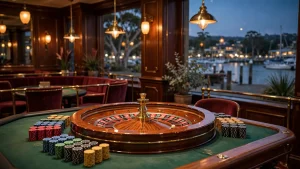 Casino in Hobart: Poker, Rooms and Venue FacilitiesLearn how live poker rooms and tournaments differ from electronic gaming machines, and which venue details listings can—and cannot—confirm.
 Pokies in Perth: hours, payouts and venue claimsLearn why venue schedules do not confirm live gaming access, and why Perth-wide payout, airport and CBD claims require careful checking.
Whether a casino in Canberra is open, reopening or operating on a regular schedule is a question about a specific venue, not something that can be answered from general casino information. Search interest, a listing copied across directories or an old event notice does not establish that a venue is currently operating. I have seen how quickly operational details become stale: a page can remain visible after the circumstances behind it have changed. A current, direct statement from the venue would be needed to establish opening status and hours. Without that, a confident timetable is just guesswork.
The same distinction applies to proposed development. A project reference, planning discussion or announcement may describe an idea or an earlier stage; it does not by itself confirm that a casino has been built, opened or is proceeding. Employment interest is not proof of active recruitment either. A job listing should be tied to an identifiable employer and current vacancy before it is treated as evidence of work at a Canberra casino. Search results are not operational records.
Events require similar care. A dated listing may refer to a past event, a different location or a proposal rather than a confirmed programme. Entertainment advertising can sound definitive while leaving the venue, organiser or status unclear. I would treat an event as established only where its organiser or venue confirms the details and the listing is current. Otherwise, the wording may outlast the event itself. That is a practical distinction, not a technicality.
A menu appearing alongside event or venue information does not resolve the status question. It could be attached to a different business, be old, or be presented without enough context to identify its source. Nor does a review establish that a casino remains open: reviews can persist long after a business changes its arrangements. The date and identity behind a claim matter more than the confidence of its wording.
There is a separate legal context for online gambling. Under the Interactive Gambling Act 2001, operators are prohibited from providing real-money online casino games, including slots, poker and table games, to people in Australia. That rule concerns online services; it cannot confirm the opening status, development or events of a physical Canberra venue. The distinction matters. An online listing is not proof of a local casino.
In my experience, the safest reading of an uncorroborated announcement is narrow: it shows that someone published a claim, not that the claimed operation is in place now. Opening hours, reopening dates, development progress, recruitment and event schedules each need current confirmation from the relevant organisation. If that confirmation cannot be identified, none should be presented as settled. No guesswork.
A street address is the detail that turns a venue name into a place to visit. For a Canberra casino, that means checking that the address appears on the operator’s own current site and matches the venue named in any booking or event information. A map pin or an old directory entry can remain visible after details change; neither, by itself, establishes that a casino operates at that location.
The same care applies to dress requirements. “Smart casual” can sound precise in a listing, but it may not tell the whole story: entry conditions can vary by area, event or time. Without a current policy from the venue, there is no dependable Canberra-specific dress code to rely on. If an occasion matters, the operator’s published conditions are the relevant reference—not a general assumption about casino etiquette.
Bars are another point where a familiar venue label can create an impression of a confirmed offering. A bar’s name, opening schedule, drinks list and access rules are operational details, not facts that can be inferred from the word “casino.” I have seen promotional language make a venue sound more complete than the practical information supports. The useful detail is the one that can be tied to an operating business. Nothing more.
A day spa or casino spa should be treated with the same distinction. “Spa” may refer to a standalone business, a hotel amenity or a facility inside a resort; the label does not establish which, if any, applies in Canberra. Before making plans around treatments, facilities or access, a named provider and its own current information would need to support the claim.
Career searches also need to be separated from general venue descriptions. A genuine vacancy should identify the employer, role and application route. A casino-related phrase in a job listing does not, on its own, establish that the employer is a Canberra casino or that the position is based at a local venue. Check who is hiring.
Games are a separate matter from venue amenities. The presence of online casino games does not prove that a physical Canberra casino has a gaming floor, and a venue search does not establish which games it offers. These are different questions with different evidence.
In practice, address, dress, bars, spa facilities and careers all depend on a clearly identified operator and current information issued by that operator. Search results can bring the terms together; they cannot make the underlying venue details interchangeable. Details matter.
A restaurant listing attached to a casino name can look like a settled venue detail. It is not. For Canberra, I cannot confirm that a casino restaurant operates, what it serves, or whether any dining outlet is connected to a casino. The distinction matters: a polished listing or a familiar-sounding venue label is not the same as an established restaurant offering.
That is the limit of what can be said about restaurants at a Canberra casino. There is no confirmed restaurant name, menu, booking arrangement, service schedule or price to report. Naming a cuisine, describing a dining room or suggesting that a table can be reserved would turn an unverified assumption into practical advice. It would also leave a reader with details that might not correspond to any real venue.
The same caution applies to searches for several restaurants, or for a restaurant inside a casino in Canberra, Australia. Repeated wording does not establish that there is a group of dining outlets—or even one casino restaurant—to compare. I would not treat a search result, an old listing or a venue description copied elsewhere as sufficient confirmation of current operation and affiliation.
A rooftop bar is a different proposition from a restaurant. The rooftop description does not establish that there is a Canberra casino rooftop bar, nor that any such bar serves meals or belongs to a casino. Without reliable venue-specific details, there is no basis for describing its setting, food or connection to a casino. A label can do a lot of work. Too much.
When checking a restaurant claim, the useful evidence is direct and specific: the venue’s own current information should identify the restaurant and clearly connect it to the named casino. If that link cannot be established, the safer conclusion is not that the outlet is hidden or temporarily unavailable, but that its status remains unconfirmed. I apply the same test before repeating claims about menus or reservations.
This is narrower than a general question about dining in Canberra. A restaurant search asks whether a particular casino-linked place exists and what it offers; it does not establish either point by itself. Until those details can be confirmed, no Canberra casino restaurant can responsibly be recommended or described here. No invented menu. No assumed booking. No borrowed certainty.
Food and pool searches point to facilities that are easy to assume from a casino’s name but should be treated as separate features. A casino is not automatically a dining complex, and a pool is not an implied part of a hotel or resort. Each needs its own confirmation.
“Food court” has a more specific meaning than food being available somewhere on a site: it suggests a shared dining area with multiple outlets. That distinction matters when planning a meal around an outing. A general mention of food would not establish that format, its operators, menu choices or opening arrangements. I have seen broad venue labels do too much work in listings. The detail matters.
A pool is a different proposition again. It could mean a leisure facility, a hotel amenity or simply a feature associated with a wider precinct. Those are not interchangeable descriptions, and none should be inferred from casino branding alone. Nor does the word “resort” settle the question; it is a marketing label until the actual facilities are specified.
For Canberra, claims about casino food, a food court or a pool should be tied to a named, operating venue and a current description of what it provides. Without that connection, the wording is not a useful basis for making plans. The same applies to promotional images: a picture of a dining area or swimming pool does not establish that it belongs to a casino in Canberra or is available to its guests.
Food service, a shared dining area and a pool are three distinct offerings, each with its own access conditions and operating details. The name alone settles none of them. No assumptions.
Yes. The Interactive Gambling Act restricts Australian-based operators from offering online casino games such as pokies, blackjack and roulette to people in Australia. Sports betting remains widely accessible and legal.
Offshore casinos are not regulated under Australian law, although it is technically not illegal for Australian players to use them; Australian-based operators cannot offer online casino games to people in Australia. In NSW, the legal age for poker-machine gambling is 18, and players must set a loss limit before play under mandatory pre-commitment systems.
Online casinos or game providers can use a player’s IP address to identify their location and block access from excluded countries. Blocked games may not appear in the lobby or may fail to load, including when a provider’s licensing rules or policies exclude Australian players.
Club Liverpool has the highest number of operational poker machines among clubs in NSW.