A practical look at checking whether a casino supports Google Pay, and why deposits, withdrawals and game choices need separate checks.
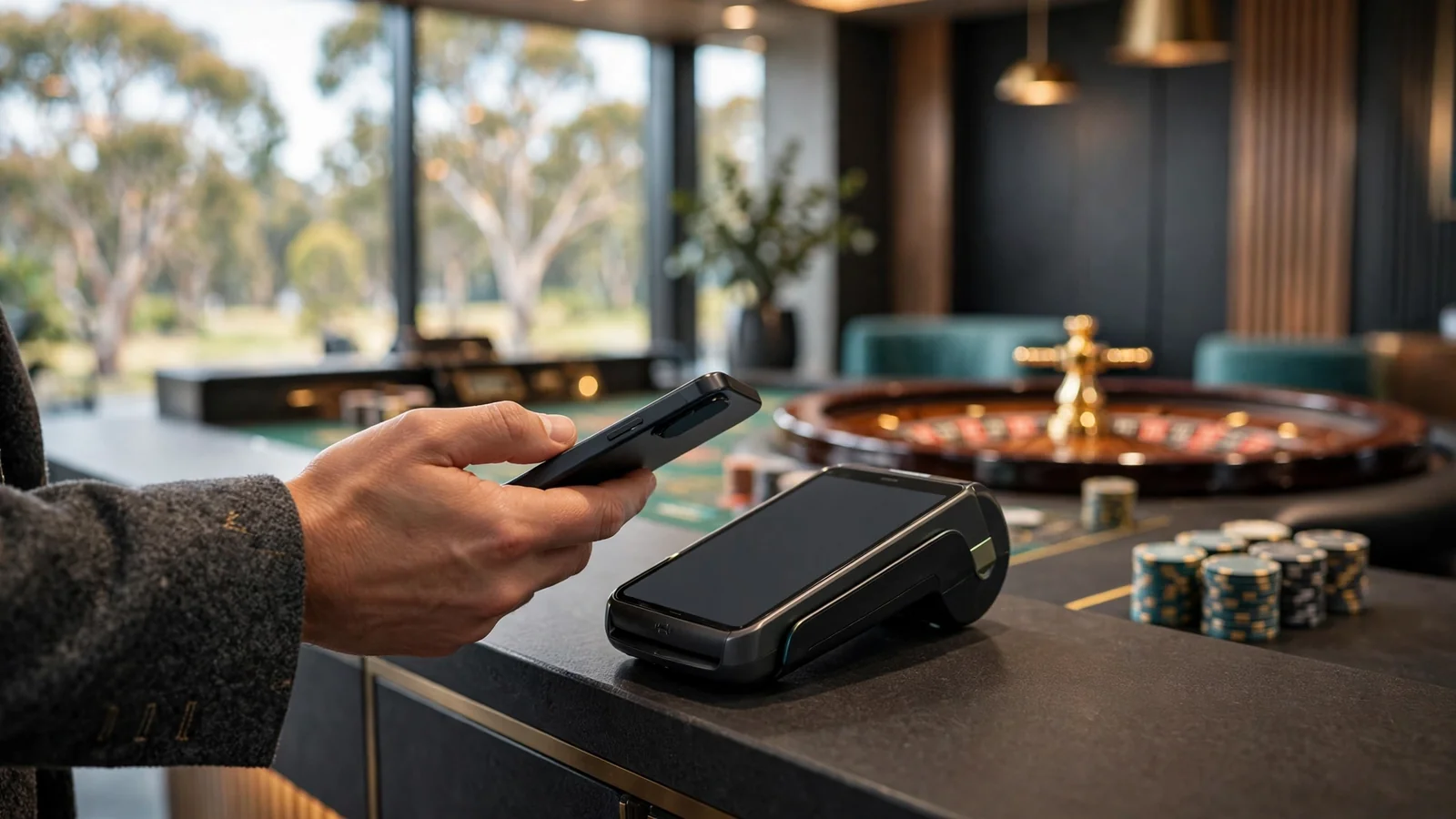
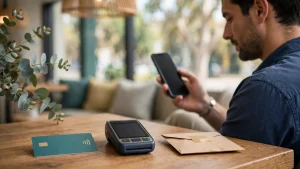
In Australia, paying by tapping a card is ordinary rather than exceptional. Contactless credit and debit cards are accepted across almost the entire country, so a customer can often use the same familiar gesture at a shop, café or other everyday checkout. The phone has become another way to make that tap: mobile wallets, including Google Pay and Apple Pay, are also accepted in almost all settings.
That everyday familiarity shapes expectations. When a payment method works across many ordinary transactions, it can seem natural to expect it to work wherever a digital payment is offered. From the operational side, though, a payment method’s prominence in daily life describes consumer behaviour; it does not, by itself, establish what a particular service supports. Those are separate questions.
I have seen how quickly payment preferences move between formats. A person may reach for a physical card in one setting, use a wallet on a phone in another, then rely on a bank-linked service such as PayPal elsewhere. The method is often chosen for the immediate task, not as a permanent preference. Familiarity with several options is part of the local payment mix.
Google Pay availability can vary by casino and may change, so check the cashier before registering or depositing. This guide offers a concise reference to the listed operators and the details available about them.
Neospin
Neospin is listed with a Curacao Gaming Control Board licence, OGL/2023/176/0095, held by Hollycorn N.V.
Ricky Casino
Ricky Casino lists a A$20 minimum deposit, rising to A$30 to qualify for the bonus. Its stated payout speeds are under one hour for crypto and 1–3 business days for PayID.
7Bit Casino
7Bit Casino is operated by Dama N.V. and is listed as licensed in Curacao.
Rollero Casino
Rollero Casino is listed with a Curacao Gaming Control Board licence, OGL/2023/176/0095, held by Hollycorn N.V.
Lucky Dreams
Lucky Dreams is listed as licensed in Curacao. Its stated minimum deposit is A$20 when using POLi.
LevelUp Casino
LevelUp Casino is listed with a Curacao eGaming licence, OGL/2023/174/0082, held by Dama N.V. Its stated minimum deposit is A$15.
DragonSlots Casino
DragonSlots Casino is listed under the Curacao Gaming Authority, with Jumpman Gaming Ltd named as the operator.
House of Pokies
House of Pokies lists an international iGaming licence, though the jurisdiction is not named in the source. Its stated PayID payout speed is 1–24 hours, and the minimum deposit is A$30, or A$10 when using PayID.
Roby Casino
Roby Casino is listed as licensed by Curacao eGaming, with Roby Games Ltd named as the company.
JustCasino
JustCasino is listed with a Curacao Gaming Control Board licence.
There is a practical reason this flexibility matters. Cards, phone wallets and bank-linked services are not identical products, even when each can be used to make a payment. They sit in different arrangements between the customer, the payment provider and the business receiving funds. To the person paying, the experience may look similarly simple. Behind the counter, the route can differ.
That distinction is easy to miss because contactless payment has made the front end feel uniform: present a card or phone, confirm the payment, and move on. The convenience is visible; the arrangements underneath are not. A familiar logo or a widely used wallet therefore tells only part of the story about where and how it can be used.
Australia’s broad adoption of mobile wallets gives Google Pay a recognisable place in everyday commerce. It is not an unfamiliar or niche way to pay. But national payment habits are background, not a universal acceptance rule. A business still has its own payment setup, and the general popularity of tapping a phone cannot settle what that business accepts.
That is the useful starting point for any discussion of payment options connected with online services: distinguish what Australians commonly use from what an individual service makes available. The first is a feature of the wider market. The second depends on the service itself. Familiarity is not confirmation.
 Casinos That Accept Litecoin in Australia: What’s VerifiedThe article distinguishes everyday payment options from gambling acceptance claims and explains what the available text does not verify about Litecoin.
 Casinos That Accept Neosurf in Australia: What to CheckLearn why a Neosurf mention does not verify an Australian casino payment option, and why a deposit claim cannot confirm a withdrawal…
A payment button does not determine whether an online gambling service may legally operate in Australia. Google Pay is a way to make a payment; it does not change the status of the service receiving it. That distinction matters when a cashier appears to accept Australian customers or when a site describes itself as an Australian online casino.
Under the Interactive Gambling Act 2001, operators must not provide real-money online casino games to people in Australia. The restriction is directed at the provider of the service. It covers casino-style online gambling offered to people physically located in the country, rather than turning a payment method into a permission to operate. A Google Pay option, where displayed, cannot override that legal boundary.
The Act does not explicitly make an individual player’s use of an offshore site a criminal offence. That is a narrower point than saying that using such a service is approved, protected or risk-free. The law’s prohibition on providing the service remains in place, and the absence of an explicit player offence does not create a lawful local casino market. These are separate questions: what the operator may provide, and whether the player is expressly criminalised for using it.
From the operational side, that distinction is easy to blur. A cashier is built to present payment routes and process transactions; it is not a legal ruling on the status of the business. A wallet logo can show what a payment interface purports to support, but it cannot establish that an operator is entitled to offer online casino services to someone in Australia. Nor does a familiar brand or an Australian-facing page change the Act’s application.
Legal Restriction
Under the Interactive Gambling Act 2001, operators are prohibited from providing real-money online casino games to people located in Australia.
The Australian Communications and Media Authority, commonly known as ACMA, administers enforcement of the Act. Its role is not the same as approving a cashier or certifying a payment option. Australian authorities actively enforce the restrictions, including through measures aimed at offshore services. A site appearing online at a particular moment should therefore not be read as evidence that it is legally available or authorised to serve Australian residents.
This is why phrases such as “Australian online casino” can be misleading. They may describe the audience a site seeks, the currency it displays or the payment methods its interface lists. None of those details makes the service an Australian-licensed casino. In this legal setting, online casino services for Australian residents are prohibited, rather than a category in which a local licence can simply be checked before choosing a provider.
The practical question behind searches about Australian pokies and Google Pay is often whether the payment route will work. But technical acceptance and legal status are different matters. A transaction might be presented as available by a service without that presentation changing the law. Equally, the appearance of a payment method does not establish that the service has been cleared by an Australian regulator. Payment processing is not a licence.
I have seen how wording in a cashier can sound more definitive than it is. “Available” may refer only to an option displayed at one stage of a transaction; it does not necessarily explain who can use the service, what jurisdiction governs it or whether the operator may provide it in Australia. The interface is commercial plumbing. The law sits outside it.
 Casinos That Accept PayID in Australia: What Is VerifiedLearn why a PayID logo does not confirm Australian customer access, casino transaction support or availability in the cashier.
 Casinos That Accept Bitcoin in Australia: PaymentsLearn how Bitcoin deposits move from broadcast to casino credit, and what to check about confirmations, network fees, legal limits and withdrawals.
There is another important boundary: the fact that players are not explicitly criminalised for using offshore sites is not a consumer guarantee. Australian consumer law does not protect people using offshore casinos. If a dispute arises over an account, a payment or a withdrawal, the operator’s willingness to respond is not equivalent to protection under Australian consumer rules. A payment wallet does not supply that protection either.
The sound reading is precise, not reassuring: the Interactive Gambling Act prohibits operators from providing real-money online casino games to people in Australia; it does not explicitly criminalise players for using offshore sites; and ACMA enforces the Act. Those statements should not be collapsed into either “players are breaking the law” or “offshore casinos are legal to use.” Neither interpretation follows from the distinction.
A Google Pay label can describe a payment facility. It cannot settle whether the underlying gambling service may lawfully be offered to Australians. The cashier and the law answer different questions.
A cashier is a snapshot of the payment routes an account can use at that point in the process. It is not a general statement about every payment service, nor a promise that a method will work for every customer. The options shown can differ between casinos and may depend on the account or the payment provider. The practical distinction is simple: a method being familiar outside gambling does not, by itself, explain how a particular cashier handles it.
A casino cashier is a snapshot of available payment routes and is not a general statement or promise that a method will work for every customer.
That matters with mobile wallets. Google Pay is part of everyday Australian payment use, but a casino deposit is a transaction routed through an operator’s cashier and payment arrangements. Familiarity with tapping a phone at a shop counter does not tell much about what happens when a payment is submitted online. The cashier is the relevant point for the transaction; general habits elsewhere are not a substitute for its displayed terms.
For Australian residents, there is also a legal boundary around the service itself. The Interactive Gambling Act 2001 makes it illegal for operators to provide real-money online casino games to people in Australia. Describing payment mechanics does not make such a service lawful or amount to an endorsement. Australian consumer law does not protect players using offshore casinos.
American Express provides a useful comparison because its reported deposit flow is described in concrete steps. A player selects Amex in the cashier, enters the card details and the deposit amount in AUD, then submits the payment. The account is funded through that transaction if it is accepted and processed. A specialist review describes Amex deposits as processing instantly, but that should be read as a method-specific report, not as a general rule for other payment routes.
The same specialist-review context describes Amex deposits as available at some Australian online casinos. That is a limited claim about the method and the services reviewed; it is not a statement that every cashier offers Amex, or that availability remains unchanged. A payment option can be present in one cashier and absent in another. Even where a method appears, its presence alone does not explain the conditions attached to the transaction.
 Casinos That Accept POLi in Australia: What to VerifyLearn why POLi’s association with bank-linked payments does not confirm casino acceptance, and how to distinguish general payment habits from cashier evidence.
 Tether USDT at Australian Online Casinos: What to VerifyLearn how to assess USDT support at online casinos, and why payment claims need evidence rather than being inferred from games, bonuses…
There is a useful operational point in the sequence: selecting a method, entering details and submitting a payment are distinct from the decision to accept it. The cashier may show the route, while the payment still has to pass through the relevant processing arrangements. The deposited amount is entered in AUD in the described Amex process; that detail should not be transferred to a different method without evidence that its process works the same way.
No shortcut here.
The same caution applies to a request framed around a small Google Pay deposit. The amount in a search or in a user’s plan does not establish a cashier minimum or confirm that a transaction will be available. Deposit handling is method- and operator-specific. A figure should come from the actual terms shown for that payment route, not from assumptions borrowed from another wallet or from Amex.
From the other side of the counter, I learned to separate what a cashier displays from what a payment description implies. A logo or method name is only the opening part of the transaction. The useful details are the method’s own instructions, the currency in which the amount is entered, and any conditions stated alongside the option. Those details belong to the route being used; they should not be inferred from a familiar brand name.
American Express Deposit
Select Method
The player chooses Amex in the cashier.
Enter Details
The card details and the deposit amount in AUD are entered.
Submit Payment
The payment is submitted and the account is funded if the transaction is processed.
American Express is a comparison, not a proxy for Google Pay. Its described flow shows how a cashier can specify a method, request payment details and accept an amount in AUD. Its reported instant processing is likewise about Amex deposits. Neither point establishes a Google Pay procedure or timing. Treating one wallet’s behaviour as evidence for another is where a tidy-looking payment explanation stops being reliable.
A cashier can therefore tell quite a lot about the transaction it actually presents: which option is displayed, what information that option asks for, and how the operator describes the deposit. It cannot turn broad familiarity with a payment service into a universal rule. Keep the method and the cashier together. That is the useful unit of comparison.
A payment symbol in a cashier is a narrow piece of information. It may show that a method is listed in that particular interface; it does not, by itself, establish that every account can use it or that the same option appears in every payment situation. “Accepted” can sound like a single, settled status. In practice, the wording needs to be read in context.
That distinction matters when a site is described as a Google Pay casino. The label can suggest broad availability, but a claim about one payment route should be tied to evidence about that route, not inferred from the general popularity of mobile wallets in Australia. A card stored in a digital wallet, a card entered directly, and a bank-linked service are not interchangeable descriptions of a payment method. Similar-looking checkout choices do not prove that their processing conditions are the same.
 Casino Sites That Accept BPAY in AustraliaSee why familiar bank-linked payments do not confirm BPAY availability, and how documented card details differ from a casino cashier's actual options.
 Casinos That Accept MiFinity in Australia: What’s VerifiedLearn why a payment brand mention does not confirm Australian access or cashier support, and which withdrawal and bonus claims remain unverified.
I have found it useful to separate three questions that promotional copy often compresses into one: is the method named, is it available in the relevant cashier, and does the attempted payment go through? Those are different stages. A page or logo may address only the first. An account interface may show the second. Neither alone settles the third, which can depend on the payment arrangement and the parties involved.
American Express offers a concrete comparison, but it should not be mistaken for evidence about Google Pay. A specialist review has reported that some online casinos do not accept Amex. That is a method-specific observation, not a universal rule about all operators, and it says nothing on its own about wallet support. The same type of review has suggested that Visa may be accepted more broadly than Amex at Australian online casinos. Because acceptance can change, that comparison is best understood as a reported distinction between card brands, not a permanent ranking.
The useful lesson is not that one method is automatically preferable. It is that payment labels are granular. A cashier listing Amex does not establish acceptance of every Amex transaction, while a statement about card acceptance does not establish that a digital wallet carrying a card will be treated identically. The route presented at checkout matters. So does the precise wording: “available” may describe a displayed option, whereas “accepted” can be read as a promise of successful use.
A shortlist headed “best” makes the problem harder by turning a changing payment detail into a broad endorsement. The label does not tell whether the comparison concerns the cashier display, the payment attempt, or some other condition. Nor does a list of sites establish that Google Pay is supported unless the claim specifically identifies Google Pay and the relevant support is substantiated. A ranking cannot repair an unclear claim.
For a careful assessment, the wording should name the payment method rather than rely on a generic phrase such as “mobile payments.” It should also distinguish Google Pay from Amex and from Visa, rather than treating all three as equivalent because they may appear in a digital checkout. If a statement concerns only a card brand, it should remain a statement about that card brand.
This is a small distinction with practical consequences. “Shown in the cashier” is not the same as “universally accepted”; “card supported” is not a synonym for “wallet supported.” Specific language. No implied guarantee.
I have seen payment questions treated as if they reveal what sits behind the cashier. They do not. A payment method concerns how an account might be funded; it says nothing by itself about the games a service lists, who can access them, or whether the service may lawfully provide them in Australia.
The distinction matters when a cashier displays a wallet option. That display, where it appears, would not establish that every game on the site can be played through that wallet. Payment is handled at account level, while game access may depend on separate service rules and the law applying to the customer’s location. “One-click access” is a payment description, not a statement about the legality or availability of casino games.
Australian law draws a separate line around provision. The Interactive Gambling Act 2001 makes it unlawful for operators to provide online casino games to people in Australia. The prohibition applies to the operator’s conduct; the Act does not expressly make an individual player’s use of an offshore site a criminal offence. Those are distinct points, and neither turns a payment option into permission to offer the service.
That is why casino games and Google Pay cannot be treated as one combined feature. A wallet label does not prove that a particular game is offered, that it is available to someone in Australia, or that the operator is entitled to provide it there. Equally, a game catalogue does not confirm which funding methods a cashier supports. Different questions, different evidence.
There is also a consumer-protection gap. Australian consumer law does not protect people using offshore casinos. A familiar payment brand or polished game menu does not change that position. The branding can feel reassuring. It is not a safeguard.
I keep these checks separate because combining them creates a misleading shortcut: “the cashier accepts it, so the games are fine.” That conclusion does not follow. Payment acceptance, game access and legal status are independent matters, and a claim about one cannot stand in for evidence about the others.
The practical distinction is simple, even if the wording around online services often blurs it. A payment method describes a transaction route. It does not certify the service or its contents.
Phrases that combine casino play with Google Pay can blur two separate claims: that a service offers particular gambling products, and that its cashier accepts a particular payment method. One does not establish the other. A page mentioning Google Pay alongside pokies may be describing a search topic, an advertising claim or a general payment option; the wording alone does not show that Google Pay can be used for a transaction.
The distinction matters because mobile wallets, including Google Pay and Apple Pay, are widely accepted across Australia in everyday commerce. That broad familiarity does not establish acceptance by a particular online casino cashier. A payment route is a specific operational detail, not something that can be inferred from nearby references to games.
Bonus wording adds another layer of ambiguity. A page may connect a casino bonus with Google Pay without clarifying whether the wallet is accepted for deposits, whether the offer has payment-method conditions, or whether the statement is current. “Bonus” is promotional language, not a payment receipt or a cashier setting. It should not be treated as proof of either an available payment method or a gambling offer suitable for Australians.
I have seen how the wording gets assembled: a payment logo, a product reference and a promotional claim can sit together on a page while describing different things. The reader sees one combined promise. The system may not work that way.
The useful distinction is between a general mention and a direct, current statement about payment acceptance. Even then, a claim about one service or one transaction does not establish a general rule for others. Payment labels can be reused in headlines or summaries without showing the conditions that apply in the cashier.
So a phrase pairing Google Pay with casino play cannot, by itself, confirm that the wallet is available, that a particular transaction will be accepted, or that any promotion applies. Those are separate claims, and each requires its own evidence. Search wording is not a payment method.
A payment option shown for adding funds does not automatically work for receiving a payout. The two transactions have different approval paths: the cashier may accept a deposit through a method while the operator’s withdrawal rules either exclude that method or require another route. I treat those as separate checks, not two sides of one promise.
Google Pay acceptance at the deposit stage, where stated, would not by itself establish that withdrawals can be sent back through Google Pay. The payment may be handled through a card or bank account connected to the wallet, and the cashier’s displayed options do not explain how a payout is routed. Without clear withdrawal terms for that specific service, an “instant Google Pay withdrawal” claim cannot be inferred from the presence of Google Pay on a deposit screen. A logo is not a payout policy.
Amex illustrates the distinction, but its rules should not be transferred to Google Pay. A specialist review reports that an Amex withdrawal may depend on having first deposited with Amex. The same type of review says that some Australian-facing casino services do not allow withdrawals to Amex. Those are method-specific conditions, not evidence of how a wallet payment will be treated.
Attention: A method available for deposits does not automatically work for withdrawals, as payout routes may be subject to different rules or prior-deposit conditions.
That prior-deposit condition is more than a cashier preference. It links the withdrawal route to the payment history on the account. If the original method is not eligible to receive winnings, or the account has not used it for a deposit, the service may require a different withdrawal method under its own terms. The exact alternatives and eligibility rules belong to the operator’s published cashier and withdrawal conditions; they cannot be assumed from a payment brand alone.
Processing time is another separate question. A specialist review gives a period of up to five days for Amex casino withdrawals to clear. That is a report about Amex, not a timetable for Google Pay, and it should not be read as a general promise or standard for every operator. A withdrawal can also involve steps beyond the payment network itself, so a method’s reputation for quick transfers does not prove that a casino payout will arrive instantly.
I have seen payment language collapse these distinctions: “instant” may describe a deposit, a transaction approval, or a withdrawal after internal processing. Those are not interchangeable events. A cashier can accept a deposit immediately while the withdrawal route remains unavailable, subject to a prior-use condition, or dependent on a separate review.
For a Google Pay withdrawal claim to mean anything, the terms need to identify Google Pay as an available payout method, explain any eligibility conditions, and distinguish processing from arrival. If the wording only lists Google Pay under deposits, it answers only the funding question. Nothing more.
A cashier can show a deposit route without establishing the terms for taking money out. Withdrawal eligibility, charges and transaction limits are separate conditions, and they may depend on the payment method as well as the operator’s rules. A Google Pay label on a cashier should not, by itself, be read as confirmation that winnings can be returned through Google Pay.
The distinction matters because payment descriptions can compress several different rules into one reassuring-sounding label. “Available” may describe deposits, while withdrawal terms are set elsewhere. I treat those as separate checks. Small print matters.
For Amex, a specialist review reports that some casinos may refuse withdrawals to the card or apply an additional withdrawal fee. That is a report about Amex, not a rule for every casino and not evidence of Google Pay conditions. The same specialist-review material says Amex deposit and withdrawal limits are set by individual operators and can differ between them. Those limits should therefore be read as operator-specific terms, not as a general Amex standard.
A fee can also depend on which part of a transaction is being considered. A deposit charge and a withdrawal charge are not interchangeable. Where an operator’s terms mention a fee, the wording needs to be checked against the precise method and transaction; a general statement about a wallet does not settle the treatment of a particular payout.
The same discipline applies to searches for Google Pay withdrawals from Australian pokies services. The wording of a cashier option does not establish a withdrawal route, its cost, or its limit. Those details require explicit terms for Google Pay itself. Amex examples can illustrate why payment conditions vary, but they cannot fill that gap.
Withdrawal eligibility, fees, and limits are operator-specific and should be verified in the published terms rather than inferred from a payment logo.
In practice, the useful comparison is not simply whether a method appears on a payment page. It is whether the published withdrawal conditions name that method, explain any charges, and state the operator’s limits. Deposit and withdrawal terms should be read separately. A familiar logo is not a payout promise.
“Australian casino” can describe a service marketed to people in Australia, but that wording does not establish that the operator is Australian, locally authorised or legally entitled to provide online casino gambling here. Nor does an Australian-friendly cashier, or a payment label such as Google Pay, change the service’s legal status. Payment access and legal status are separate questions.
The distinction matters because the Interactive Gambling Act 2001 prohibits operators from providing online casino games to people in Australia. The law is directed at the provider; it does not expressly make a player’s use of an offshore site a criminal offence. The Australian Communications and Media Authority (ACMA) administers enforcement of the Act. That does not turn offshore services into locally approved businesses.
I have seen “Australian” used as a market descriptor, where it signals an intended audience rather than an Australian operation. It can blur an important boundary. A site might accept Australian dollars or display payment options familiar to Australians, yet still be operating from offshore and outside the protections available under Australian consumer law. Those details are not proof of local status.
Australian consumer law does not protect players who use offshore casinos. That leaves a practical gap between being able to access a service and having the safeguards associated with a locally accountable provider. The word “Australian” in a page title or cashier description cannot close that gap.
So a claim that an Australian casino accepts Google Pay should be read narrowly: it may refer to a payment option presented to Australian users, not to a casino established or authorised in Australia. The label describes reach, not legal standing. A crucial distinction.
Google Pay and Apple Pay are accepted almost everywhere in Australia. That describes the country’s wider payment environment; it does not establish that an online casino cashier accepts either wallet. The distinction is easy to lose in broad claims about a “Google Pay casino”, where a familiar payment brand can make an unverified option sound routine.
I keep those statements separate. A wallet’s everyday availability says nothing by itself about whether a particular gambling service displays it, permits a transaction through it or supports it for a particular account. The cashier is the relevant place for a service-specific claim, and its wording needs to identify Google Pay rather than refer vaguely to “mobile payments” or “digital wallets”.
There is a second gap between a logo and a working payment route. A general page mentioning Google Pay does not, on its own, show that the method is available to Australian users at the point of payment. Nor does a third-party description establish what a cashier currently offers. Payment labels can be repeated long after the underlying terms or options have changed.
I would therefore treat “Google Pay accepted” as a claim that needs direct, current support from the relevant service, not as a conclusion drawn from Australians’ widespread use of mobile wallets. If that support is absent or ambiguous, the accurate description is that acceptance has not been established. No inference from popularity.
That is the boundary behind claims about using Google Pay at a casino in Australia: widespread wallet use is a fact about local payments; it is not proof of casino cashier support. The two statements may sound close in promotional copy. Operationally, they are different claims, and only the second requires evidence specific to the cashier.
Limits are set by each casino and can vary. Check the casino’s cashier or payment terms for its current Amex limits.
Check the payment methods listed in the casino’s cashier. If Amex is offered, select it to enter your card details and deposit amount.
Yes, casinos set their own Amex deposit and withdrawal limits, so they vary by site. Check the cashier or payment terms for the limits that apply.
Amex deposits typically have no fee, but a casino may add a 1.5% surcharge. A 3% currency conversion fee may also apply, and withdrawal fees can vary.