MiFinity availability depends on each operator, while Australian access, cashier options and transaction terms require separate verification.

MiFinity and Australian online pokies are often discussed as if they were a single, settled offering: a player chooses a pokies site, selects MiFinity at checkout and funds an account. That description joins separate questions. One concerns whether a particular operator provides a service to people in Australia; another concerns which payment methods that operator accepts. A payment brand appearing in general discussion does not establish either point.
From inside the payments side of a casino, I learned to treat acceptance as an operator-level condition, not a property that can be inferred from a method’s name. A service may be familiar, available in other settings or mentioned alongside gambling without being enabled by a particular casino. Even an operator’s general payment information may not establish what appears for a specific account or transaction. The cashier is where payment options are presented, but a label alone does not settle every condition attached to using it.
That distinction matters for searches about MiFinity at Australian pokies sites, including mobile play. “Mobile casino” describes how a site is accessed; it does not show that its payment options are the same across devices, accounts or locations. Nor does a mobile-friendly page establish that MiFinity is supported. Acceptance must be tied to the operator and the actual payment flow, rather than inferred from a casino’s general description or from the fact that MiFinity is a payment service.
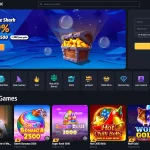
When choosing a casino that accepts MiFinity in Australia, it helps to check the available details about licensing, deposits and payouts alongside payment-method compatibility. Use these verdicts as a concise reference when deciding which options to investigate further.
Neospin
Neospin is listed with a Curacao Gaming Control Board licence, OGL/2023/176/0095, held by Hollycorn N.V.
Ricky Casino
Ricky Casino lists crypto payouts in under an hour and PayID payouts in 1–3 business days. Its minimum deposit is A$20, or A$30 to qualify for the bonus.
7Bit Casino
7Bit Casino is operated by Dama N.V. and is listed as licensed in Curacao.
Rollero Casino
Rollero Casino is listed with a Curacao Gaming Control Board licence, OGL/2023/176/0095, held by Hollycorn N.V.
Lucky Dreams
Lucky Dreams lists a minimum deposit of A$20 via POLi and is licensed in Curacao.
LevelUp Casino
LevelUp Casino lists a minimum deposit of A$15. Its Curacao eGaming licence, OGL/2023/174/0082, is held by Dama N.V.
DragonSlots Casino
DragonSlots Casino is listed as licensed by the Curacao Gaming Authority, with Jumpman Gaming Ltd named in connection with the licence.
House of Pokies
House of Pokies lists PayID payouts in 1–24 hours and a minimum PayID deposit of A$10; its general minimum deposit is A$30. The source describes its licence as an international iGaming licence but does not name the jurisdiction.
Roby Casino
Roby Casino is listed as licensed by Curacao eGaming, with Roby Games Ltd named as the licensee.
JustCasino
JustCasino is listed as licensed by the Curacao Gaming Control Board.
There is no sound basis for turning the phrase “best Australian online pokies with MiFinity” into a recommendation. A ranking would require evidence that the named operators accept MiFinity, and that the comparison uses meaningful, current criteria. Without those foundations, “best” is just an advertising word. It looks decisive. It proves little.
The same separation applies to claims about new pokies sites. A site being newly launched, newly discussed or newly encountered does not establish that it offers MiFinity. A payment method may be listed in one place while the operator’s cashier presents different options. Conditions can also be set by the operator or payment provider. A broad statement about a casino, then, should not be treated as a transaction-level guarantee.
For comparison, Australian consumers are accustomed to several other payment forms in ordinary commerce. Contactless card payments and mobile wallets such as Apple Pay and Google Pay are accepted almost everywhere in Australia, and consumers are comfortable moving among cards, mobile wallets and bank-linked services such as PayPal. That context says something about general payment habits. It does not establish that any casino accepts MiFinity, and it cannot be used as a proxy for the payment options shown by an online operator.
American Express provides a useful illustration of why payment claims need to stay specific. A specialist review has named certain casinos as accepting Amex, but that is a claim about Amex, not MiFinity; it should not be transferred to another method or treated as a permanent market-wide rule. Card acceptance can depend on the operator and other transaction conditions. Familiarity with one payment brand tells nothing conclusive about another.
The word “Australian” also needs care in this context. It can refer to a person located in Australia, an operator’s intended audience or a site’s marketing language. Those are not the same as a locally authorised casino service. Under the Interactive Gambling Act 2001, operators cannot provide real-money online casino games to people physically in Australia, and the Australian Communications and Media Authority enforces the Act. Australian consumer law does not protect players using offshore casinos. A payment option does not alter that legal position.
This is why a polished cashier, a mobile layout or a payment logo cannot by itself establish that a service is lawful for Australians or that a particular method will work. Those are separate questions, with separate evidence. A claim about MiFinity needs to identify the operator and the relevant payment conditions; a claim about legal status needs to be assessed on its own terms. Neither can be safely inferred from a generic label such as “Australian pokies.”
The practical boundary is simple: general payment familiarity is not proof of casino acceptance, and a casino’s mention of a payment service is not proof that it can be used for a particular transaction. For MiFinity and pokies, the claim has to stand on operator-specific information rather than association, repetition or a “best” label. No shortcut.
Legal Warning
Under the Interactive Gambling Act 2001, operators cannot provide real-money online casino games to people physically in Australia, and Australian consumer law does not protect players using offshore casinos.
A deposit claim has to mean more than a payment name appearing in a general list. In a cashier, the relevant question is whether a particular service is available for the specific account and transaction—not whether the operator mentions MiFinity somewhere on its site. Payment arrangements can differ between operators, and a statement about one does not establish what another permits.
I have learned to read payment language as a set of separate claims. “Accepted” may refer to a method being listed, an account being eligible to use it, or a completed transaction. Those are not interchangeable. A method can be described in promotional copy without establishing that it is available to every customer or usable for a particular purpose. The wording matters.
For a MiFinity deposit, the essential point is whether the casino’s own current terms and cashier identify MiFinity as an available funding route for the relevant account. A third-party mention is not the same thing as an operator’s current statement, and an old statement may no longer describe the present arrangement. That is a basic distinction, not a technicality.
The amount is another separate matter. A search for a small MiFinity deposit does not establish that a casino allows that amount, or that its minimum is the same across payment methods. Deposit thresholds are operator-specific details; a figure cannot safely be inferred from a payment brand or from another casino’s terms. If a site does not state the amount clearly, the amount should not be treated as confirmed.
 Payments & Crypto for Australian CasinosThis page brings together Australian casino searches for cards, bank payments, e-wallets and cryptocurrencies, rather than game or bonus topics.
 Casinos accepting Bitcoin Cash in Australia: key checksLearn how BCH payment claims, bonuses and withdrawals should be assessed, and why the Interactive Gambling Act 2001 focuses on operators rather…
Fees need the same care. A deposit can involve terms set by the operator, the payment service, or other parties involved in processing. A statement that one route is fee-free would not establish that MiFinity deposits are free, and a fee reported for another payment method would not transfer to MiFinity. The only useful figure is one tied to the actual method and transaction conditions.
Processing language is easy to overread. “Instant” may describe an authorization or a status update rather than the entire path from starting a payment to seeing a usable balance. Without a MiFinity-specific statement about the relevant process, another method’s timing says nothing reliable about this one. Speed is a condition to verify, not an attribute to assume.
From the operator side, these distinctions often sit in different places: general payment information, account-specific cashier options, and transaction terms. A broad payment page may not describe every condition. A cashier display may reflect account eligibility but still leave other terms unstated. A successful deposit, if one occurs, is evidence about that transaction; it does not establish a universal rule for all accounts or future transactions.
The same caution applies to wording such as “MiFinity deposits supported.” It may sound complete, but the practical meaning depends on the terms attached to it: who can use the route, which currency is handled, what amount is allowed, and whether charges or restrictions apply. No single label answers all of those questions. Specific conditions, stated by the operator for the relevant route, are what make a claim meaningful.
This is why a “best” deposit option cannot be identified simply by seeing a payment method named. A comparison would need reliable, current conditions for the same kind of transaction. Without those, ranking one route or operator above another would turn an incomplete label into a recommendation. That is not sound analysis.
I would also separate deposit information from other payment claims. The fact that a method is discussed for funding does not establish that it can be used for any later transaction, nor does it prove anything about account verification or other operator requirements. One transaction direction does not settle another. Different rules.
For Australian readers, there is a further context: the Interactive Gambling Act 2001 makes it illegal for operators to provide real-money online casino games to people physically in Australia. That legal position does not change according to the payment method named in a cashier. Australian consumer law does not protect players who use offshore casinos. A deposit label is not a safeguard, and it does not make an offshore service lawful for operators to provide.
The responsible way to describe MiFinity deposits is therefore narrow: treat acceptance, amount, charges and processing statements as separate operator-specific conditions. Do not infer them from a general payment list or borrow details from another method. Clear terms, not familiar wording, are the difference.
A claim that a casino accepts MiFinity is not the same as proof that a payment can be made from an Australian account. Payment options can depend on the operator, the account, and the point in the transaction where the method is being used. A logo on a landing page, a mention in a review, or a cached list may describe an earlier arrangement rather than the current cashier.
 Casinos That Accept Neosurf in Australia: What to CheckLearn why a Neosurf mention does not verify an Australian casino payment option, and why a deposit claim cannot confirm a withdrawal…
 Trustly Casino Sites in Australia: What Is VerifiedLearn why a Trustly mention does not confirm casino cashier support, and why payment availability depends on the operator’s setup.
That distinction matters when a page promises the “best” MiFinity casino. “Best” sounds like a comparative verdict, but it only holds together if the comparison is based on verifiable, current details. Without those, a ranked list turns an uncertain payment claim into an endorsement. I have seen how easily a neat table can make a conditional or outdated statement look settled. Presentation is not verification.
A useful claim should identify what the operator actually supports and in which direction. A method offered for deposits does not automatically establish that it can be used for withdrawals. Nor does an operator’s general statement about payment options prove that MiFinity is available to every account or in every location.
The clearest evidence would come from the operator’s current payment information and the cashier displayed for the relevant account. Even then, the wording matters. “Available” might mean an option exists in some circumstances, not that every transaction will be accepted. A payment method can also appear in general site material while being absent from the actual cashier. That gap is where a broad claim stops being useful.
A review should therefore be read for its basis, not just its conclusion. Does it distinguish deposit support from payout support? Does it explain whether its statement was checked against current operator information? Does it state the applicable jurisdiction? If those details are not clear, a confident label such as “MiFinity casino” tells less than it appears to.
Rankings compress several separate questions into one position. A site may be placed first for a payment method, but the ranking may not show whether that method works for deposits, withdrawals, or both. It may also combine payment claims with unrelated qualities and present the result as a single measure of suitability.
A payment method offered for deposits does not automatically establish that it can be used for withdrawals, nor does a general statement prove availability for every account.
That is a poor fit for a payment decision. A method-specific comparison needs method-specific evidence. General ratings, attractive design, or a long list of cashier logos cannot establish MiFinity acceptance. Nor can a casino’s support for another e-wallet establish support for MiFinity. Similar names and functions do not make payment networks interchangeable.
There is another problem with the word “instant.” It can describe the operator’s handling of a request, a payment provider’s processing, or simply promotional copy. Those are different stages. A claim about one stage cannot, by itself, establish the time for the whole transaction. That is why a “best instant MiFinity withdrawal” label should not be treated as a confirmed performance record.
Specific wording carries more weight than a broad badge. A statement that names MiFinity and explains the transaction type is more informative than a generic “multiple payment options” claim. A dated review can still be out of date, however, and a screenshot may show an option without establishing that the transaction completed.
The distinction is basic but often blurred: listed, selectable, accepted, and completed are not synonyms. A listed method may not appear in the cashier. A selectable method may still be declined. A completed deposit does not establish that withdrawals use the same route. Each step describes a different point in the payment process.
I would not convert that uncertainty into a recommendation. A site cannot be called the best MiFinity option on the strength of a name appearing beside a payment logo. The claim has to be narrow enough to test and current enough to matter. Otherwise, the ranking is decoration.
For Australian audiences, there is also a broader boundary around online casino services: the Interactive Gambling Act 2001 prohibits operators from providing real-money online casino games to people in Australia. A payment label does not change that position or make an offshore service locally authorised. Australian consumer law does not protect players using offshore casinos. The distinction is material, not fine print.
 Casinos That Accept Litecoin in Australia: What’s VerifiedThe article distinguishes everyday payment options from gambling acceptance claims and explains what the available text does not verify about Litecoin.
 Casino Sites That Accept BPAY in AustraliaSee why familiar bank-linked payments do not confirm BPAY availability, and how documented card details differ from a casino cashier's actual options.
“Instant withdrawal” sounds like a single event. In practice, it can describe different stages: an operator approving a payout, sending it to a payment service, or the money becoming available to the account holder. Those are not interchangeable. A fast approval does not, by itself, establish when funds arrive.
That distinction matters for any claim about a MiFinity withdrawal casino in Australia. A payment method’s name beside “instant” is not enough to establish a payout time. The claim needs to be tied to MiFinity withdrawals specifically, and its wording needs to make clear which stage is described. Otherwise, “instant” functions as a headline, not a useful timing statement.
I have seen the same compression in payment copy elsewhere: a process with separate checks and hand-offs gets reduced to one reassuring word. It reads cleanly. It leaves the important boundary unclear.
A casino could use “instant” to refer to its own handling of a withdrawal request, while the payment transfer follows a separate path. Or the phrase could be used without explaining whether it refers to approval or receipt. Unless the scope is stated, the label cannot support a precise expectation about when money will be available.
This is why searches for instant MiFinity withdrawals and instant MiFinity pokies do not establish that such payouts happen immediately. The wording describes what someone hopes to find; it is not evidence of a payment route, an operator’s processing practice, or a completed transfer. The same applies to claims about a “best” instant option: speed cannot be compared responsibly without comparable, payment-specific terms.
Attention: The term "instant" may describe only one stage of a transaction, such as operator approval, rather than the total time until funds are available.
Nor does a deposit-time claim settle the question. Funding an account and receiving a withdrawal are different transactions, and a statement about one does not establish how the other works. I would not carry a timing claim from another payment method across to MiFinity. Different methods do not become equivalent because the promotional wording is similar.
A useful payout statement would identify MiFinity as the withdrawal method and clarify what the stated timing measures. It would also distinguish operator handling from the transfer itself. Without that separation, “instant” may describe only one part of a longer process—or may have no defined meaning at all.
There is a further distinction between a payment claim and a claim about a particular casino. General wording about MiFinity cannot establish that a named operator supports MiFinity withdrawals, and a casino’s general withdrawal language cannot establish MiFinity-specific timing. Each link needs its own support. Otherwise the sentence may sound complete while leaving the central condition unanswered.
“No deposit” language does not change that standard. A bonus phrase attached to an instant-withdrawal claim is not proof of a payout route or timing, and it should not be read as one. The words may combine separate topics without clarifying either.
For Australian readers, offshore casino use also carries an important consumer-protection limitation: Australian consumer law does not protect players using offshore casinos. That sits apart from the wording of any payment claim. A fast-sounding label does not change the legal position or provide protection if a dispute arises.
 Casinos That Accept Bitcoin in Australia: PaymentsLearn how Bitcoin deposits move from broadcast to casino credit, and what to check about confirmations, network fees, legal limits and withdrawals.
 CashToCode Casinos in Australia: What’s VerifiedLearn what the available evidence says about CashToCode deposits, casino acceptance and payouts, and why ACMA enforcement matters in Australia.
The sensible reading is narrow: treat “instant” as a claim that needs a clear definition, not as a guaranteed arrival time. For MiFinity, the wording must concern MiFinity withdrawals themselves. Anything broader is not proof. Short version: labels are not settlement records.
A payment method does not change the legal status of an online casino. MiFinity may be part of a payment search, but whether a service accepts it is separate from whether that service may lawfully offer casino games to people in Australia.
The Interactive Gambling Act 2001 prohibits operators from providing real-money online casino games to people physically located in Australia. That includes casino-style games such as poker, roulette, blackjack and pokies. The restriction is directed at the operator’s provision of the service; the Act does not explicitly make a player’s use of an offshore site a criminal offence.
The Australian Communications and Media Authority (ACMA) enforces the Act. That matters because a polished cashier or a payment brand shown on a page is not evidence of Australian authorisation. In my experience, payment copy is often designed to answer a narrow operational question: what the cashier appears to support. It does not settle the broader question of whether the underlying service can lawfully be offered here.
There is a second distinction that promotional wording can blur. An offshore casino may describe itself as “available” to Australians, but availability is not the same as legal protection. Australian consumer law does not protect players using offshore casinos. If a dispute arises, that leaves a player without the protections that apply to ordinary Australian consumer transactions. The wording on a payment page cannot fill that gap.
That is why a search for casinos said to accept MiFinity should not be treated as a shortlist of lawful Australian services. Nor does a reference to MiFinity establish that a particular casino accepts the method, or that its claims about payments are dependable. Those are separate questions; neither changes the legal rule.
From the inside, the distinction is easy to miss because a cashier is concrete: a logo, a button, a deposit flow. Legal status is less visible and rarely explained in the same promotional space. But the button is not the licence, and the licence is not consumer protection. In Australia, the legal framework sets a boundary around operators offering real-money online casino games to people here, while leaving offshore players without Australian consumer-law protection.
The practical takeaway is narrow, not promotional: payment branding should never be read as proof that an offshore casino is lawful or protected under Australian consumer law. The method and the legal position are different matters. A familiar payment label does not bridge them.
A payment method and a game catalogue answer different questions. A casino may describe its available games in one place and list payment methods elsewhere, but neither description proves a connection between a particular game and MiFinity. The name of a payment service beside a casino’s branding would not, by itself, establish that the service is accepted for an account or that it can be used in connection with any particular game.
I keep those claims separate when assessing casino payment language. “Supported” can sound broad while leaving the actual condition unclear: it might refer to a payment option mentioned on a general information page, not a method available to a particular customer at the point of transaction. A game listing has a similar limit. It can indicate that a title is presented by an operator, but it does not establish anything about how an account can be funded.
For MiFinity, there is no substantiated link to a casino game catalogue, and no confirmed casino-level acceptance to attach to such a catalogue. That means claims about games being playable with MiFinity would go beyond what can be established. It would also be misleading to treat a game’s presence on a casino site as evidence that MiFinity is among the payment options for that site.
The distinction matters because payment wording is often compressed. A page may place a game category, a payment logo and an operator name close together, creating an impression of direct support without spelling out the relationship. In operational terms, those are separate claims: what the operator lists, what its cashier offers, and what payment route is available for the account in question. One does not prove the others.
I would therefore avoid describing any casino games as “MiFinity games” or presenting a list of titles as compatible with the service. That phrasing implies a verified connection between the game and payment method. No such connection is established here. The same caution applies to broad claims that MiFinity can be used across a casino’s entire catalogue: a general payment statement would not demonstrate game-by-game availability.
The useful conclusion is narrow. Game availability and payment acceptance must be evidenced independently; combining their names does not create proof. Without a confirmed operator-level payment statement and reliable information about the games offered, specific pairings should not be presented as fact. Clear separation.
An operator may list games and payment methods in different sections; the presence of a game does not prove MiFinity is an available funding route for that specific title.
In Australia, contactless credit and debit card payments are accepted almost everywhere. Mobile wallets, including Google Pay and Apple Pay, are similarly familiar at the point of sale. That everyday reach shapes expectations: payment tends to feel like a choice among methods already carried on a phone or card.
Consumers are also comfortable moving between cards, mobile wallets and services connected to bank accounts, such as PayPal. From the payment-industry side, that flexibility is ordinary. A person may tap a card for one purchase, use a wallet for another, and choose a bank-linked service elsewhere. Familiarity with several methods is not the same as every merchant offering every option.
That distinction matters when MiFinity is mentioned alongside an Australian casino. General payment habits describe how people pay across the wider economy; they do not determine which methods appear in an individual operator’s cashier. A service can be familiar in one setting and absent in another. The cashier is configured by the business, not by national preference.
I have seen broad payment language used as if it settled the practical question. “Widely accepted” sounds decisive, but it describes contactless cards and mobile wallets across Australian commerce. It cannot be carried over to MiFinity, nor does the popularity of digital payments establish that a particular casino supports a particular service. Different systems. Different decisions.
There is also a category error in treating a mobile wallet, a card network and a bank-linked payment service as interchangeable. They may all help complete a payment, but they are distinct methods with separate acceptance arrangements. A consumer’s willingness to switch among them says something about habit, not about a merchant’s technical or commercial setup.
So the Australian context is narrow but useful: flexible payment behaviour is normal, and contactless cards and major mobile wallets are broadly present in everyday transactions. It does not turn that pattern into a claim about MiFinity at casinos. Consumer comfort is not a cashier specification.
A casino’s acceptance of MiFinity for incoming funds would not, by itself, establish that it sends withdrawals through the same service. Deposits and payouts are separate functions in a cashier. Each can have its own available methods and conditions, so a payment logo alone is not evidence of a MiFinity withdrawal route.
I have seen payment pages make a method look like a complete two-way option when the wording only covers deposits. The operational detail sits elsewhere: in the withdrawal terms, the cashier’s payout choices, and any conditions attached to the account. A claim about MiFinity withdrawals needs to identify that route specifically, rather than rely on a general statement that MiFinity is accepted.
Timing needs the same precision. A displayed estimate might refer to a casino’s review of a request, a payment provider’s handling, or the whole process. Those are not interchangeable. Without a clearly stated MiFinity-specific basis, a quoted processing time should not be treated as a dependable payout expectation. Limits and fees also need to be tied to the particular route and the applicable terms; they cannot be inferred from a payment method’s name.
Account checks matter as well. Online casinos typically require customers to complete a Know Your Customer assessment before financial transactions. That requirement is distinct from the payment method and does not establish how quickly a withdrawal will be handled.
There is also a more basic Australian context. The Interactive Gambling Act 2001 prohibits operators from providing real-money online casino games to people physically located in Australia, and the Australian Communications and Media Authority enforces the Act. Australian consumer law does not protect players using offshore casinos. A payment claim does not alter that position.
I keep the distinction simple: a withdrawal statement is meaningful only when it names the method, the conditions, and what its timing actually covers. Anything broader is not a MiFinity payout commitment.
A payment option can be familiar in a market without being available at a particular business. That distinction matters when assessing MiFinity as a casino payment method in Australia: general comfort with digital payments does not confirm that an operator accepts this service, or explain how it handles a transaction.
Australian consumers are accustomed to moving between cards, mobile wallets and services linked to bank accounts, including PayPal. Contactless card payments and mobile wallets such as Apple Pay and Google Pay are accepted almost everywhere in the country. Those habits describe the wider payments environment; they do not establish MiFinity’s reach or casino acceptance.
In payment operations, the cashier is where a method becomes more than a logo. The operator must support the service for the relevant account and transaction, and the displayed terms need to match what happens at checkout. A payment brand appearing in promotional copy is not the same as a selectable option in the cashier. Nor does seeing it at one operator establish acceptance elsewhere.
The word “supported” can conceal several separate conditions: whether a method is available to Australian customers, whether it can be selected for the intended transaction, and what rules apply once selected. Without operator-specific confirmation, none of those details should be inferred from the general popularity of online payments. Familiarity is not acceptance.
I have seen payment decisions go wrong when a general claim is treated as a transaction-level promise. The wording may look straightforward, but the cashier and its terms are what determine whether a method is actually offered. A MiFinity reference alone cannot settle that point.
There is a separate Australian legal issue. The Interactive Gambling Act 2001 prohibits operators from providing real-money online casino games to people in Australia, and ACMA enforces the Act. Australian consumer law does not protect players who use offshore casinos. Payment availability does not change either point.
So “pay with MiFinity” should be understood as a claim requiring confirmation for a specific operator and transaction, not as a market-wide fact. General payment habits cannot fill that gap. No shortcut.
A payment method and a promotional offer are separate parts of an account’s terms. The appearance of MiFinity in a cashier would not, by itself, establish that a casino has a MiFinity-specific bonus, or that a particular offer can be used with that payment method. The distinction matters: promotional wording can make an offer sound automatic when eligibility may depend on conditions set by the operator.
I treat a bonus claim as a set of terms, not a headline. The relevant details would include who qualifies, which deposits count, whether a payment method is excluded, and what restrictions apply to any resulting balance or winnings. Without those terms, there is no sound basis for describing a MiFinity casino bonus as available, comparing offers, or suggesting that using MiFinity triggers an incentive. “Exclusive” is just a label until the conditions support it.
That caution does not turn the offer into a recommendation. The Interactive Gambling Act 2001 prohibits operators from providing real-money online casino games to people in Australia, and the Australian Communications and Media Authority enforces the Act. Australian consumer law does not protect players who use offshore casinos. A bonus headline does not change either point.
For that reason, promotional language should not be treated as evidence of a usable or suitable offer. Payment compatibility, bonus eligibility and the legal status of an operator are distinct questions; one does not answer the others. No shortcut.
Amex casino deposits are processed instantly. Withdrawals can take up to five days to clear, and not all casinos allow withdrawals to Amex.
Check the casino’s current cashier and payment terms for Amex, then confirm that it is available for your account and transaction. Some casinos do not accept Amex, and an issuer may block payments to a particular website.
Limits are set by each casino and can vary. Amex limits are usually higher than those for Visa or Mastercard, but check the casino’s terms and cashier for the applicable limits.
Amex deposits typically have no fee, but a casino may apply a 1.5% surcharge, and a 3% currency conversion fee may apply. Withdrawals may also incur a fee, depending on the casino.
Amex casino deposits are processed instantly. Amex withdrawals can take up to five days to clear.