Tasmanian venue hours vary, and general opening times may not show whether gaming rooms are operating or what “best-paying” claims can establish.
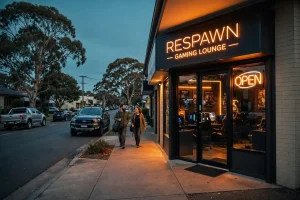
An “open” label can answer less than it appears to. It may refer to a venue’s general trading hours, not confirm that its gaming room is operating at that moment. A restaurant, bar or club can be open while a separate area has different access or operating arrangements. I have found that distinction matters most when a trip is being planned around pokies rather than around the venue as a whole.
Tasmanian venues do not share one set of opening hours. Each listing needs to be read as information about that particular place, not as a statewide timetable. A result showing a venue as open now is a useful lead, but it is not the same as confirmation that pokies are available immediately. The wording can be broad, and online listings may not reflect a changed schedule or a temporary closure.
The most reliable first check is the venue’s own current information. Look for hours that clearly apply to the gaming room, rather than relying only on the venue’s general opening hours. If the distinction is not stated, a direct call can settle whether the room is open and whether machines are operating. This is especially useful when the planned visit is early, late or close to a listed closing time.
A map listing or search result is still useful for a quick indication. I treat it as a starting point, not a promise. Listings can show standard hours, while a particular day may be affected by a public holiday, a private function, maintenance or a temporary change. Those are practical reasons to verify; they do not establish that any one Tasmanian venue has altered its schedule.
“Open now” also says nothing by itself about how long the gaming room will remain available. The venue may be nearing its closing time, or the gaming area may have an earlier finish than other parts of the premises. If timing is tight, confirmation of both current operation and the relevant closing time is more useful than a general open-status badge.
Searches for very early access, such as opening around dawn, need the same care. A request for pokies at a particular hour does not establish that a Tasmanian venue operates machines then. Nor does a late-night listing automatically confirm that pokies remain available throughout the venue’s trading hours. Only information that specifically covers the gaming room can answer that part.
There is also a staffing aspect to what “open” means. A report published by regionriverina.com.au says that, from 1 July, venues operating more than 20 gaming machines are required to have a dedicated responsible gambling officer (RGO) on duty while those machines are running. The key point is the connection between the officer’s presence and machine operation: the requirement is not simply about whether the wider venue has opened its doors.
That is a more useful distinction than treating opening status as a single switch. The venue may be trading, but a gaming room’s status depends on its own operating arrangements. For a larger venue covered by the reported requirement, the RGO is part of the conditions around machines being in operation. An open sign alone does not describe those arrangements.
I would not infer that every room has identical staffing or operating details from one rule applying to larger venues. The reported threshold matters, as does whether machines are operating. Where a venue’s public information does not make the situation clear, the practical question is whether the gaming room is open now—not merely whether the address is open.
Start with the venue’s own published hours and check whether they refer to the gaming room or only to the premises generally. Compare that with a current listing, then contact the venue if the information is unclear or the visit depends on a particular time. For a visit outside ordinary daytime hours, direct confirmation is particularly valuable.
A listing that says “open” can be accurate and still leave the main question unanswered. It may confirm that the venue is trading, while saying nothing precise about machine operation. The same applies to a location name appearing alongside a request for opening information: the name does not verify that a gaming room is currently available.
That is the practical reading of “open now” in Tasmania: a prompt to check the specific venue and room, not a statewide assurance. A few minutes spent confirming the detail can prevent a wasted trip. The room’s status matters.
Choosing pokies for play in Tasmania in 2026 means checking the details that matter to you, such as licensing and available payment information. Use these short notes as a starting point and confirm the current terms before playing.
Neospin
Neospin is listed with a Curacao Gaming Control Board licence, OGL/2023/176/0095, held by Hollycorn N.V.
Ricky Casino
Ricky Casino lists crypto payouts in under an hour and PayID payouts in 1–3 business days. Its minimum deposit is A$20, or A$30 to qualify for the bonus.
7Bit Casino
7Bit Casino is operated by Dama N.V. and is listed with a Curacao licence.
Rollero Casino
Rollero Casino is listed with a Curacao Gaming Control Board licence, OGL/2023/176/0095, held by Hollycorn N.V.
Lucky Dreams
Lucky Dreams lists a A$20 minimum deposit via POLi and a Curacao licence.
LevelUp Casino
LevelUp Casino lists a A$15 minimum deposit. It is operated by Dama N.V. and holds a Curacao eGaming licence, OGL/2023/174/0082.
DragonSlots Casino
DragonSlots Casino is listed with a Curacao Gaming Authority licence, with Jumpman Gaming Ltd as the operator.
House of Pokies
House of Pokies lists PayID payouts in 1–24 hours and a A$30 minimum deposit, or A$10 when depositing with PayID. Its stated international iGaming licence does not name a jurisdiction.
Roby Casino
Roby Casino is listed with a Curacao eGaming licence and is operated by Roby Games Ltd.
JustCasino
JustCasino is listed with a Curacao Gaming Control Board licence.
“Best-paying” sounds like a ranking, but a payout claim needs context before it can mean much. A pokie does not recognise a run of losses and compensate for it with a win. I have seen players read a recent result as a clue to what comes next; it is an understandable instinct, but it is not how the game works. Each spin is generated independently, so its outcome does not depend on the spin before it.
That independence matters when comparing games. A machine that has paid out recently is not thereby more likely to pay on the next turn, and a quiet stretch does not create a debt the game must settle. The random number generator determines each result separately. A streak may happen, but it is not a schedule or a forecast.
Return to player, or RTP, is a theoretical measure of how much a game is designed to return across play over time. It can help describe a game setting, but it does not predict the result of a short session or promise that a particular player will receive a stated share of their stake. The figure describes a long-run model, not a personal outcome.
There is another complication: the title alone may not identify the setting. A specialist review reports that some providers allow casinos to choose between different RTP configurations for the same pokie. If that applies, two casinos offering an identical-looking game may not be using the same return setting. The game name is therefore not enough to establish a like-for-like comparison.
That is a narrower claim than saying every pokie has different settings wherever it appears. The point is that configurations can vary where a provider makes that choice available. Without reliable information about the particular game and its active setting, a payout comparison may have a missing piece.
A high stated RTP can sound like a simple advantage, yet it does not settle the question of what happens during a single visit. It is not a promise of a win, a guide to when one might occur, or evidence that a game will suit every player. The random sequence can produce results far from the long-run model over an individual session.
I have also found that the word “best” can bundle together different ideas: the size of possible prizes, how often wins appear, the return setting, or simply a player’s preference for a particular style. Those are not interchangeable measures. A game described as generous because it offers large potential prizes is not necessarily the same thing as one with a higher theoretical return. A claim needs to say what is being compared.
For Tasmania, the same caution applies whether the subject is a casino floor, a city venue or a game encountered elsewhere. A title’s reputation does not establish its configuration, and a list of popular pokies is not automatically a ranking by return. Without a stated basis for comparison, “best-paying” is promotional shorthand, not a result that can be checked.
Return to player (RTP) is a theoretical long-run model and does not predict the outcome of a short session or a personal result.
The practical distinction is between what a game is configured to do in theory and what any particular run of play produces. The first can sometimes be compared if dependable setting information is available. The second remains uncertain from spin to spin. A machine’s recent history cannot bridge that gap.
So a payout claim is useful only when its meaning is clear: which game, which setting, and whether the claim concerns a theoretical return rather than an expected result in the next session. If those details are absent, the wording may create confidence without providing a sound comparison. No spin owes the next one anything.
Location wording often says more about the shape of a trip than about the venue being sought. An airport search points to a different practical question from a CBD search, while a reference to Victoria may mean the search has crossed a state boundary. I treat those phrases as starting points, not as confirmation that a particular venue is nearby or accessible.
An airport-focused search may come from someone arriving, departing or arranging transport around a flight. The word “near” is doing a lot of work: it can mean close to the terminal, somewhere on the route into town, or simply within the wider airport area. Those are not interchangeable. A result that mentions an airport does not, by itself, establish distance, transport options or whether pokies are available at the place named. The same applies to searches that put “Tasmania” and “airport” together without naming a specific airport.
CBD wording usually signals a preference for being within or near a central area, perhaps as part of a broader city visit. But “CBD” is not a precise address. It may describe a general district rather than a short walk from a particular hotel, workplace or transport stop. I would not treat a map label or a search-result snippet as proof of how convenient a venue is for a specific itinerary. The location has to be checked against the actual destination and route.
The broad phrase “near me” is more dependent on the person’s current position and device settings. A result can change when the search is made from a different suburb, town or part of the island. It is not a reliable way to compare all Tasmanian options, and it does not mean that the closest result is necessarily the most relevant one. “North Tasmania” is similarly broad: it describes a region, not a single point from which distance can be measured.
Mentions of Victoria introduce another distinction. Tasmania and Victoria are separated by Bass Strait, so a result associated with Victoria may belong to a different part of the journey rather than to Tasmania itself. The phrase might reflect a planned trip, a departure point or simply a wide search area. It should not be read as evidence that a Tasmanian venue is across the strait, or that a particular transport connection includes gambling facilities. Geography first; assumptions later.
Attention A result associated with Victoria may belong to a different part of the journey rather than to Tasmania, as they are separated by Bass Strait.
I have seen location wording treated as if it were a recommendation. It is not. A search result can group places by a loose label, and the label may not match the traveller’s intended starting point. That is especially easy to miss when “airport,” “CBD” or a regional name is used without a more exact destination. A useful location check is about matching the place to the actual trip, not inferring details the wording cannot establish.
The age threshold is straightforward: gambling in Australia is restricted to adults aged 18 and over. Location does not change that rule. For trip planning, the useful distinction is between a place’s broad geographic label and its verified position in relation to the route. Small difference. Big practical effect.
“Best” is doing a lot of work in searches for a pokies venue in Tasmania. It can mean a nearby gaming room, a venue with facilities that suit a particular outing, or simply a place whose details are easy to confirm. Those are different tests. I would not treat a broad reputation claim as evidence that one venue offers a better experience than another.
Start with details the venue itself can confirm: whether it has a gaming area, what facilities are available, and whether those facilities fit the purpose of the visit. Published descriptions can be incomplete or out of date, so a direct confirmation matters where a specific feature is essential. A polished listing is not the same as a verified comparison.
The same caution applies to claims about choice or quality. A venue’s general description does not establish which games are installed, whether a particular machine is available, or how one venue compares with another. Those are operational details, not conclusions that can be drawn from a name, a photograph or a promotional phrase. I have seen “best” used as if it were a measurable category. Often it is only a label.
Responsible-gambling arrangements are a more concrete point to check. A report published by regionriverina.com.au describes a requirement for venues with more than 20 gaming machines to have a dedicated responsible gambling officer (RGO) present while those machines are operating. The report also describes a one-month transition period for venues to remove relevant signage and put the officer arrangements in place. These are reported requirements, not proof that a particular Tasmanian venue has met them; venue-specific compliance should not be assumed from a general statement.
The same report says venues will need to maintain a gambling incident register. It is intended to capture events that may indicate a patron is experiencing, or at risk of experiencing, gambling harm. That makes the RGO role more than a title on a notice: it sits within a broader process for recognising and recording incidents. But a register’s existence does not tell an outsider how consistently a venue identifies concerns or responds to them.
For a practical comparison, separate what can be checked from what remains a claim. Confirm the venue’s own description and facilities, ask about features that affect the visit, and look for clear information about responsible-gambling support. Treat unsupported rankings and vague assurances as marketing, not independent evidence. The distinction is useful. A venue can be suitable without being objectively “the best,” and a confident label does not settle the question.
A search for pokies on the Spirit of Tasmania can mix two different ideas: entertainment associated with a ferry journey and gambling available at a venue or online. The wording alone establishes neither that pokies are offered onboard nor that a particular service is connected with the ship. I would not treat a name appearing beside “pokies” as confirmation of what passengers can access.
The same caution applies when a search combines Tasmania with a casino name. A reference to Crown and Tasmania does not, by itself, establish that a venue is in Tasmania, that it has pokies, or that its games are available online. Those are separate claims, and they need reliable confirmation rather than inference from a search result.
Online real-money pokies sit on a different legal footing from gambling at a physical venue. Under the Interactive Gambling Act 2001, companies cannot legally provide real-money online pokies to people in Australia without a domestic licence. No such licences have been issued. That means an offshore operator accepting Australian customers is not thereby authorised to offer the service here.
The distinction that often gets blurred is who the law targets. The Act prohibits the operator’s provision of the service; it does not make an individual player criminally liable simply for playing on an offshore site that accepts Australians. That does not turn the arrangement into a protected one. If an offshore casino withholds winnings, an Australian player has no legal recourse in Australia to compel payment. The offer may look familiar; the local remedy is absent. A costly distinction.
This matters when claims about “online pokies in Tasmania” are framed as though they describe a locally regulated product. They do not. A bonus label, a Tasmanian reference, or a ferry-related name does not change the legal position or create Australian consumer protection for an offshore service. I have seen how promotional language can make a transaction feel routine while leaving the crucial condition—who is responsible if something goes wrong—in the background.
BetStop is not a safeguard against offshore gambling: it applies to Australian-licensed operators and does not bind offshore sites. It should not be presented as a way to block access to every offshore casino or to secure a disputed withdrawal.
The practical line is straightforward, even when the surrounding wording is not. A physical venue, a ferry, a search result and an offshore website are not interchangeable. The law addresses companies offering online real-money pokies to people in Australia, while an individual player is not penalised under that prohibition. But if an offshore operator refuses to pay, Australian legal recourse is not available. No local protection.
A venue’s published opening hours describe when its doors are open; they do not, by themselves, confirm that its pokies are available throughout that period. Food service, bar access and other facilities may operate on a different schedule from the gaming area. The distinction matters when a listing says a venue is open late or appears to offer round-the-clock access.
I have seen “open” used as a broad label, not a promise about every service inside. A venue may be open while its gaming room is closed, or its machines may stop operating before the venue shuts. A search result marked “open now” can also lag behind a changed schedule. It is a starting point, not confirmation.
Useful controls include deposit limits, loss limits, session time limits, and self-exclusion. These tools help define when gambling stops and shape an individual's activity, separate from the venue's operating hours.
For a particular visit, the useful check is the venue’s own current information, followed by direct confirmation if the gaming-room schedule is unclear. Look for wording specifically about pokies or the gaming room rather than relying on general opening hours. If the information does not say when machines operate, that gap should not be filled by assuming they match the venue’s full schedule.
The same applies to claims of 24-hour access. A phrase suggesting a venue is open around the clock does not establish that its pokies run continuously. Nor does a general result for Tasmania show that every venue follows the same arrangement. “Open all day” is not the same as “machines operating all day.” Different things.
Responsible-gambling limits sit alongside this operational distinction, but they are not opening-hour information. Deposit limits set a boundary on money put into play; loss limits and session time limits can help define when gambling stops. Self-exclusion is another available tool for stepping away from gambling. These controls shape an individual’s gambling activity, not a venue’s published timetable or the hours its machines are switched on.
That separation can be easy to miss because both subjects appear in venue information. A listed schedule answers when a place or gaming area is operating. A limit answers what boundary applies to gambling. Neither should be treated as evidence of the other: a venue’s hours do not say what personal controls are in place, and a deposit or session limit does not confirm that machines are available at a particular time.
For late-night plans, the practical question is therefore narrower than whether a venue is “open”: does its gaming room operate at that time? Current, venue-specific confirmation is the only useful basis for that detail. A broad label cannot settle it.
Broad claims about pokies in Tasmania need to be separated from facts that can be checked. A venue page, a room photograph or a customer comment may indicate what was visible or described at a particular time. On its own, none establishes a complete picture of the state’s machines, the games available across venues or how those games are configured.
That distinction matters when a claim is framed as “best”. A title can be popular with players, prominent in a room or simply familiar; none of those qualities proves it offers better results. Each spin is an independent random event produced by a Random Number Generator. A run of wins or losses is not evidence that a machine is due to change direction, nor does a short account of someone’s session establish a reliable pattern.
I have seen promotional language turn a limited observation into a market-wide impression. “Big payout” may describe one reported outcome, not the likelihood of repeating it. “Maximum cash payout” can also be read too broadly: a figure attached to a particular game or set of rules would not, by itself, describe every pokie in Tasmania. The wording needs its context—what game it refers to, what conditions apply and when the information was checked.
The same care applies to maximum bets. A search result or a machine label can answer a narrow question about one game, but it cannot establish a shared setting across venues. Nor does knowing a maximum bet tell much about the experience of ordinary play. It is a limit, not a prediction of what a session will cost or return.
“Best pokies Tasmania” is therefore not a measurable category unless the comparison states what is being measured and supports it with comparable evidence. A list of names without a method may look decisive while leaving the important question unanswered. Are the entries being compared by game rules, availability, player preference or independently verified performance? Those are different claims.
For a useful assessment, details should be tied to the specific machine and its displayed rules, rather than carried across from a different venue or a past account. Even then, game information describes conditions, not a promised outcome. The boundary is simple. Evidence can describe a particular game or reported event; it cannot turn random play into a dependable forecast.
A search for online pokies connected with Tasmania can return pages that look local without showing that the service is authorised in Australia. There is no Australian-licensed online casino. Under the Interactive Gambling Act 2001, operators cannot provide real-money online casino games to people in Australia. A polished page, a Tasmania reference or a claim about “the best-paying” games does not alter that position.
Bonus terms are a separate issue from legality, but they matter when assessing what an offer actually promises. In my experience, the headline amount gets attention; the conditions determine whether any winnings can be withdrawn. A wagering requirement sets how much must be bet before bonus funds or related winnings become eligible for cash-out. A specialist review suggests treating requirements of 35 times or less as a more manageable benchmark and describes anything above 40 times as punishing. That is an assessment, not a universal rule.
The calculation depends on what the multiplier applies to. If a $500 bonus carries a 40-times requirement on the bonus alone, the required turnover is $20,000. If the condition applies to a $500 deposit plus a $500 bonus at 35 times, it becomes $35,000. The larger headline can therefore carry a much larger turnover obligation. Read the definition of the qualifying amount, which games count, and whether the requirement must be completed before a stated cash-out condition applies.
Free spins have their own complication: a cap may limit how much of the resulting winnings can be withdrawn. A winning balance can look substantial on screen and still be subject to a lower cash-out ceiling under the offer terms. The cap, expiry conditions and any wagering attached to those winnings all affect the practical value. Fine print. Not the banner.
Withdrawal rules also shape the offer. A specialist review reports that identity checks before a first withdrawal can require identification and proof of address; some services may also request a selfie with the identification document. Those checks are not a substitute for legal authorisation, and a search result cannot establish that a service is licensed in Australia.
The same distinction applies to claims about online pokies near Tasmania, including pages framed around a local centre or “high-limit” play. Those phrases describe how a page presents itself, not the legal status of the operator or the enforceability of its promises. Before treating a bonus as money, the terms need to be read as a set: qualifying turnover, caps on free-spin winnings, verification requirements and withdrawal conditions. A large offer can be small in practice.
Legal Risk
Offshore operators accepting Australian customers are not authorised under the Interactive Gambling Act 2001, meaning players have no legal recourse in Australia if winnings are withheld.
A club in a central business district is not safer simply because it is familiar, busy or attached to another activity. I have seen how reassuring labels can blur the real question: what controls are available around the pokies, and how clearly are they explained? A venue name or location does not establish which safeguards it uses.
Useful controls include deposit limits, loss limits, session time limits and self-exclusion. These are practical tools, not evidence that gambling is risk-free. Their value depends on how they are set, whether they can be changed during play, and what happens when someone asks for help. A self-exclusion option matters only if its scope and operation are clear. The details should be checked with the venue rather than assumed from the word “club”.
The physical layout matters too. Signage directing patrons to gaming lounges should not be placed within sight of ATMs or EFTPOS terminals. Signs pointing patrons to ATMs should not be visible from gaming machines. That separation is more than a design detail: prompts near cash access can make continuing to play feel like the default next step.
For larger venues, reporting on Tasmania’s new requirements says a Responsible Gambling Officer (RGO) must be on duty while machines are operating where a venue has more than 20 machines. The same report describes a gambling incident register for recording occasions when a patron appears at risk of gambling harm. These are operational safeguards, not a promise that harm cannot occur. The relevant question is whether the required oversight is present when machines are running.
Online controls sit under a different system. The Australian Communications and Media Authority (ACMA) enforces the Interactive Gambling Act 2001 and blocks access to illegal offshore gambling sites; internet service providers must comply with its blocklist. That is not the same as a club-level safeguard, and a search result or familiar brand does not change the legal position of an online service.
BetStop is another point that needs precise wording: it applies to Australian-licensed operators and does not bind offshore sites. It should not be treated as a universal self-exclusion switch for every gambling service. In practice, club safeguards and online exclusion tools have different scopes. Keep that distinction clear.
“Cashless” can describe different things. In a venue, it may refer to how payments are handled around gaming machines; online, it may describe a bank transfer method. Those are not interchangeable, and a cashless label does not tell us which system a venue uses.
PayID is not a wallet holding a separate balance. It is an alias layer within Australia’s New Payments Platform (NPP): a transfer can be addressed using an email address, mobile number or ABN rather than bank-account details. For a real-money online gambling deposit, PayID must first be linked to a bank account. That explains the payment mechanics, not whether a gambling service is lawful or available in Tasmania.
That distinction matters. Real-money online casino games, including pokies, cannot legally be provided to people in Australia by operators without a domestic licence, and no Australian online casino licence has been issued. A site mentioning PayID is not thereby licensed, approved or more transparent. Payment support proves only that a payment route is offered.
I have seen payment badges do a lot of quiet persuasive work. They make a service look settled and ordinary. They are not evidence of consumer protection. BetStop applies to Australian-licensed operators; it does not bind offshore sites.
A phrase combining “Newcastle” and Tasmania may also mix a place reference with a payment feature. It does not establish that a particular venue exists there, accepts cashless payments or offers pokies. The useful distinction is simple: PayID is a transfer alias, while venue payment arrangements are a separate matter. Neither label settles legality.
The mechanics are plain. The implications are not.
You must be at least 18 years old to gamble online in Australia.
Australian players can legally play on offshore sites that accept them, but offering real-money online pokies to Australians without a domestic licence is illegal for operators, and no Australian online casino licences have been issued. Players have no legal recourse in Australia if an offshore casino refuses to pay.
It is the amount you must bet before bonus winnings can be withdrawn. For example, a $500 bonus with a 40x requirement means $20,000 in bets; if the requirement applies to a $500 deposit plus a $500 bonus at 35x, it means $35,000 in bets.
Compare the bonus with the required turnover and any cash-out limits. For example, a $500 bonus at 40x requires $20,000 in bets, while a 35x requirement on a $500 deposit plus a $500 bonus requires $35,000; free-spin winnings may also be subject to a withdrawal cap.