Venue listings, operating hours, payment methods and gambling oversight each answer different questions about access and protection.
“Open” can mean different things at a venue. A building may be operating while its pokies area is unavailable, or a venue may be open for some services but not accepting visitors in the way expected. For a planned visit, the useful question is not simply whether an Adelaide venue is open. It is whether that specific venue will provide access to its pokies at the time of arrival.
I would treat this as a practical check, not an assumption based on a venue’s name, past experience or a general listing. Conditions can differ from one place to another and may change. A listing that says a venue is open does not necessarily confirm that the gaming area is available; equally, an old note that it was closed does not establish its current status. The distinction matters most when the visit depends on pokies being accessible rather than on another part of the venue being open.
A broad search for Adelaide pokies can produce a mixture of venue pages, directory entries and other results. Those may help identify a place to investigate, but they are not confirmation of access at a particular moment. The detail that matters is attached to the individual venue and the intended visit time.
A direct check through a venue’s own current information is a sensible starting point. If the information does not answer whether pokies are accessible, contact the venue and ask plainly. That avoids a common mismatch: asking whether the premises are open when the real question is whether the gaming area is operating and available to visitors. The wording need not be complicated. What matters is that the answer refers to the right venue, the right area and the time planned.
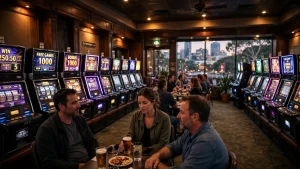 Brisbane pokies: how to check what's openLearn why an “open now” listing may not confirm gaming-area access, and how to assess venue-specific hours, online terms and Brisbane searches.
 Big Red Pokies Online in Australia: Free Play ExplainedLearn what “free” Big Red play does—and does not—tell you about cash stakes, game settings and offer conditions; the label alone settles…
Online listings can be useful, but they are not the venue itself. They may be out of date, may describe the premises generally, or may not distinguish between services. I would not treat a status indicator alone as a promise that a particular area will be available when someone arrives. Confirming directly is more useful than trying to infer the answer from a broad label.
A check made well before departure can lose value if circumstances change. A check close to the intended arrival is more relevant, especially when the plan depends on access being available then. If there is a delay or the visit shifts to a different time, the earlier answer may no longer settle the question.
This is particularly important for visits planned early or late. A venue’s general public information may not make clear whether pokies are accessible at the precise time in question. Rather than relying on a general impression, ask about the intended arrival time. That is a narrower and more useful check than asking whether the venue is “open” in an abstract sense.
There is also a difference between being told that a venue is operating and being told that access is available to the visitor in question. If the answer is vague, it is reasonable to clarify what it covers. An answer about the premises as a whole may not resolve the availability of the pokies area. Small distinction. Practical consequence.
For a visit that would be wasted if access is unavailable, use the most current information the venue provides and make a fresh check if plans change. Save or note the response if useful, but do not treat an earlier confirmation as permanent. A venue’s operating circumstances can change, and a published listing may not update at the same moment.
The aim is not to build a complicated research routine. It is to avoid acting on an assumption. Identify the specific venue, confirm that the pokies area is accessible, and make the time of the visit explicit. If no clear answer is available, the uncertainty remains; a search result cannot fill that gap.
This is separate from a broader question about a venue’s regular operating hours or whether it offers continuous access. Those are questions about its general schedule. Here, the issue is narrower: whether access is available for a particular visit. Keeping the two questions apart prevents a general schedule from being mistaken for confirmation of a specific occasion.
Responsible-gambling tools are a separate consideration from venue availability. Deposit limits, loss limits and session time limits can help set boundaries, while self-exclusion is an option for someone who wants to stop access to gambling. They do not establish whether a venue is open, but they belong in the decision about whether and how to gamble.
I would not describe any Adelaide venue as open now without current, venue-specific confirmation. Nor would I treat a general opening label as proof that pokies are accessible at a chosen time. Check the place. Check the time. Keep the answer specific.
Choosing pokies in Adelaide means looking beyond the game selection to practical details such as licensing and payment options. This list gives you a concise reference for considering operators in 2026.
Neospin
Neospin is listed with a Curacao Gaming Control Board licence, OGL/2023/176/0095, held by Hollycorn N.V.
Ricky Casino
Ricky Casino lists crypto payouts in under an hour and PayID payouts in 1–3 business days. The minimum deposit is A$20, or A$30 to qualify for the bonus.
7Bit Casino
7Bit Casino is operated by Dama N.V. and is listed as licensed in Curacao.
Rollero Casino
Rollero Casino is listed with a Curacao Gaming Control Board licence, OGL/2023/176/0095, held by Hollycorn N.V.
Lucky Dreams
Lucky Dreams lists a A$20 minimum deposit via POLi and a Curacao licence.
LevelUp Casino
LevelUp Casino lists a Curacao eGaming licence, OGL/2023/174/0082, held by Dama N.V. Its minimum deposit is A$15.
DragonSlots Casino
DragonSlots Casino is listed as licensed by the Curacao Gaming Authority, with Jumpman Gaming Ltd named as the operator.
House of Pokies
House of Pokies lists PayID payouts in 1–24 hours and a A$30 minimum deposit, reduced to A$10 for PayID. Its source describes the licence as international but does not name the jurisdiction.
Roby Casino
Roby Casino is listed as licensed by Curacao eGaming, with Roby Games Ltd named as the licensee.
JustCasino
JustCasino is listed with a Curacao Gaming Control Board licence.
“Best paying” sounds like a fixed property of a pokie, as if one title carries a permanent return figure wherever it appears. That is not always how the settings work. A specialist review reports that some providers let casinos choose between different return-to-player, or RTP, configurations for the same game. If that applies, the title alone does not tell the whole story: its stated return can differ from one casino to another.
RTP is a percentage used to describe the share of wagers a game is designed to return over a very large number of plays. It is a long-run measure, not a forecast for a particular visit or a promise about an individual result. A higher published figure may help compare settings, but it does not mean that a particular player will receive that share back, or that one session will follow the average.
That distinction is easy to lose in promotional wording. “Best paying” may refer to a game’s possible configuration, a figure shown for one casino, or simply a broad label without enough detail to compare like with like. In my experience, the useful question is not whether a title has a reputation for paying, but whether the specific version being offered has a clearly stated RTP and whether that figure is tied to the casino in question. A name alone is not evidence.
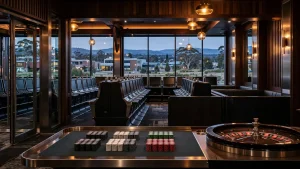 Best Pokies in Canberra: Hours, Access and RulesFind out why opening hours must be checked venue by venue, how gaming-area access differs, and what Canberra searches can and cannot…
 Queensland Casino Hotels: Rooms and Stay DetailsCompare room layouts, bed arrangements, views and bathroom details, and see why the final booking total matters more than a headline rate.
When a provider makes multiple RTP settings available, the casino’s selected configuration matters. The same pokie can therefore carry different return percentages at different casinos. It is not enough to recognise a familiar title or see a figure associated with it elsewhere; the relevant figure is the one that applies to the version actually offered.
That also means a general list of “best paying” games can create a false sense of precision. A list may describe one setting while a different setting is in use somewhere else. Without a clear connection between the title, the selected configuration and the casino, a comparison is incomplete. The advertising label may be neat. The underlying setting is the detail that counts.
I would treat claims carefully when they do not say which configuration they refer to. A headline can make a game sound consistently generous, while leaving out that its return figure may depend on the casino’s choice. The omission does not prove that a particular setting is being used; it simply means the claim cannot establish the version’s return.
The other part of the calculation is randomness. Each spin is generated as a separate random outcome, rather than as a step in a sequence that must balance out for one player. A run of losses does not make a win due, and a recent win does not mean the next spin is less likely to pay. The long-run return figure does not schedule outcomes.
Each spin is generated as a separate random outcome; a run of losses does not make a win due, and a recent win does not make the next spin less likely to pay.
This is why stories about a pokie being “hot” or “due” are not a sound way to judge its return. A short run can look striking in either direction, but it does not reveal the game’s RTP setting or determine what the next spin will do. I have seen how easily a sequence of results becomes a story about a machine. It remains a sequence, not a forecast.
The same caution applies to comparing Adelaide venues. A player may hear that a particular title pays well at one place, but that report does not establish the setting used at another casino, or predict a result there. Even when the game name is identical, a different selected RTP configuration may matter; even when the configuration is identical, individual spins remain random.
A meaningful comparison separates two questions: what RTP setting is attached to the specific version, and what can be expected from an individual session. The first concerns configuration. The second cannot be answered by the long-run percentage. Neither a favourable setting nor a reputation turns random outcomes into reliable income.
So “best paying” is not a dependable promise about a particular pokie in Adelaide. At most, it can describe a stated return figure for a particular configuration, if that figure is clearly connected to the version being discussed. Without that detail, the phrase is too broad to support a serious comparison. And even with it, the next spin remains unknown.
A venue’s location is a separate question from whether its pokie offering suits a particular visitor. I start with the venue’s actual street address, then compare that point with the intended starting place: Adelaide Airport, the CBD, North Adelaide or another location. A label such as “near the airport” is not a route. Without an address, it is difficult to judge whether the trip is genuinely convenient or merely described that way.
The comparison should use the same destination throughout. A venue may be close to one edge of the CBD but less convenient from another, and a route from the airport can differ from one beginning in the city centre. “Near me” is meaningful only when the starting point is known. North Adelaide is also a distinct destination area, not a substitute for checking where a particular venue sits in relation to the visitor’s plans.
For a useful comparison, I look at the address on the venue’s own current information and enter it as the destination in a mapping service. The route can then be assessed from the actual origin, using the mode of travel that will be used. A car route and a public-transport route answer different questions; straight-line proximity alone may not reflect the practical journey. If travelling with a fixed pickup point, hotel or appointment in mind, that point is a more useful origin than a broad label such as “Adelaide”.
There is a basic distinction between a venue located in Adelaide and one located inside Adelaide Airport. A search phrase can blur the two. The airport may be the starting point for a trip without being the location of the venue. I would not infer that pokies are available at the airport simply because a venue is described as being near it, nor treat an airport-related result as proof of an on-site gaming area. The address is what resolves that ambiguity.
Assessing Venue Proximity
Identify the address
Find the venue's actual street address from its own current information.
Set the origin
Determine the exact starting point, such as Adelaide Airport, the CBD, or a specific hotel.
Map the route
Enter the address into a mapping service to assess the practical journey based on the intended mode of travel.
The same care applies to “CBD” and “North Adelaide”. Those terms help define an area of interest, but they do not establish that a particular club or venue has gaming machines, or that it is close to a chosen landmark. A street address and a mapped route do the practical work. Marketing shorthand does not.
I have seen location language do more than it can support. “Convenient” may describe a route for one visitor and an awkward journey for another. The useful details are the starting point, destination address and travel mode—not an unsupported claim about how close something is. Geography first.
Anyone considering gambling at a venue must also meet the Australian legal age requirement: eighteen. That condition does not change the location comparison, but it is part of the basic boundary around access. A short journey is still only a journey; it says nothing by itself about the venue’s suitability, facilities or current availability. Those are separate matters.
A venue’s gaming-machine oversight concerns what happens on the floor and how staff record incidents, not whether one Adelaide venue is “best”. A report published by regionriverina.com.au describes a requirement for venues with more than 20 gaming machines to have a dedicated responsible gambling officer (RGO) present while those machines are operating, starting from 1 July. The report also describes a one-month transition period for venues to remove signage and put the officer arrangement in place.
That threshold matters. The reported requirement is tied to a venue’s machine count, rather than applying in the same way to every place with gaming machines. It also links the officer’s presence to machine operation. It does not, by itself, establish that a particular venue meets the threshold, has an RGO on duty, or is subject to the same rule. Those are venue-specific matters, not qualities that can be inferred from a name or a general description.
The RGO role is an operational control: a designated person is assigned responsibility while machines are running. In practice, a named role makes accountability clearer than a general expectation that staff will notice concerns. But the title alone does not show what intervention occurred in a particular situation, or whether a patron received support. A policy on paper and its application on the floor are different things.
The same report says venues will have to maintain a gambling incident register. It is intended to capture occurrences, including behaviour suggesting that a patron may be at risk of, or affected by, gambling harm. The register turns an observed incident into a record rather than leaving it solely as an informal staff recollection. That can matter for continuity: a recorded occurrence can be considered within the venue’s own oversight process.
The requirement, as described, is about recording relevant incidents; it should not be stretched into a claim that every concern is detected or that a register prevents harm. Nor does the existence of a register tell an outside observer how often incidents arise or how they are handled. It establishes a process, not an outcome.
For someone comparing venues in Adelaide, these measures are better understood as governance questions than as a scorecard. A venue’s size may affect whether the reported officer threshold is relevant, while incident recording concerns how the venue documents signs of harm. Neither measure says anything about the quality of the machines or the likelihood of a win.
The distinction is important. “Responsible” can sound like a broad assurance; the concrete meaning here is narrower: an assigned officer under a stated operating condition, and a register for specified kinds of incidents. Useful controls. Not a guarantee.
PayID is a way to address a bank transfer, not a separate bank account or a gambling licence. It sits over Australia’s New Payments Platform (NPP), allowing a transfer to be directed using an email address, mobile number or ABN instead of entering account details. The NPP is available through all major banks and protects transfers with end-to-end encryption.
That describes the payment rail. It does not establish what a recipient is authorised to provide, whether a gambling service is fair, or what return percentage a pokie uses. A familiar payment option can make a transaction look routine; it cannot verify the operator behind the payment request. Different questions. Different checks.
For a real-money deposit to an online casino using PayID, the payment method must first be linked to a bank account. In practical terms, the alias points to the account from which the transfer is made. It is not a way to deposit anonymously, and an accepted PayID transfer should not be read as a bank or regulator endorsing the recipient.
One specialist review describes PayID as being processed like other eligible deposit methods on the services it covers. That is a limited description of deposit handling, not a market-wide rule or a judgment about the service itself. The wording matters: payment eligibility concerns how funds are sent and credited, not whether a site has authority to offer real-money pokies in Australia.
I have seen payment logos do more persuasive work than their small print warrants. A logo signals a claimed route for moving money. It does not confirm licensing, game fairness, or RTP disclosure. Nor does a successful transfer certify that a withdrawal will be honoured. A deposit mechanism cannot answer those questions.
The distinction is especially important for online gambling. Australian law prohibits operators from supplying real-money online casino games to people in Australia, and no Australian online casino licence has been issued. PayID availability does not change that position. The payment method and the legality of the service are separate matters.
For a physical venue, PayID’s online deposit mechanics are not a measure of the pokies on its floor or of the venue’s status. Adelaide’s venue choices and online payment claims should not be folded into one “best” label: the same word can describe very different arrangements. A bank transfer alias is not a quality mark.
The useful reading is narrow. PayID identifies a transfer destination through a linked bank account; the NPP carries the payment. Neither layer tells anything reliable about a pokie’s return or an operator’s standing. No endorsement implied.
A search for online pokies around Adelaide can blur two different things: a physical venue with pokies and a website offering real-money play. The legal position for the online version is not a local variation of venue access. The Interactive Gambling Act 2001 prohibits companies from providing real-money online pokies to people in Australia unless they hold a domestic licence. No such licences have been issued, so there is no Australian-licensed online casino.
No Legal Recourse
If an offshore casino refuses to pay winnings, Australian players have no legal recourse in Australia to compel payment.
That distinction matters when a website uses familiar Australian language or presents itself as serving local players. A local-looking page, an Adelaide reference or a polished account area does not turn an offshore operator into a locally licensed business. The legal test concerns the service being offered to people in Australia, not the wording on its home page.
From the other side of the counter, I learned to separate the promise made at the point of sale from the protection available when something goes wrong. A site may display rules for withdrawals and describe a process for resolving disputes. Those statements are not the same as an Australian legal remedy. If an offshore casino refuses to pay winnings, Australian players have no legal recourse in Australia to compel payment.
That is the practical limit. A balance shown on a screen is not equivalent to money held under Australian oversight, and a complaint process controlled by the operator is not a substitute for a local route to enforce a claim. The operator may have its own terms, but those terms do not create Australian licensing where none exists.
Searches for “best paying” pokies can also suggest that an online offer is simply another way to compare games found in Adelaide venues. It is not. The key question is not whether a website uses a familiar game name or advertises attractive terms; it is whether the service is lawful for an operator to provide to people in Australia. The domestic licence condition is not a quality badge or a preference. It is the legal boundary.
This does not mean that a venue-based search and an online search should be treated as interchangeable. A physical venue and a remote gambling service raise different practical and legal questions. The phrase “Adelaide casino online pokies” may combine them in a few words, but it cannot establish that an online casino is licensed in Australia or that any winnings would be enforceable here.
I would treat claims of Australian protection with particular care when they are attached to an offshore service. A brand’s presentation, its own rules and the possibility of a displayed balance do not supply the missing domestic legal protection. If winnings are withheld, the Australian player has no legal recourse in Australia against that offshore casino. The distinction is stark.
A request for 24-hour pokies access is about a venue’s operating schedule, not simply whether its doors happen to be open at a particular moment. Those are different checks. A venue could be open during some hours without offering continuous access, and a statement that it is open now would not establish its schedule for the rest of the day or on another date.
I would not read “24 hour” as a description of Adelaide venues generally. It is a claim about a particular location and its arrangements. Without a confirmed address and reliable information from that venue, there is no basis for saying that any Adelaide venue operates around the clock or has pokies available at all hours. Search wording is not evidence of a schedule.
Attention: A venue's general opening hours may describe the premises overall and do not necessarily confirm that the pokies area is accessible during those times.
The same distinction matters when reading opening-hours information. A venue’s general hours may describe the premises overall; they do not necessarily spell out the hours for every facility within it. If the purpose of a visit is specifically to use pokies, the relevant detail is whether that activity is available during the intended period, rather than whether some part of the venue is open.
Hours also need to be read as a schedule, not as a permanent promise. A listing may not make clear which days it covers or whether the information applies to the date being considered. Where the schedule is unclear, the venue’s own current information is the sensible point of reference. If that does not answer whether pokies are accessible throughout the stated hours, direct confirmation is more useful than assuming the venue’s general opening time settles it.
In practice, “open now” and “open all day” answer separate questions. The first concerns a specific time. The second requires evidence of continuous operation across the period in question. A listing showing a late closing time, for instance, would not by itself establish that a venue is open without interruption. Nor does a venue name or a broad description of its services prove that its hours match another location’s.
That is the limit of what can responsibly be said about 24-hour pokies in Adelaide: operating hours must be established venue by venue, and continuous access must be stated rather than inferred. A schedule is not a guarantee of round-the-clock availability. Verify the specific hours.
A reference to Crown alongside Adelaide does not, by itself, identify a Crown venue in the city. Names can be carried across headings, listings and discussions without proving that a particular property is local or that it operates pokies there. I have learned to separate the name being discussed from the venue someone may have in mind. They are not interchangeable.
That distinction matters when someone is trying to decide where to go. A page using “Crown” and “Adelaide” together is not enough to establish an address, a connection to a local operator or the presence of a pokies room. Nor does the phrase “best pokies room” tell anything concrete about the room: it may be a subjective label, not a description of facilities or service. A comparison needs identifiable venues and comparable details. Without those, a ranking would be presentation, not evidence.
The same restraint applies to questions about the maximum cash payout from pokies in Adelaide. There is no single figure that can responsibly be attached to every machine or venue on the basis of a name alone. A claim about a maximum needs to specify what it covers and where it applies. A headline that gives a number without that context can make a narrow condition sound universal.
I have seen how easily promotional language turns proximity into implication. A venue mentioned near a city name starts to feel local; a payout phrase starts to sound like a promise. Neither impression proves the underlying detail. The practical distinction is plain: establish which premises are being discussed before drawing conclusions about their machines or payouts. No shortcut.
For Crown-related references, the sensible reading is therefore limited. The name may be part of the subject, but it does not establish a Crown casino in Adelaide, an Adelaide pokies room associated with Crown, or a basis for comparing such a room with other local venues. Treating those as settled facts would put more into the wording than it can support.
This is not a claim about what a particular venue offers. It is a boundary around what can be inferred from a name. A local venue’s identity, machine availability and any payout conditions are separate matters, each requiring its own clear identification. Until then, a Crown-branded comparison or a maximum-payout figure attached to Adelaide should not be treated as a reliable description of a local option.
A club’s address or reputation does not tell much about the safeguards available around its pokies. I have seen “responsible gambling” used as a broad label, when the practical question is narrower: which controls can be set, how they work, and whether they fit the person’s situation. Those details matter more than a venue sounding reassuring.
The standard tools include deposit limits, loss limits, session time limits and self-exclusion. Each addresses a different point of control. A deposit limit restricts money put into play; a loss limit concerns losses; a time limit puts a boundary around a session. Self-exclusion is different again: it is a request to prevent access for a chosen period or longer, rather than a reminder to stop.
For someone comparing clubs or pokies in Adelaide’s CBD, these safeguards are worth checking directly with the venue before relying on them. Availability, enrolment steps and how a restriction is applied are venue-specific. A sign or a general statement about safer gambling does not explain whether a limit can be changed immediately, whether exclusion covers all relevant areas, or what happens when someone returns. Ask for the actual terms. Marketing language is not a control.
I would also separate venue-level self-exclusion from BetStop. BetStop applies to Australian-licensed operators; it does not bind offshore sites. It should not be treated as a universal block on gambling, or as a substitute for asking a club how its own exclusion process works. The boundary matters.
A useful comparison is therefore not a ranking of CBD clubs, but a check of the safeguards each one explains clearly. Look for whether deposit, loss and session limits are available, and whether there is a defined route to self-exclusion. If staff cannot describe the process plainly, the label alone offers little practical assurance. That is a meaningful distinction when judging what “best” means: not a promise about wins, but whether the venue’s controls are understandable and usable.
Self-exclusion also takes a deliberate step. It is not the same as setting a limit, and it should not be assumed to follow automatically from a limit being reached. The terms should say what access is restricted and how the process is recorded or ended. I would treat vague assurances as incomplete information, not evidence that a safeguard is absent or present. Clear terms first. Then decide.
“Cashless” can refer to different things: paying for a venue transaction without cash, or using a bank card for an online gambling payment. Those are not interchangeable. A search for cashless pokies in Adelaide does not establish that a particular venue offers cashless play; that depends on the venue’s own arrangements.
There is a separate complication with online transactions. A specialist review reports that Australian banks and card issuers are increasingly stopping payments they identify as going to gambling sites. A declined transaction therefore does not, by itself, reveal anything about a venue’s payment facilities. Nor does a payment method indicate whether a gambling service is lawful or trustworthy.
Newcastle is also a distinct place, not an Adelaide suburb or a venue feature. Combining the two city names may reflect mixed-up location intent, but it supplies no basis for connecting Adelaide venues with Newcastle or recommending a particular venue. The practical distinction is simple: cashless payment arrangements are venue-specific, while card blocks concern the bank or issuer’s handling of a transaction.
No implied connection.
Yes, Australians can play on offshore sites that accept them; the Interactive Gambling Act targets operators offering real-money online pokies without a domestic licence. No Australian-licensed online casinos exist, and players have no legal recourse in Australia if an offshore casino withholds winnings.
You must be at least 18 years old to gamble online in Australia.
It is the amount you must bet to meet a bonus’s turnover multiplier before withdrawing winnings. For example, a $500 bonus with a 40x requirement means $20,000 in bets; if the requirement applies to a $500 deposit plus a $500 bonus at 35x, it means $35,000 in bets.
There are no Australian-licensed online casinos, and Australian players have no legal recourse if an offshore casino refuses to pay. ACMA blocks access to illegal offshore gambling sites, but that does not provide a guarantee that an offshore casino will pay winnings.