Broad searches can point to casino-related topics, but they do not verify a property's rooms, facilities, games or offers.
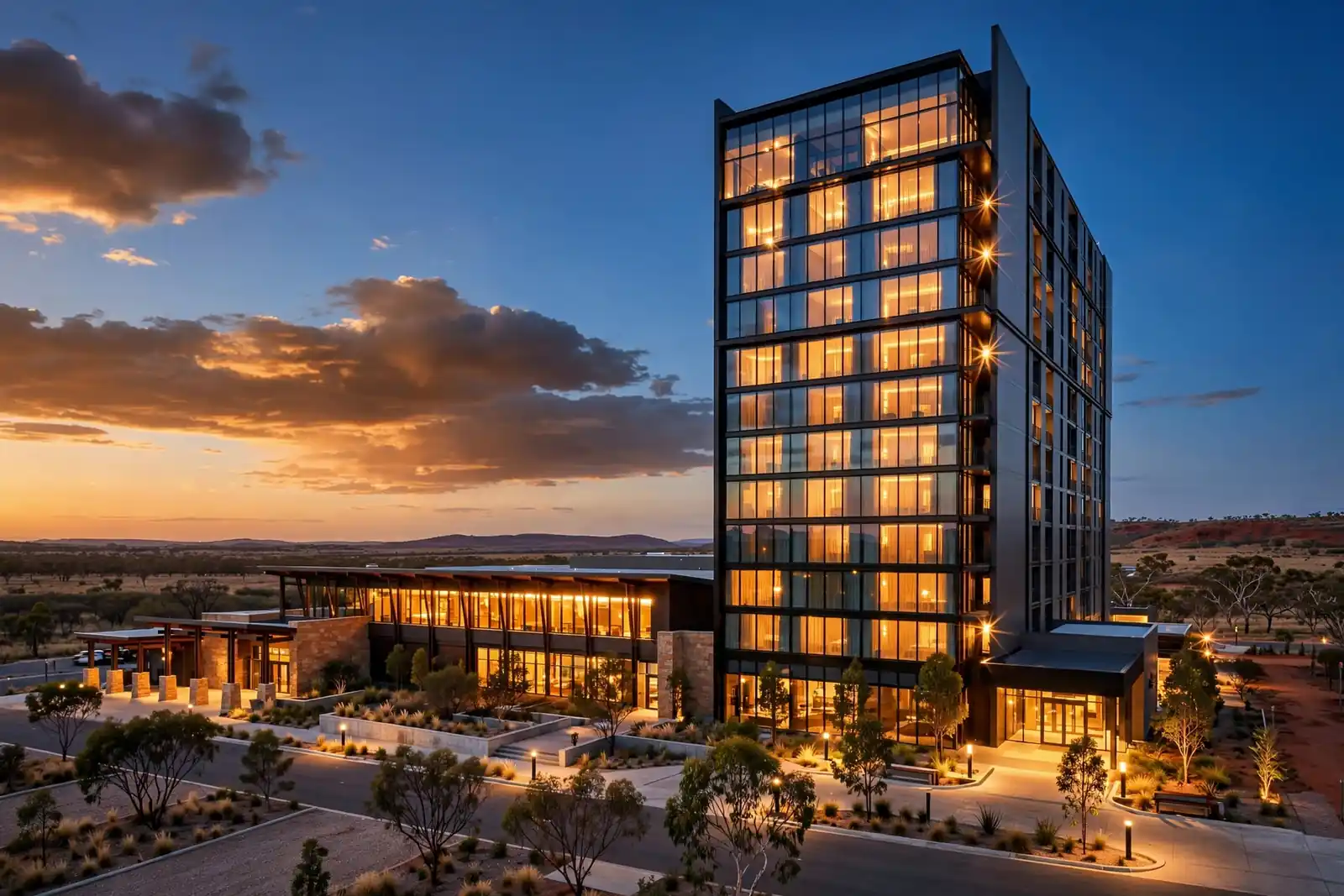
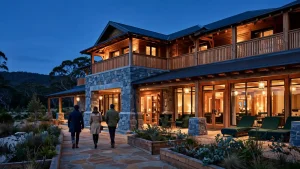
A casino hotel can mean two different things: accommodation operated as part of a casino complex, or an independent hotel located near a casino. The distinction matters. A result that places “hotel” and “casino” together does not, by itself, establish that the rooms belong to the venue, share its facilities or are even in the same building.
I have learned to treat the word “attached” as a claim about the property, not a decorative description. It should be clear which business operates the rooms and where the accommodation sits in relation to the casino. “Near” is less precise: it can describe a short walk, a drive or simply the same general area. Without property-specific information, neither label says much about the actual stay.
That is the boundary of what a broad description of a Western Australian casino hotel can establish. It identifies the kind of accommodation someone may have in mind; it does not identify a particular hotel, room category or booking offer. Those details belong to a named property and a dated listing. They cannot be inferred from the phrase alone.
Choosing an online casino while in Western Australia calls for a careful look at the information available about each option. This list highlights stated licensing details and, where provided, payment speeds and minimum deposits.
Neospin
Neospin lists a Curacao Gaming Control Board licence, OGL/2023/176/0095, held by Hollycorn N.V.
Ricky Casino
Ricky Casino lists crypto payouts in under an hour and PayID payouts in 1–3 business days. Its minimum deposit is A$20, or A$30 to qualify for the bonus.
7Bit Casino
7Bit Casino is operated by Dama N.V. and lists a Curacao licence.
Rollero Casino
Rollero Casino lists a Curacao Gaming Control Board licence, OGL/2023/176/0095, held by Hollycorn N.V.
Lucky Dreams
Lucky Dreams lists a Curacao licence and a minimum deposit of A$20 via POLi.
LevelUp Casino
LevelUp Casino lists a Curacao eGaming licence, OGL/2023/174/0082, held by Dama N.V. Its minimum deposit is A$15.
DragonSlots Casino
DragonSlots Casino lists a Curacao Gaming Authority licence and is operated by Jumpman Gaming Ltd.
House of Pokies
House of Pokies lists an international iGaming licence, but the jurisdiction is not named in the source. PayID payouts are stated as taking 1–24 hours; the minimum deposit is A$30, or A$10 when using PayID.
Roby Casino
Roby Casino lists a Curacao eGaming licence and is operated by Roby Games Ltd.
JustCasino
JustCasino lists a Curacao Gaming Control Board licence.
The same applies to “deals.” In hospitality, the word can cover different arrangements: a room price, a package combining accommodation with another service, or a promotion with conditions. A headline may foreground the saving while leaving the important mechanics elsewhere: eligible dates, room types, booking windows, cancellation rules or what is excluded. Without those terms, “deal” is a label, not a comparable price.
Room descriptions need the same discipline. A room name can indicate a category, but it does not settle practical questions about layout, view, accessibility, bedding or included services. Nor does a casino connection guarantee that every room is sold or managed under the casino’s own name. Marketing language often compresses those distinctions; the booking details are where they should become concrete.
I would separate three claims before treating any listing as useful: that the property exists under the stated name; that its location genuinely fits the description; and that the quoted room or offer is available on the stated terms. Each needs its own support. A map pin may help with location, but it does not establish a package. A promotional headline may advertise a rate, but it does not explain what the rate includes.
There is also a difference between a hotel being associated with a casino and a stay being an endorsement of the casino itself. The first is a lodging description. It should not be allowed to imply anything about the quality of gambling, the availability of games or the suitability of a venue. Those are separate questions, and a room listing cannot answer them.
 Fast payout online casinos in Australia: key checksLearn why advertised transfer speed may not include operator approval, and how verification, bonus terms and payment rails shape payout claims.
 Best Pokies in Melbourne: What to CheckSee how to assess airport-area locations, opening-hour claims, RTP wording and venue safeguards; a map pin alone does not prove a venue…
The practical point is modest but important: a broad hotel description is a starting category, not a booking decision. For a Western Australian stay, a specific property name and its own current room terms are needed before claims about rooms or offers can be meaningfully assessed. Without that level of detail, there is no sound basis for comparing one casino-linked stay with another or treating an advertised benefit as part of the price.
No shortcut.
A poker room and a poker tournament are different things to establish. A room implies a dedicated playing area and some form of ongoing venue provision; a tournament implies a dated event, its format and conditions of entry. Seeing either phrase associated with a casino is not enough to confirm that the venue currently provides it. The distinction matters because promotional wording can make an occasional event sound like a permanent facility.
That is not a subtle point to bridge with assumptions. A venue should be named only when current, venue-specific information confirms the facility or event. Without that, claims about tables, tournament nights, registration or player numbers would be guesswork.
I have seen how easily a broad label becomes a promise in a reader’s mind. “Poker” may refer to a game category, an event listing, a past promotion or a dedicated room. Those are not interchangeable. A listing for one tournament would not, by itself, establish that a permanent poker room operates there; a poker room reference would not confirm that tournaments are scheduled. Details need to match the claim.
The same restraint applies to searches for casino rooms. The word “rooms” can mean poker facilities, hotel accommodation or simply a space within a venue. Context decides. It cannot establish that poker is available, nor can it supply an event calendar.
A useful venue description would need to be precise about what is actually being offered. For a room, that means confirming that poker is played there and that the information applies to the specific venue. For a tournament, it means confirming that the event is current rather than an old listing, and that its date and entry arrangements belong to that event. If these details cannot be matched to the named location, the safer reading is that availability remains unconfirmed—not that the activity must be present.
This is also where a casino’s general identity can mislead. A venue may be associated with gaming without every game or format being available there. A page about a casino, or a broad description of its entertainment, does not establish poker tables, scheduled competitions or a regular poker calendar. The wording has to carry the evidence, not just the venue’s category.
Poker at a physical venue should also remain separate from online poker. They involve different settings and different questions. A local venue claim concerns facilities and events at a named place; an online service concerns gambling delivered over the internet. One cannot be used as proof of the other. The legal position for online casino-style services in Australia is governed separately by the Interactive Gambling Act 2001, so online availability should not be inferred from a venue’s name or from a reference to poker.
Sports-bar and opening-status terms are further signs of a different kind of venue information. They may appear beside poker in a broad description, but they do not confirm a poker room or tournament. Nor does a venue being open on a particular day establish that poker is running then. Facility, event and opening information each require their own confirmation.
For the person comparing Western Australian casino options, the practical standard is straightforward: treat poker-room access and tournament schedules as unconfirmed unless a current notice ties the specific detail to a named venue. No invented calendar. No assumed tables. A clean distinction saves more confusion than a confident-sounding guess.
A search for the best casino in Western Australia in 2026 can combine several different intentions: finding a physical venue, checking whether bingo is available, looking at dining, or asking whether casino games can be played online. Those are not interchangeable services. A venue-based result and a website offering real-money games sit on different sides of Australia’s gambling rules.
The distinction matters because “casino online” can sound like a digital extension of a local property. Legally, it is not. The Interactive Gambling Act 2001 prohibits operators based in Australia from providing online casino games to people in the country. That restriction covers games such as pokies, blackjack and roulette. A physical casino’s existence does not make online versions of those games lawful for an Australian operator to offer.
Legal Restriction
The Interactive Gambling Act 2001 prohibits operators based in Australia from providing online casino games, such as pokies, blackjack, and roulette, to people within the country.
I have seen the wording around this boundary do a lot of work. “Play anywhere” is an advertising phrase; it does not explain who operates the service or which law applies. A land-based venue and an online casino service need to be assessed separately, even when a page uses the same casino name or imagery. A familiar brand is not a legal test.
Offshore platforms create a less tidy picture. Australian players are not themselves committing an offence simply by using one, but an offshore service is not regulated under Australian law. That distinction is easy to flatten into a reassuring headline. It should not be. The absence of a local regulatory framework is a material limit, not a substitute for one.
So the phrase “legal grey area” describes the position of the player and the offshore service differently. The player’s use is technically not illegal; the platform does not thereby become an Australian-regulated provider. Nor does that make it appropriate to treat an offshore site as an authorised local casino. The operator’s location and the service being offered remain central.
Searches that pair a Western Australian casino with bingo or online play can therefore lead to results that appear related while describing unlike things. Bingo might refer to a physical activity, while online casino wording points to remote gambling. The wording alone does not establish that a particular venue offers bingo, or that its name is connected to a lawful online service. Those are separate claims, and each needs its own evidence.
Dining language can also appear beside online terms in the same results. That association does not tell anything reliable about a restaurant or a digital gambling product; it may simply reflect a broad page category or a venue’s general branding. I would not read a mixed result as confirmation of shared ownership, availability or legal status.
The practical check is to identify what is actually being offered: entry to a physical venue, a non-gambling amenity, or real-money casino games supplied over the internet. Then apply the relevant rules to that service rather than relying on a search snippet or a familiar name. For online casino games, Australian operators cannot lawfully provide them to people in Australia; offshore platforms remain outside Australian regulation.
Different service. Different rule.
Accommodation near a casino is a different proposition from a room inside a casino hotel. The practical question is whether a separately operated property is close enough to make a visit workable, and what the quoted rate actually includes. A page using broad labels such as “casino accommodation” does not, by itself, establish a property’s name, address, distance from a venue or price.
I treat those details as the starting point, not as small print. A useful comparison needs a property that can be identified, a location that can be checked against the venue, and a rate tied to specific dates and conditions. Without those particulars, “nearby” is only a sales description. It could mean a short walk, a drive or simply the same general area. The distinction matters when transport, parking and arrival time affect the plan.
“Accommodation deals” is another phrase that can look more definite than it is. A promotion may refer to a room rate, a package, or an offer subject to booking dates and availability. The label alone cannot show what is included or whether the advertised price applies to the intended stay. I would separate the headline from the terms: check the property, the dates, the room category, any conditions and whether parking is part of the price. If those elements are not stated, the offer cannot be compared reliably with an ordinary room rate.
That is especially important when accommodation, casino promotions and gaming facilities appear together on the same page. A package description should not be read as proof that a particular venue has a hotel, that a nearby property has a formal partnership with it, or that a casino promotion applies to the room. Each is a separate claim. Keep them separate.
Location should be verified at street level rather than inferred from a venue name or a map label. A listing may describe itself as being near a casino without explaining the route, access or likely transport needed. The same care applies to parking: the words “parking available” can leave open whether spaces are on site, subject to availability or charged separately. Those are property details, not something that can be assumed from the casino connection.
Opening times and trading hours are also separate from accommodation availability. A room booking does not establish when a casino is open, and a venue’s hours would not establish when a property accepts arrivals. Confirming both directly avoids building a schedule around an assumption.
In Western Australia, broad accommodation descriptions do not provide enough detail to identify a specific property, location or current price. No dependable comparison without identifiable details.
Baccarat and craps belong to the table-game side of a casino visit; questions about a bar, parking, a map or concerts are practical venue enquiries. They may appear together when someone is deciding whether a trip is worthwhile, but each depends on current information from the particular venue. A game name in a search result is not confirmation that the game is offered at a Western Australian location.
I learnt to treat a venue detail as a separate operational fact, not as something that can be inferred from the word “casino”. A map may show an address or approach roads, but it does not establish parking availability. A listing for a bar does not settle its hours or whether it is open during an event. Concert information can change, and a contact number copied from an old listing may no longer reach the right department. Small distinctions; real consequences when plans depend on them.
For baccarat or craps, the useful distinction is whether the question concerns a physical gaming floor or an online game lobby. Venue availability is specific to the property and its current operations. Online availability is governed by a different set of restrictions. The two should not be treated as interchangeable simply because the same game name appears in both contexts.
Australia’s rules make that distinction especially important. The Interactive Gambling Act 2001 prohibits operators from providing real-money online casino games to people located in Australia. A digital table game is not made lawful by resembling a game that might be found at a land-based venue. Nor does a Western Australian location in a site name establish that the operator is Australian or authorised to provide online casino play.
Regional controls can also shape what appears online. A casino or software provider may restrict games where its licensing jurisdiction requires it. When access comes from an Australian IP address, geo-blocked titles do not appear in the game lobby. A specialist review has also reported that a game may fail to load because of regional blocking; that is one possible explanation, not proof that a particular venue or game is involved.
The same care applies to practical details. A current venue map, parking guidance, event calendar and contact channel should be tied to the venue itself, rather than assembled from unrelated listings. If a contact route is unclear, a generic search result cannot safely fill the gap. I have seen how easily a confident-looking listing can outlast the information it once described. It is better to verify the precise detail than to treat a familiar name as confirmation.
“Convenient” is often the word used for a combined night out. Behind it are separate checks: whether the relevant table game is available, how to reach the property, where parking is permitted, whether an event is scheduled and which contact point handles the question. Those are venue matters. Online casino play is a separate legal and technical issue, not a substitute source for current local information.
Keep the categories apart. A venue enquiry concerns a specific place and its operations; an online game lobby reflects operator and provider restrictions. One does not confirm the other.
Breakfast and buffet searches point to dining arrangements, while “rewards” can mean a venue loyalty scheme or an online promotion. Those are different products with different terms. A resort label does not, by itself, tell anyone what a breakfast package includes; similarly, a rewards label does not explain how points accrue or what they can be exchanged for. Menus and loyalty rules are venue-specific.
Employment searches are separate again. Casino jobs concern recruitment, not guest benefits, and a job listing should be assessed on its role, employer and stated conditions rather than inferred from a resort or rewards page.
The distinction matters most when “bonus” is used to make an offer sound immediate. In online gambling, free spins may produce winnings that cannot be withdrawn until wagering conditions have been met. A report published by psu.com describes free-spin wagering requirements in a range from 20 to 50 times the winnings. That is a reported range, not a universal rule. The operator’s terms determine the actual requirement, and those terms can also specify which games count, how long the offer remains available and whether a cash-out cap applies.
Wagering Requirements
Some reported free-spin offers require winnings to be wagered between 20 and 50 times before they can be withdrawn.
One specialist review describes a free-spin offer requiring winnings to be wagered 30 times before withdrawal. That figure belongs to that reported offer, not to every promotion. The difference is why the headline number is only one part of the condition. If pokies contribute fully toward a wagering requirement, that still does not mean every spin advances it: game eligibility and the offer’s own rules matter. “Free” describes the entry to the promotion, not necessarily unrestricted cash.
I learned to read the condition before the banner. A bonus can look generous at the point of sign-up and become less useful once the qualifying games, withdrawal rules or expiry terms are applied. Fine print does the work.
There is also a legal distinction in Australia. The Interactive Gambling Act 2001 prohibits operators from providing real-money online casino games, including pokies, to people physically in the country. Offshore sites are not regulated under Australian law, and access may be blocked. Online bonus terms should therefore not be confused with a Western Australian venue’s breakfast package or loyalty programme, nor treated as an invitation to play.
A venue rewards scheme, if one is offered, has its own mechanics: how value is earned, what it can be used for and whether exclusions apply. None of those details can be inferred from the word “rewards.” The same applies to breakfast inclusions. The label is not the contract.
Opening hours, reopening announcements and event calendars are different kinds of information, and none should be inferred from an old review or a general description of a casino. For a Western Australian venue, a claim that it is open, has reopened or is hosting entertainment needs a current, venue-specific announcement. Without one, the status remains unclear. A development headline or employment notice may indicate activity around a project, but it does not establish that doors are open or that public events are scheduled.
That distinction matters because “open” can mean several things: a construction project is active, a venue is operating, or a particular part of it is available to the public. Likewise, an event listing needs a date and venue, not just a general reference to entertainment. Menus and reviews are separate details; neither confirms present opening hours or an upcoming performance. Old information can linger after circumstances change. Dates matter.
Online game availability works differently. A game catalogue is not a fixed promise that every title will appear for every player. An online operator or software provider can restrict games by a player’s country. This can be done by using the player’s IP address to estimate their location, then preventing access from an excluded region. A game may therefore be absent from a lobby or fail to load because of a regional restriction, rather than because the software has disappeared everywhere.
Restrictions can also reflect a provider’s own licensing position. A specialist review has reported that some providers blocked Australian players in anticipation of possible future changes to gambling law; that is a source-specific account, not proof of a general or continuing industry practice. The practical point is narrower: game availability can depend on location and provider decisions, and a catalogue seen elsewhere may not match what is accessible from Australia.
Attention: A game catalogue is not a fixed promise; titles may be absent or fail to load due to regional restrictions and IP-based geo-blocking.
This is not the same as a local casino event calendar. A venue schedule concerns physical opening and programmed entertainment; a digital game lobby is affected by geographic controls and licensing arrangements. One cannot be used to fill gaps in the other. A casino review that does not identify when it was published may also describe conditions that have since changed.
I have seen how a broad label such as “entertainment” can make a listing sound more definite than it is. The useful detail is the dated announcement: the venue, the event and the session information, where provided. For game access, the relevant detail is whether the title is available in the player’s region, not merely whether it appears in a general catalogue. Separate records. Separate checks.
A restaurant described as being “at a casino” may be part of the gaming venue, within a larger complex, or simply nearby. Those distinctions matter more than the label. In Western Australia, a broad reference to a casino does not identify a dining room, establish where it is, or show whether it belongs to the casino itself.
I learned to treat venue names as the starting point, not the dining details. A useful restaurant listing ties the name to a specific property and location. From there, the practical questions are straightforward: what kind of food is served, whether the menu is current, how dining is arranged, and whether a booking is required. Without that link, a result can sound relevant while describing a different business or a separate part of a precinct.
The word “restaurant” is also broad. It can refer to a formal dining room, a casual counter-service outlet, or a venue with a narrower food offer. The label alone says little about menu style, price, dietary options or suitability for a particular occasion. Those details belong to the individual venue’s own information, not to assumptions about casinos generally.
Location deserves the same care. “Near” and “at” are not interchangeable. A nearby restaurant may be an independent business, with its own access, trading arrangements and booking process. A restaurant within a casino complex may still have a separate entrance or operate under a different name. Pinning down the exact address and the relationship to the casino prevents a convenient-sounding description from doing too much work.
The same rule applies to a rooftop restaurant. “Rooftop” is a feature that needs to be attached to a named venue, rather than inferred from a casino’s presence or from an image. A photograph can suggest a setting; it cannot establish the restaurant’s current offer, access arrangements or menu. Marketing language is often tidy. The operating detail is what counts.
When comparing dining options, I separate three things: the venue’s identity, the food information, and the conditions of a visit. A current menu answers a different question from a location listing; a booking page answers a different one again. Keeping those pieces distinct makes it easier to spot when a page is promotional copy rather than practical restaurant information.
For a Western Australian casino dining decision, the useful unit is therefore not “casino restaurants” as a category but a named restaurant connected to a clearly identified location. Broad labels create an expectation. Specific venue details do the confirming.
A casino address is a practical fact, not a regional description. “Western Australia” does not identify a street, entrance or property, and a map result needs to match the venue’s own current contact information before it is used for travel or employment enquiries. I would not turn a broad location label into a specific address. Wrong door. Wrong destination.
The same caution applies to a day spa. A spa may be part of a hotel or another nearby business rather than a casino itself; the wording of a listing does not establish who operates it or whether it is on the gaming venue’s premises. A service should not be assumed from the property’s general reputation or from a search result that combines several businesses.
Dress codes are similarly specific. They can differ between gaming areas, bars, events and adjoining facilities, and may change with the occasion. Without a named venue’s current entry policy, claims about acceptable clothing would be guesswork. The useful distinction is between a general impression and an enforceable house rule: only the venue’s own current guidance can settle the latter.
Bar listings need the same care. A result may refer to a bar inside a casino, a hotel venue nearby, or a business using similar location terms. Neither the listing nor the word “casino” proves that a particular bar is on site, what it serves, or when it operates. I keep those as separate questions rather than treating an amenity as guaranteed.
Careers information also depends on the employer. A casino operator, hotel, spa contractor and bar business may recruit separately, even when they share a site. A job listing should identify the employing organisation and workplace; a regional phrase alone cannot establish either. That matters for applications, shift locations and employment conditions.
Finally, “casino games” can mean games at a physical venue or online casino-style products. Those are not interchangeable. Under the Interactive Gambling Act 2001, operators based in Australia cannot provide real-money online casino games to people in Australia. An online game lobby therefore cannot confirm what is installed at a Western Australian venue, and a venue description cannot make prohibited online services lawful.
The most reliable approach is to match each detail to the organisation responsible for it: address and entry policy to the venue, spa and bar information to the actual operator, and employment details to the named employer. Regional wording is not a substitute for that identification. No assumptions.
Food and pool facilities are separate practical questions from where to stay or which restaurant to choose. A food court suggests a particular format, while a pool search may reflect interest in a leisure amenity rather than gambling. Neither follows automatically from the word “casino”.
I have learned to treat venue labels as the start of a check, not a description of what is on site. A property may be associated with casino gaming without that label establishing what food outlets it has, whether a food court operates, or whether there is a pool. Those details need to be tied to a named venue and current information; otherwise, a confident-sounding listing can blur assumption and fact.
The same caution applies to practical details such as access and opening times. A facility’s existence would not, by itself, confirm when it is available or whether it is open to every visitor.
That distinction matters because accommodation, dining and recreation are often bundled together in casino marketing language. “Resort” or “entertainment” may sound comprehensive, but neither word identifies a specific amenity. I would not treat either as evidence of a pool or a particular food option.
For an accurate picture, the detail has to come from venue-specific information, not inference from the casino label. Until then, food choices and pool access remain open questions—not features to assume.
Yes. Australian-based operators cannot offer online casino games such as pokies, blackjack and roulette to players in Australia. Offshore platforms are not regulated under Australian law, although it is technically not illegal for Australian players to use them.
You must be 18 or older to gamble on poker machines in NSW.
Yes. Online pokies use a Random Number Generator, and each spin is independent, so previous results do not affect the next spin.
Examples include progressive jackpot pokies, which add a portion of bets to a growing jackpot, and buy-bonus pokies, which let players pay to enter a bonus round directly.