A practical check of accommodation terms, casino access and nearby amenities helps distinguish confirmed details from assumptions.
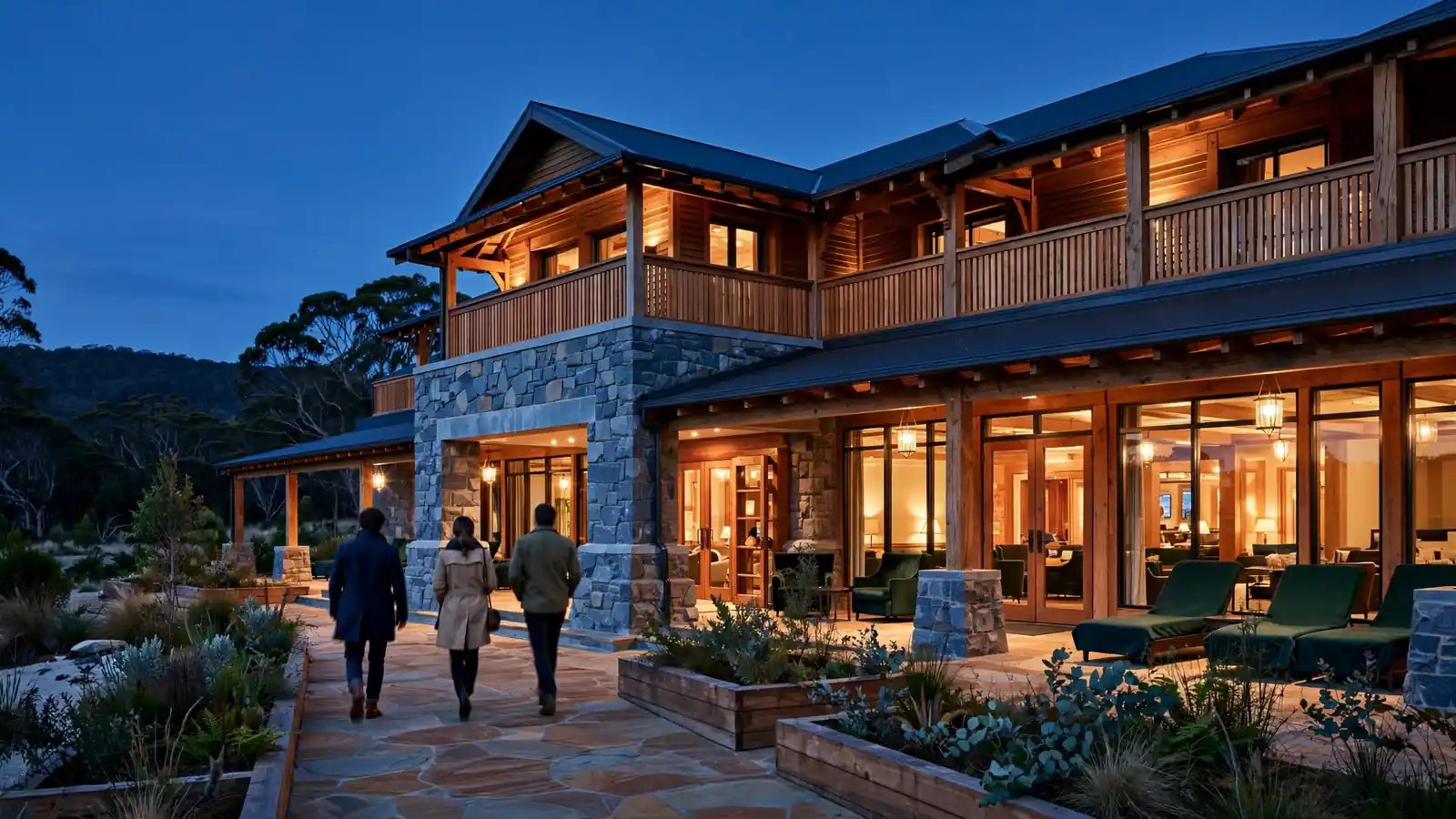
A casino stay combines two separate decisions: where to sleep and whether a casino visit is part of the trip. The word “casino” in a hotel description can suggest that accommodation and gaming belong to one operation, but that impression needs checking. A name, photograph or booking label alone does not establish who runs the property, what is included in a room rate, or whether the casino is on the same premises.
For Tasmania, a hotel should be assessed as a lodging choice on its own merits before any casino connection is assumed. The practical questions are familiar: what room is being offered, what dates the rate covers, what conditions apply to cancellation, and whether the listed price includes anything beyond the room. These details can change by date and booking channel. A “deal” is only useful once its restrictions and inclusions are clear.
I have seen the word “package” do a lot of work in hospitality copy. It may describe a room bundled with another service, or simply a promotional rate with conditions attached. The label itself does not tell the guest what is covered. The booking terms do.
Choosing a casino in Tasmania means checking the details that matter to your play, including licensing and available payment information. This list offers a concise reference to help you assess the options.
Neospin
Neospin is listed with a Curacao Gaming Control Board licence, number OGL/2023/176/0095, held by Hollycorn N.V.
Ricky Casino
Ricky Casino lists crypto payouts in under an hour and PayID payouts in 1–3 business days. Its minimum deposit is A$20, or A$30 to qualify for the bonus.
7Bit Casino
7Bit Casino is operated by Dama N.V. and lists a Curacao licence.
Rollero Casino
Rollero Casino is listed with a Curacao Gaming Control Board licence, number OGL/2023/176/0095, held by Hollycorn N.V.
Lucky Dreams
Lucky Dreams lists a Curacao licence and a minimum deposit of A$20 via POLi.
LevelUp Casino
LevelUp Casino lists a Curacao eGaming licence, number OGL/2023/174/0082, held by Dama N.V. Its minimum deposit is A$15.
DragonSlots Casino
DragonSlots Casino lists a Curacao Gaming Authority licence and is operated by Jumpman Gaming Ltd.
House of Pokies
House of Pokies lists an international iGaming licence, though the jurisdiction is not named in the available information. PayID payouts are listed at 1–24 hours, and the minimum deposit is A$30, or A$10 when using PayID.
Roby Casino
Roby Casino is listed with a Curacao eGaming licence and is operated by Roby Games Ltd.
JustCasino
JustCasino is listed with a Curacao Gaming Control Board licence.
A dependable room description identifies the accommodation being sold, rather than leaning on a nearby attraction or a casino association. It should let the guest understand the room type, occupancy conditions, rate basis and cancellation terms before payment. If those points are unclear, the advertised price cannot be compared fairly with another property’s rate.
The same applies to claims about a casino hotel in Tasmania. “Casino hotel” can mean a hotel operated as part of a casino complex, accommodation associated with a venue, or a hotel selected because a casino is somewhere in the area. Those are not interchangeable arrangements. The property’s own current description and booking terms matter more than a shorthand label.
Room photographs are useful for orientation, not proof of the exact room allocated. Images may illustrate a category rather than the specific room. When a particular feature matters, it should appear in the written room description or be confirmed by the accommodation provider. A polished image is not a term of sale. Plainly put.
A Tasmanian casino hotel deal should be read as a set of conditions, not as a promise created by its headline. Check the dates, room category, payment timing, cancellation rules and any stated inclusions. A low displayed rate may apply only under a particular condition; a bundle may not include every service implied by its wording. If the listing does not spell out an inclusion, it should not be treated as part of the purchase.
Rates also need a like-for-like comparison. A room-only price and a package price are different products, even when they appear beside one another. The length of stay, occupancy and flexibility of the booking can alter what “value” means. I would not treat a discount label as evidence that a rate is the best available option. The terms decide what was actually bought.
For travellers combining a hotel stay with casino plans, confirm the relationship between the two separately. Establish whether accommodation is part of the same property or merely described in connection with a venue, and whether the booking provides any stated access or benefit. Do not infer a bundled arrangement from branding. Check the current listing before paying, then retain the confirmation and conditions.
A search result can be a useful starting point, but a hotel name or a “casino stay” label is not enough to settle those details. The booking page needs to identify the property and the room being sold, while the terms need to explain the rate. That is the difference between an appealing description and a stay whose conditions are understood.
A search for poker at a Tasmanian casino can mean two different things. It may refer to live poker played against other people in a dedicated room, or it may mean electronic gaming machines (EGMs), often called pokies in Australia. Those are not interchangeable. A poker-room listing or tournament schedule needs to be confirmed as a current venue offering; the wording of a search alone does not establish that a particular casino has a room, runs tournaments or has a game available today.
Attention: A poker-room listing or tournament schedule must be confirmed as a current venue offering; search wording alone does not establish availability.
I have seen how easily these categories blur in casino copy. “Poker” can attract interest without making clear whether the product is a live table game, an organised event or a pokie with poker-themed graphics. The distinction matters: a themed machine is still a pokie, while a poker tournament is an event whose format and availability depend on the venue. Confirm the specific activity through the venue’s own current information before making plans. A room name is not a schedule.
The same care applies to searches combining poker with a casino room or sports bar. They bundle different practical questions—what is played, where it is played and what else is on site. Those details need venue-specific confirmation rather than inference from a broad label. “Open now” is also time-sensitive; a general casino reference cannot establish that a particular room or activity is operating at the moment.
Online pokies work differently from live poker. Each game uses a Random Number Generator (RNG) to determine outcomes. The generator does not keep a record of earlier spins and use that history to shape the next result. Each spin is independent, so a run of wins or losses does not make a particular outcome due.
That point is easy to lose when a screen presents recent results, celebratory graphics or a near miss. Those displays can make a sequence feel meaningful, but they do not change the next spin’s odds. A pokie does not remember that it has paid out, nor does it owe a return after a losing run. I used to see players read patterns into the screen; the interface encourages that instinct. The mechanism does not. No memory. No balancing act.
RTP, or return to player, describes a theoretical share of wagered money that a game pays back across a very large number of spins. It is not a forecast for one session, a promise of a personal return or a timetable for a payout. A result over a short stretch can differ sharply from the long-run theoretical figure. That is not a malfunction; the measure applies across extensive play, not to an individual’s next spin.
The wording around RTP is important. “Return” can sound like money coming back to a particular player, but the figure is a statistical model of game behaviour over time. It does not mean that losses will be recovered, and it does not make an individual outcome predictable. Randomness remains in force on every spin.
So a live poker-room question calls for current venue information; a question about a pokie calls for understanding how its mechanics work. Neither a tournament search nor an RTP label can establish what will happen in a particular game. Keep the categories separate, and the claims become easier to assess.
Parking, bingo and online gambling belong to different practical and legal questions, even when they appear together in a search for a Tasmanian casino. A request for parking information concerns a physical venue; a bingo query concerns an activity and its availability. Neither establishes that a particular facility or session is offered. Those details need confirmation directly from the venue before plans are made.
Legal Restriction
Under the Interactive Gambling Act 2001, operators based in Australia cannot provide real-money online casino games to people in Australia.
“Online casino” is a different category altogether. It does not describe a Tasmanian building or an extension of a land-based casino. Under the Interactive Gambling Act 2001, operators based in Australia cannot provide real-money online casino games to people in Australia. That restriction covers pokies as well as table games such as blackjack and roulette.
Offshore platforms sit outside the Australian licensing system. Their status is often described as a grey area for players: using one is not itself a criminal offence for an Australian player, but the service is not regulated under Australian law, and providers are prohibited from supplying these casino services to people in Australia. Offshore access is also actively restricted. That distinction matters. A platform being reachable, or holding a gambling licence overseas, does not make it an Australian-authorised casino or provide the protections of local regulation.
I learned to separate the operator’s legal position from the customer’s when reading this market. They are not interchangeable. Australian law targets the provision of prohibited services; it does not turn an offshore website into a locally approved option merely because a player can open it. Nor does a local casino’s name make an online gambling service part of its Tasmanian premises.
A virtual private network can alter the apparent digital location of a connection while the person remains in Australia. A specialist review reports that using a VPN to reach region-blocked pokies sites breaches the site’s terms and can result in account suspension. The technical change does not remove the underlying restriction. Access may also be blocked by the operator or its game suppliers, so a game can be unavailable even when the platform itself appears accessible. A workaround is not an entitlement.
That is a poor basis for a money decision. Offshore operators are not overseen by Australian gambling regulators, and a dispute may offer limited routes for resolution. If an operator fails, winnings may not be protected. Promotional wording can distract from the contractual detail: bonus conditions may impose wagering requirements, limit withdrawals or allow winnings to be voided. The fine print governs.
A search for a casino in Tasmania can therefore lead to two separate checks: what a physical venue actually provides, and whether an online service is lawfully offered to Australians. Parking or bingo availability should be confirmed as venue information, not inferred from an online result. Real-money online casino play is not a lawful service for Australian operators to provide. Keeping those categories apart is the useful first step.
“Near the casino” sounds like a straightforward booking filter. In practice, it can mean a short walk, a quick drive or simply a place in the same part of town. Those are different arrangements, with different costs and late-night logistics. I learned to treat proximity as a detail to verify, not a promise hidden in a property description.
For accommodation near a Tasmanian casino, the first useful step is to establish which venue and entrance the booking is being planned around. A property can describe itself as close to a casino without spelling out the route, the distance on foot or whether the approach is practical after dark. A map can help, but the route matters as much as the pin: roads, crossings and access points can change the experience. No assumption about walking time should be made from a promotional label alone.
The same care applies to transport. A stay that looks close on a map may still depend on a car, a taxi or another arrangement, particularly if the route is inconvenient on foot. Parking should be checked with the accommodation provider rather than assumed to be included or available. “On-site parking” and nearby parking are not interchangeable, and the wording does not by itself establish cost, access hours or whether a space can be reserved.
Accommodation deals need the same scrutiny. A package may bundle a room with another service, but the headline does not show whether the dates suit, what conditions apply or whether the advertised price covers every part of the stay. I have seen “special” do more work in a headline than in the actual terms. The useful comparison is the total cost and the cancellation conditions, not the size of a claimed saving.
Before booking, details worth confirming directly include the property’s exact address, the route to the intended venue, check-in arrangements and any parking conditions. These are ordinary travel checks, not evidence that a particular hotel or deal is available. Booking platforms can also describe a location in broad terms; the property’s own current information is a better place to resolve a discrepancy.
There is a separate distinction between staying near a casino and choosing a property that is part of one. A nearby accommodation listing should not be read as proof of a casino-run hotel, a shared booking arrangement or access to venue services. Those claims need explicit confirmation from the relevant business. Marketing language can blur the boundary. The booking confirmation cannot.
For a trip built around a casino visit, location is only one part of the plan. The practical choice depends on the actual route, transport options and the terms attached to the stay. A deal is useful only when those details hold up. Check the particulars first. Then book.
A venue name in a directory is not enough to plan around. Contact numbers, map pins, bar listings and concert notices can be copied between pages long after the underlying details change. I treat each as a separate claim, and look for a current statement from the venue before relying on it. If the source cannot be tied clearly to the venue, the detail remains unconfirmed.
For a casino in Tasmania, no specific address, telephone number or contact channel can be stated here. That matters when a call concerns more than a general enquiry: a number may connect to a central switchboard rather than the department that can answer a question. The practical check is whether the venue’s own current information identifies the contact method and what it handles. A third-party listing can be a useful lead, not confirmation.
Maps need the same care. A pin may mark a broad property, an entrance, or a nearby road rather than the point where visitors should arrive. A map is useful for orientation, but it does not establish which entrance is open, where a drop-off point sits, or whether a car park is available to visitors. Those are distinct operational details. I would not infer them from a pin or a photograph.
The same distinction applies to a casino bar. A listing or old image does not establish that a bar is currently operating, what its service arrangements are, or whether access is limited by an event or venue policy. “Open” is not a decorative word in hospitality; it has to match the date and the area being described. A current venue notice is more useful than an undated directory entry.
Entertainment listings also require a date check. A concert announcement can refer to a past performance, a separate space, or an event whose arrangements have since changed. Without a current programme tied to a specific Tasmanian venue, no concert schedule can be confirmed. A generic events page is not evidence that a performance is happening on a particular night.
Game names need the same restraint. Baccarat and craps are recognisable casino table games, but that does not establish that either is offered at a Tasmanian venue, let alone when or under what conditions. A games list should be current and venue-specific. Online game access is a different matter from an on-site table; one cannot be used as proof of the other.
From behind the counter, the useful distinction was always between a facility that existed in a general sense and one available at the time someone planned to use it. Small print often carried that distinction. Check the detail, not the impression. No guesswork.
Breakfast, buffet and resort descriptions can make a casino sound like a self-contained holiday package. In practice, each claim needs to be read separately. A breakfast service might be offered by a venue, a nearby business or a hotel with no direct casino connection; the word “resort” may describe a broader property rather than establish what facilities are included. Those distinctions matter when comparing Tasmanian casino options. A label is not an itinerary.
I have seen how broad hospitality language can do a lot of work while leaving the practical details unstated. “Buffet breakfast” says little about service days, booking requirements, price or whether the meal is part of a room package. “Resort” does not, by itself, establish access to particular facilities. Those are details to confirm with the venue or accommodation provider before making plans, rather than assumptions to carry over from a headline or an old listing.
The same care applies to rewards. A casino rewards programme is not automatically a discount on breakfast, a buffet booking or a resort stay. The relevant terms determine what activity earns benefits, what those benefits can be used for and whether restrictions apply. I would treat “rewards” as a programme label, not as a promise of a particular meal or saving. Terms can change, and an offer described on a third-party page may no longer be available.
Casino jobs sit in a different category from hospitality offers, even when the roles involve food service. A vacancy might concern a particular department, shift pattern or level of experience, but none of that can be inferred from a general reference to casino employment in Tasmania. Job titles also do not establish that a role is currently open. The useful evidence is a current listing from the employer, with responsibilities and conditions set out clearly.
From the other side of the counter, recruitment language is often deliberately broad at first. “Flexible” can refer to roster arrangements, not a guaranteed choice of shifts; “career opportunities” describes a possibility, not a specific progression route. The detail sits in the position description and employment terms. A listing should identify the employing business and explain the work, rather than relying on the casino name alone.
Applications, too, deserve a basic check. A genuine process should make clear who is collecting personal information and how the application is submitted. A message promising a job without a clear role or identifiable employer is not equivalent to an official vacancy. That is ordinary caution, not cynicism.
For anyone weighing a breakfast booking against a job application, the checks are different: confirm service and package conditions with the relevant hospitality provider; confirm the role, employer and terms through an official recruitment channel. No polished label fills in those details. Plain paperwork does.
Opening times and event calendars are venue information; a game lobby is not. A Tasmanian casino’s hours, reopening status or scheduled entertainment cannot be inferred from whether a website is available, and online activity does not confirm that a physical venue is open. I keep those checks separate: venue notices answer questions about access and events, while a digital lobby reflects the rules applied to an online account and its location.
That distinction matters when plans depend on a particular date. An announcement about a development or reopening may describe a proposal, construction stage or future intention rather than a confirmed operating schedule. Likewise, an event listing needs a date and current status before it can support travel plans. I would treat unspecific claims about “what’s on” as promotion, not as a timetable. Details can change; confirmation should come from the venue’s current official communications.
Online access works by a different mechanism. An online casino may use the IP address of a visitor’s connection to estimate their country, then block access from locations excluded by its own rules or software-provider agreements. When a game is blocked for Australian IP addresses, it may be absent from the lobby altogether. The missing tile is not proof that the game has been removed everywhere, nor does it establish anything about a Tasmanian venue’s operating hours.
A visible game is not a local venue listing, either. The Interactive Gambling Act 2001 prohibits operators from providing real-money online casino games to people in Australia. An overseas site appearing on a screen does not make that service an Australian-authorised casino or a substitute for checking a physical venue’s status.
I have seen location controls mistaken for technical faults. A title that will not load may be restricted by location, while a game that never appears may have been filtered before the lobby is displayed. A specialist review has reported that providers may block certain games for Australian users in anticipation of possible changes to gambling rules; that is a report about particular provider decisions, not a dependable prediction of what any lobby will show.
Warning: Using a VPN to reach region-blocked pokies sites breaches the site's terms and may lead to account suspension.
A VPN can make an internet connection appear to come from another country, but using one to reach region-blocked pokies sites breaches the site’s terms and may lead to account suspension. It does not change the legal position for operators offering prohibited services in Australia. A workaround is not confirmation.
For a review of a Tasmanian casino, the practical questions remain separate: whether the venue is operating, what its current hours are, and whether an event is actually scheduled. Those details need current venue confirmation. A digital game list cannot answer them.
A restaurant search linked to a Tasmanian casino can mean two different things: a dining room inside a casino venue, or an independent restaurant nearby. Those are not interchangeable. A map pin, a booking page and a venue’s own listing can describe different businesses, even when the wording makes them appear connected.
I have learned to treat “casino dining” as a relationship that needs checking, not as a description that proves itself. The useful questions are basic: Is the restaurant operated by the casino, located within its premises, or simply close by? Does the listing identify the business clearly? Is its menu attached to that specific restaurant rather than to a group or another property? Until those details line up, a polished page is not much evidence.
Names and menus are particularly easy to misread. A search result may retain an old title, surface a restaurant with a similar name, or show material that belongs to a different venue. A menu image can also travel well beyond the place it describes. I would look for the restaurant’s own current listing and compare its address and business name with the casino’s official venue information. A mismatch is a reason to pause, not to infer a connection.
Opening arrangements need the same care. Restaurant service can differ from the casino’s general operating schedule, and a page that gives venue-wide hours may not establish when a particular dining room serves meals. The distinction matters when planning around a reservation, a performance or a late arrival. A booking option is useful evidence of a service being offered, but it should still match the intended date and location.
“Restaurants at a Tasmanian casino” is also broader than it sounds. It can suggest several venues, while a result may refer to one restaurant, a nearby business, or an older listing. I would not treat a plural heading as proof of choice. Nor does a casino-related label establish cuisine, price, dietary provision or the availability of walk-in tables. Those are separate details, and each needs a current, venue-specific statement.
For a restaurant near a casino, distance alone does not establish an affiliation. A business may be in the same district without being part of the casino, and directions should be checked against the restaurant’s own address rather than inferred from a search label. The practical distinction is simple: on-site dining and nearby dining answer different questions.
I avoid turning an unverified restaurant name into a recommendation. The wording may sound confident; the underlying listing may not be. Check the business identity, location, menu and service arrangements together, then make plans on that basis. No implied connection.
Spa searches often sit beside casino searches because people are trying to establish whether a venue offers a full day out, not just gaming. But a spa is a separate facility, and its presence cannot be inferred from the word “casino,” a hotel association, or a polished promotional image. I would treat any claim about treatments, pool access, booking arrangements or opening times as unconfirmed until it appears on the venue’s current official information. A spa name in an old directory is not enough. Details change.
The same discipline applies to a Tasmanian casino address. A search result, map pin or third-party listing can be useful for orientation, but it is not a substitute for checking the venue’s own current contact page before travelling. Names and listings can be duplicated or outdated, and an address alone does not establish which entrance serves the public or whether access arrangements have changed. I would confirm the venue identity and address through an official channel, then check directions separately.
There is a practical reason to keep these checks distinct. A spa may be operated or booked separately from the gaming floor; a venue’s address does not confirm that treatments are available, and a general casino listing does not establish dress requirements. “Resort-style” is a marketing description, not an inventory. The useful detail is the specific facility and its current conditions, not the label.
Dress-code claims need the same source discipline. A photograph can show what some guests wore on one occasion; it cannot establish the rule for every room, event or time of day. Before setting out, the relevant venue should confirm whether any clothing standard applies and whether it differs between public areas and particular spaces. No assumption should be made from casino conventions elsewhere in Australia.
I have seen small practical checks prevent larger misunderstandings. Confirm the exact venue, the address, the facility being promoted and whether access needs a separate booking. Keep spa details separate from gaming information: online pokies availability is governed by a different set of restrictions and cannot establish what exists at a physical Tasmanian venue. A search listing is a lead, not proof.
If the information comes from a third-party directory or an old review, use it only to identify what needs checking. For a current decision, rely on a direct confirmation from the venue and retain the wording of any relevant conditions. No guesswork.
Food-court access and a swimming pool are separate practical questions, not details that can be inferred from a casino’s name or its general description. A venue may have food available without operating a food court, and a pool may belong to a nearby hotel rather than form part of the casino facilities. Those distinctions matter when planning a meal break, a family visit or time at the property.
I have learned not to read “resort” or “full facilities” as a precise promise. Such wording can describe a wider complex, a particular accommodation arrangement or amenities that are not open to every visitor. It does not, by itself, establish that a food court or pool is on site, available on the day, or accessible without conditions.
Before setting an itinerary around either facility, check directly with the relevant venue using its current official information. For food, confirm whether there is a dedicated food court rather than another type of dining service, and check its operating arrangements. For a pool, establish whether it is actually at the casino property, who may use it, and whether access depends on a booking or other conditions. A general online listing can blur these distinctions.
I would also keep the two plans independent. A meal option does not confirm pool access, and a pool advertised as part of a broader property does not establish that casino visitors can use it. If the information is unclear, a quick confirmation before travelling is more useful than assuming a facility will be available.
That is the practical limit: food-court and pool plans need their own confirmation. No assumption.